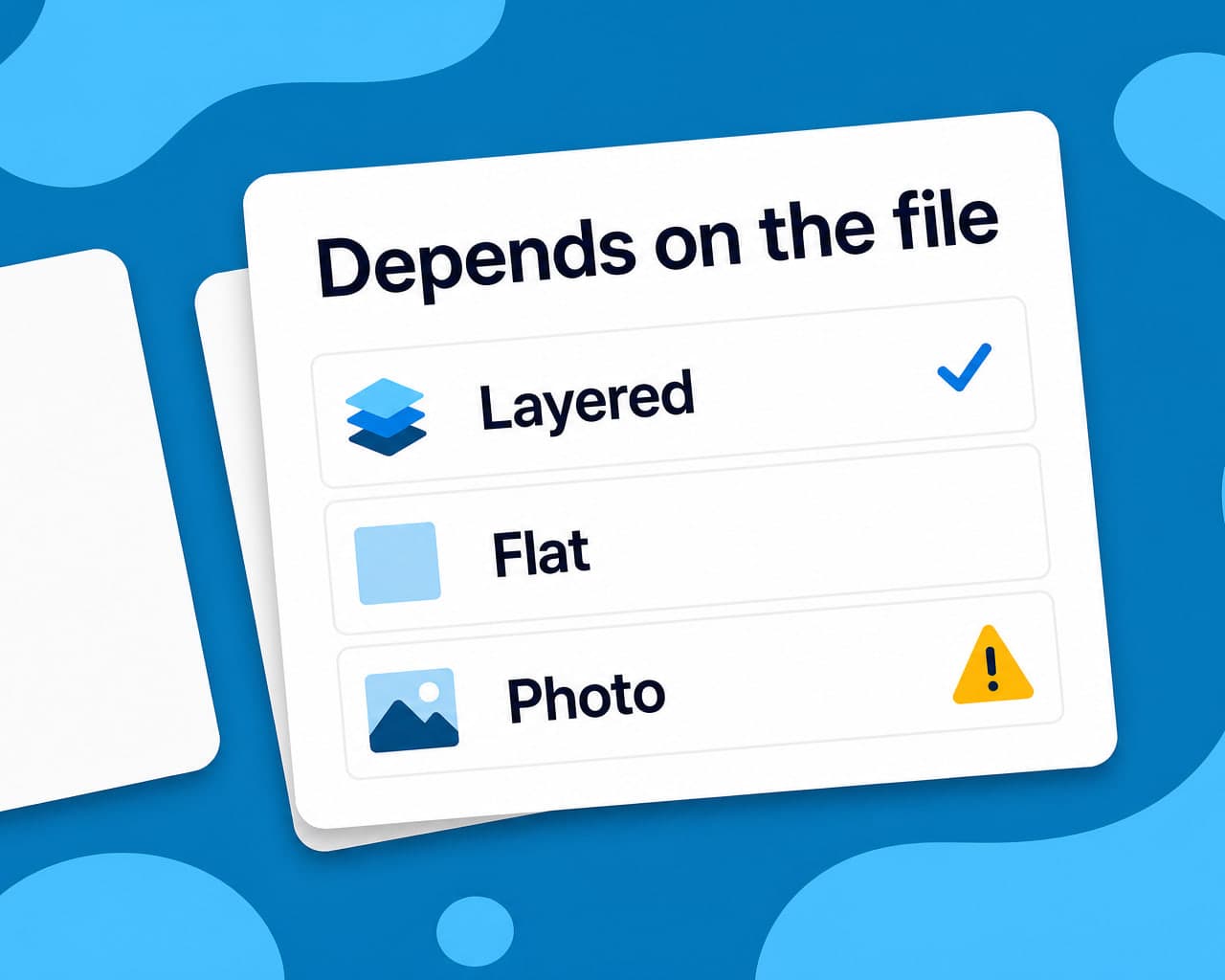
Quick answer — An AI image translator reads the text inside a picture and puts the translation back. How well that works depends on the file: a layered PSD or Figma frame keeps its structure, while a flat PNG or JPG has to be repainted.
Vitra.ai Universe translates the layer, then checks the result.
The file decides everything
The phrase "image translation" covers two different jobs, and confusing them is why results vary so much. If the text is still a layer — a PSD, an .ai, an InDesign story, a Figma frame, a Canva element — the words can be replaced and the design survives. If the text was flattened into pixels, there is no text. It has to be read, removed, the background rebuilt underneath, and the translation painted back.
What each format allows
| Format | Text is | What you get back |
|---|---|---|
| PNG, JPG | Pixels | Repainted; background reconstructed |
| Photoshop | A layer | Layers, masks and effects intact |
| Illustrator | Live type | Paths and artboards intact, still editable |
| InDesign | Threaded stories | Styles and threading kept, reflow contained |
| Figma | Text nodes | Components and auto-layout intact |
| Canva | Text elements | Design structure kept |
| PowerPoint | Text boxes | Slide layout and notes kept |
The pattern is simple. Keep the source file and you keep your options; ship only the export and every future language costs more than the last.
What goes wrong regardless of format
Expansion. German runs roughly a third longer than English, Russian around fifteen percent, and a layout built tightly around the source will break in all of them.
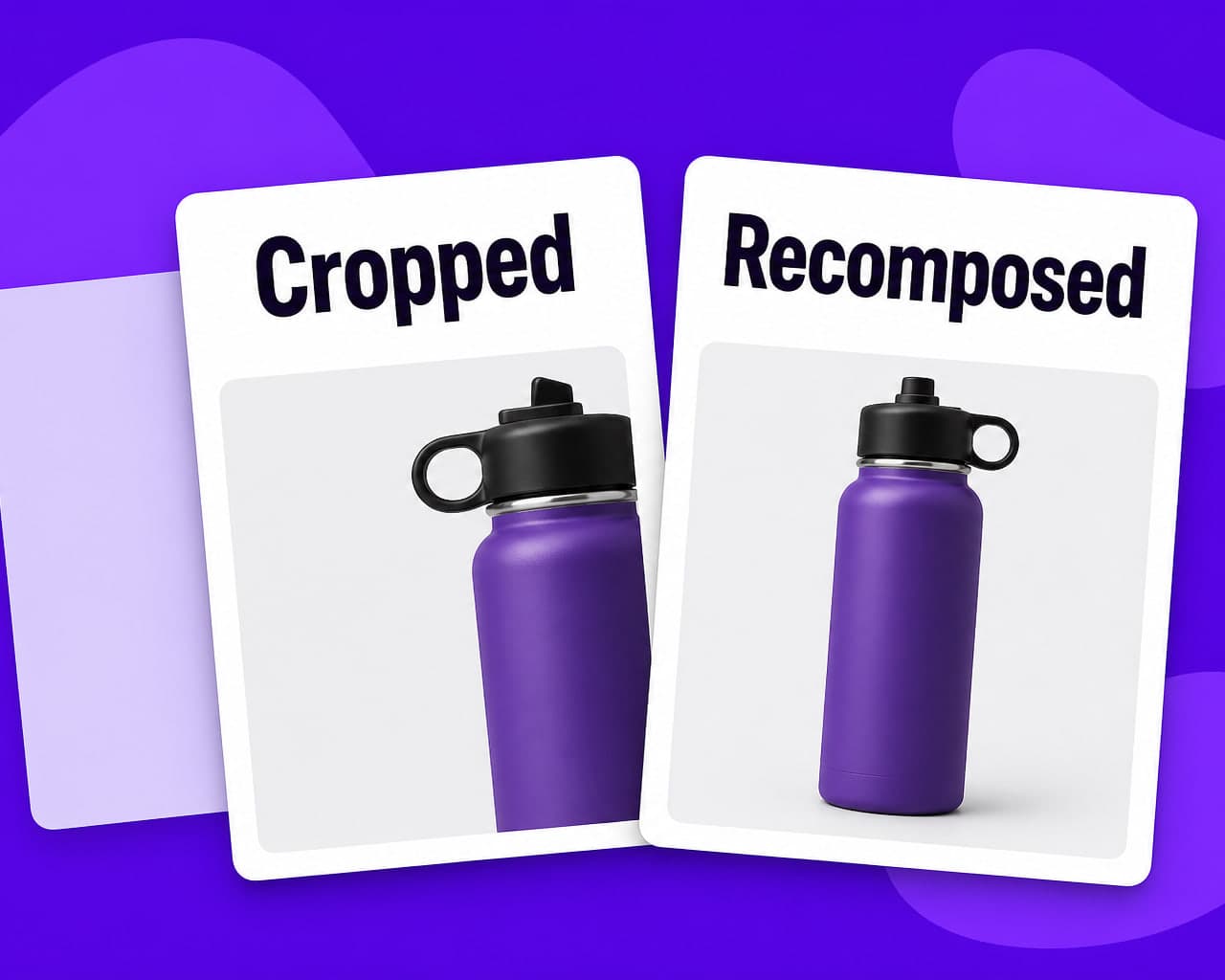
Right-to-left languages need the layout mirrored while the product photograph inside it stays as it is, or you have shown a reversed version of the thing you are selling.
And scripts need fonts that actually contain them, which is where a brand typeface with no Cyrillic or Devanagari coverage stops the job.
Checking what came out
A translated image cannot be proofread by looking at a string file, because the words are in a picture.
Quality control runs on the rendered result — a proofreading pass, a back-translation comparison for anything carrying a claim, and a region-aware check on both the text and the imagery it sits on, returning approved, review or blocked with the findings.
Corrections write back to translation memory, so wording approved on a banner is already correct on the packaging and in the dubbed video that share it.
That shared memory is the argument for treating images as part of the content pipeline rather than as a design errand.
Beyond the file, the campaign
Format is only half of it. The rest is what happens once one image becomes a campaign: banner sets across every size, display advertising at IAB dimensions, email creative where images are often blocked, and infographics where the numbers need converting rather than translating.
Two things sit underneath all of it. A brand kit that states values rather than adjectives, and right-to-left layouts for Arabic and Hebrew, where what must not mirror matters more than what does.
Then the output gets checked — quality control on the rendered picture, and regional moderation on whether the market will actually accept it.
FAQ
What is an AI image translator? A tool that reads text inside a picture and replaces it with a translation. On layered files it edits the text layer directly; on flat images it removes the original text, rebuilds the background and paints the new text in.
Which image formats translate best? Anything where text is still editable — PSD, .ai, InDesign, Figma, Canva and PowerPoint all keep their structure. Flat PNG and JPG work but require reconstructing whatever sat behind the original text.
What breaks when images are translated? Text expansion, mainly. German runs about a third longer than English, so tight layouts overflow. Right-to-left languages need the layout mirrored, and some brand fonts lack the scripts required.
How do you proofread a translated image? On the rendered result rather than a string export, since the words are pixels. A proofreading pass plus back-translation catches meaning drift, and a regional check covers the imagery as well as the text.