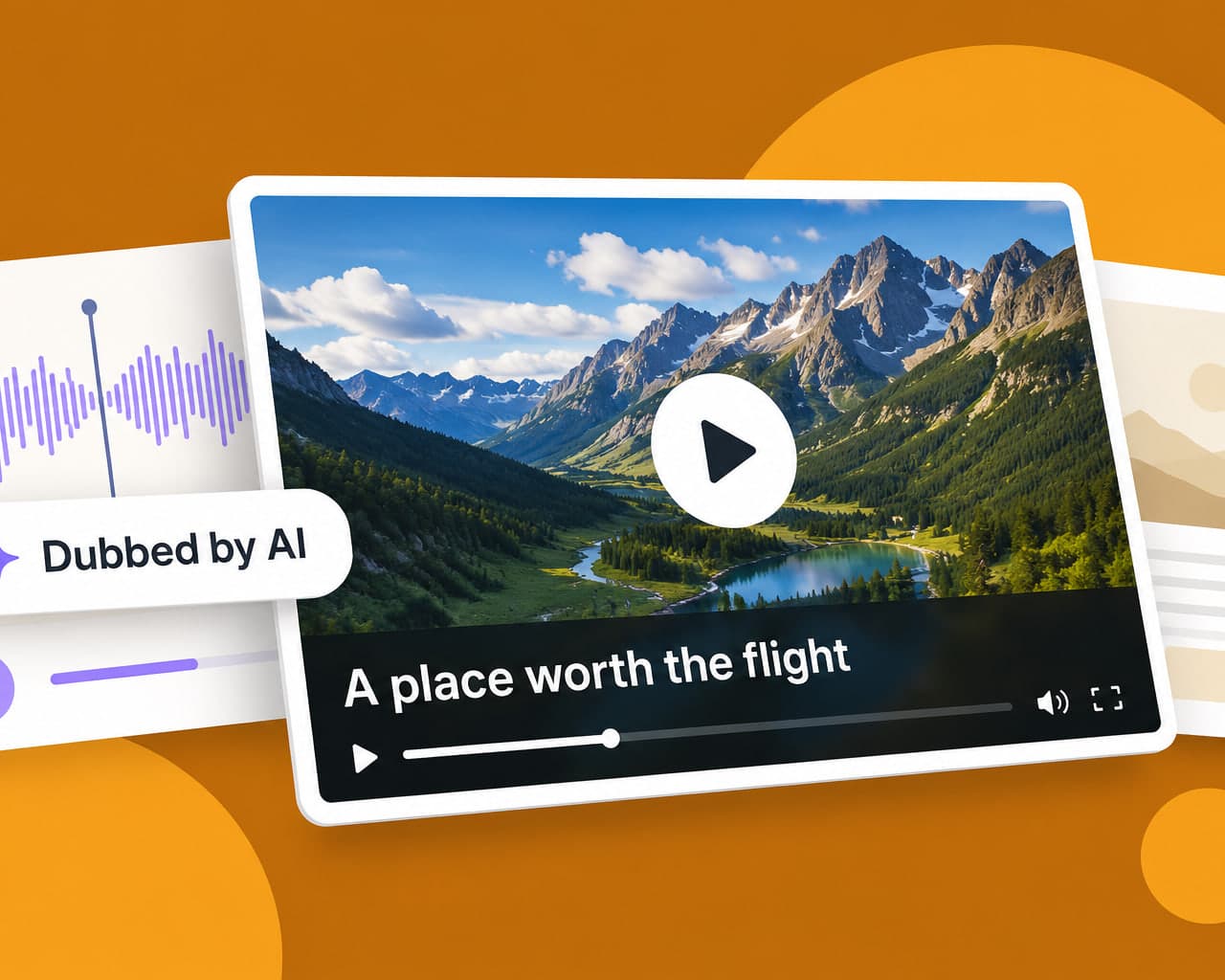
Quick answer — Destination video localization means dubbing an existing travel film into other languages rather than reshooting it. Transcription, translation, voice, lip-sync and subtitles run as one job, and the captions come from the same transcript as the audio.
Video dubbing handles all of that in a single run across 120 languages and 178 regional variants.
Most travel film libraries are stuck in one language
Somebody spent real money on a drone crew, a colourist and three days on location. The film went out in English. It has stayed in English ever since. Not because nobody wanted a Japanese version. Because a per-market voice session, a booking, a director and an engineer cost more than the extra views were ever going to return — so the footage sits in a folder and the German market gets a photo carousel instead.
What actually runs in a dubbing job
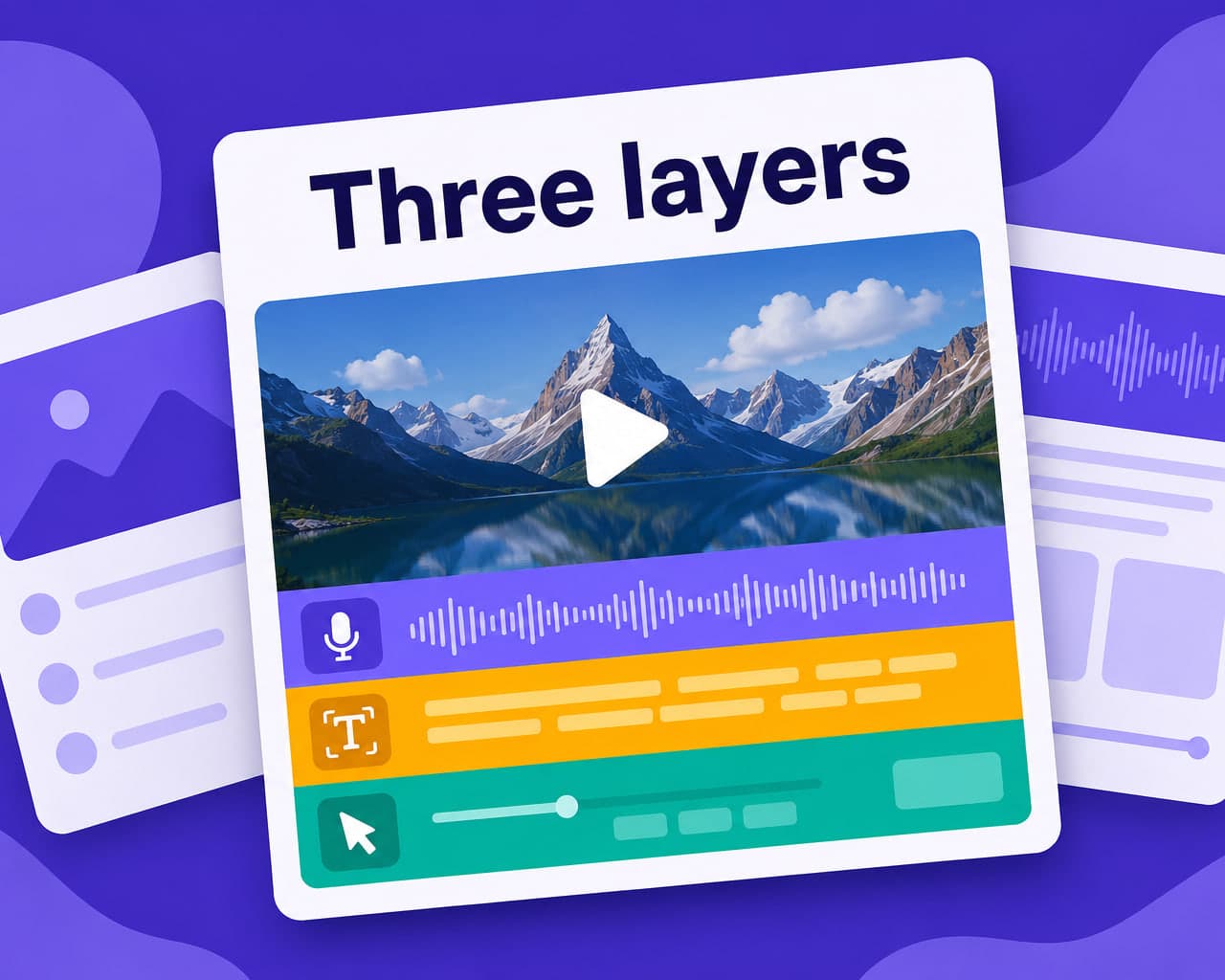
Five things, in one pass. The audio is transcribed. The transcript is translated. A voice is generated. Lip movement is realigned so a piece to camera doesn't read as overdubbed. Subtitles are produced from that same transcript.
That last detail matters more than it sounds. When captions come from a separate process, they drift from the spoken track over a long film, and the version a viewer reads stops matching the version they hear.
Dub or subtitle?
| Content | Usually | Because |
|---|---|---|
| Destination brand film | Dub | Watched full-screen, mood matters |
| Property walkthrough | Dub | Detail-heavy, viewers won't read and look |
| Social vertical cuts | Subtitle | Watched on mute |
| Practical how-to and arrival guides | Both | Reading fluency varies exactly here |
Produce both in the same run and let the channel decide.
It costs almost nothing extra once the transcript exists.
Keeping the same voice across a library
A destination brand that has built recognition around one narrator loses it the moment each language introduces a different voice actor.
Voice cloning takes a short sample of the original narrator and carries it into every target language, with pace and emotion adjustable per segment. One recognisable voice, 120 languages. For a tourism board running a multi-year campaign, that continuity is most of the brand.
The languages nobody quotes you for
Every vendor is fluent in Spanish, French and German. Ask about Odia, Sinhala, Amharic or Khmer and the conversation changes.
Coverage here extends to low-resource languages with no commercial voice or translation support, using custom voice models built for them — which is usually the thing that has blocked a domestic or regional campaign rather than any lack of demand. See hyperlocal.
Where to start
Take the film you already paid for. Dub it into the two source markets sending you the most traffic that doesn't convert, publish both, and compare watch-through and booking rate against the English version in the same placements.
You'll know inside a month.
FAQ
Can you dub an existing travel video into other languages? Yes, and it's usually cheaper than any alternative. Transcription, translation, voice, lip-sync and subtitles run as a single job across 120 languages, so an existing film reaches markets that never justified a reshoot.
Should destination video be dubbed or subtitled? Dub the brand film and property walkthroughs, subtitle the social cuts that get watched on mute, and do both for practical arrival guides where reading fluency varies. Producing both in one run costs almost nothing extra.
How do you keep the same narrator across languages? Voice cloning builds a reusable voice from a short sample of the original narrator and carries it into each target language, with pace and emotion adjustable per segment. One recognisable voice across the whole library.
What about languages with no commercial voice support? Custom voice models cover low-resource languages that off-the-shelf providers skip, including much of the Indic set. That gap, rather than a lack of demand, is usually what has blocked a regional campaign.