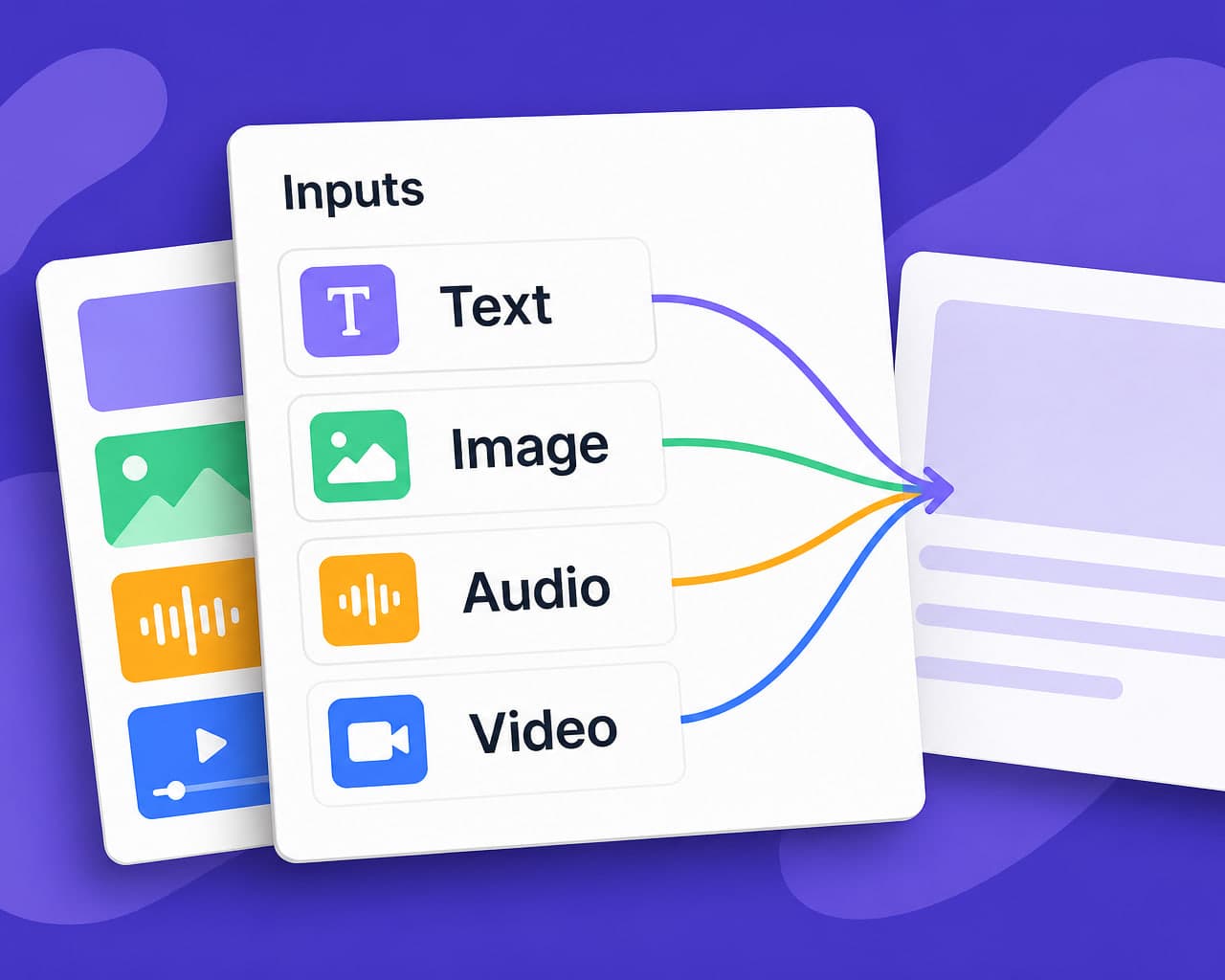
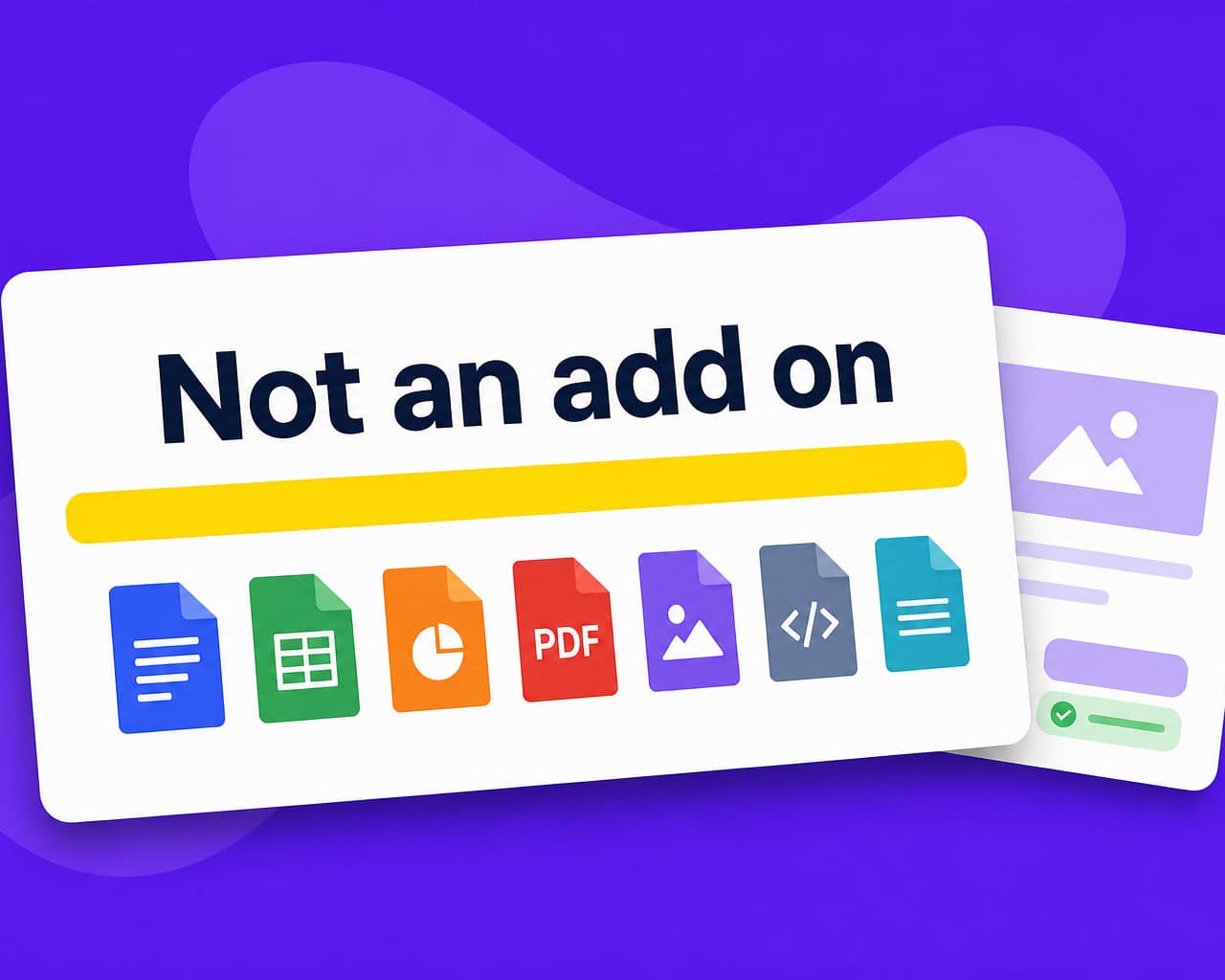
Quick answer — A multimodal localization platform handles text, documents, images, audio, video, web and app in one system with one memory. Most stacks do text well and treat the other modalities as exports, which is where consistency breaks.
Vitra.ai Universe creates, translates, adapts and publishes from one place.
Text is the solved part
Translating strings and documents is mature. Connectors exist, memory works, vendors are plentiful. Everything else in a modern content mix — the product video, the banner with text baked into the artwork, the app screenshots, the podcast, the size chart rendered as an image — sits outside that maturity, and gets handled by exporting it to somebody. So a company reports its site as fully localized while a majority of what a customer actually sees is not.
What each modality needs
| Modality | The specific problem |
|---|---|
| Text and documents | Solved; structure preservation |
| Images | Text is pixels; layout expands |
| Design files | Layers must survive |
| Audio | Voice consistency across a library |
| Video | Timing, lip-sync, speaker mapping |
| Web | Indexability, hreflang, rendering |
| App | String files, screenshots, store listings |
They are genuinely different engineering problems, which is why the market fragmented into per-modality tools in the first place.
What they share is vocabulary. The product does not change name because the asset is a video.
One memory is the join
A shared translation memory that every modality reads and writes is what turns seven tools into one pipeline.
Approve a claim once and it resolves the same way in the PDF, the banner, the app string and the dub — and a reviewer's correction on any of them propagates to the rest.
Without it, consistency is a process people follow, and processes that depend on people remembering fail at scale. The mechanics are covered in multimodal translation memory.
One quality gate, too
Checking text and shipping the video unchecked verifies the cheapest asset and skips the most expensive.
Quality control that runs across image, text, audio and video returns the same verdict format for all of them, which is what lets one review process cover a mixed batch instead of four.
Then the assets land somewhere addressable rather than in four vendors' portals — which is the difference between a library and a scavenger hunt when next quarter's campaign needs the master.
FAQ
What is a multimodal localization platform? One system that localizes text, documents, images, audio, video, web and app content using a single shared memory and one quality gate, rather than a separate tool and memory per content type.
Why do most localization stacks handle text well and little else? Because text translation matured first and has established connectors and vendors. Images, video and audio get exported to specialists, so they sit outside the memory and the review process.
What breaks when each modality has its own tool? Vocabulary. A product name approved once is retranslated separately for the banner, the app and the dub, so a customer meets three different versions of the same claim.
Does one platform mean one engine for everything? No. The modalities are genuinely different engineering problems and need different processing. What they share is the memory, the terminology and the quality gate applied to their output.