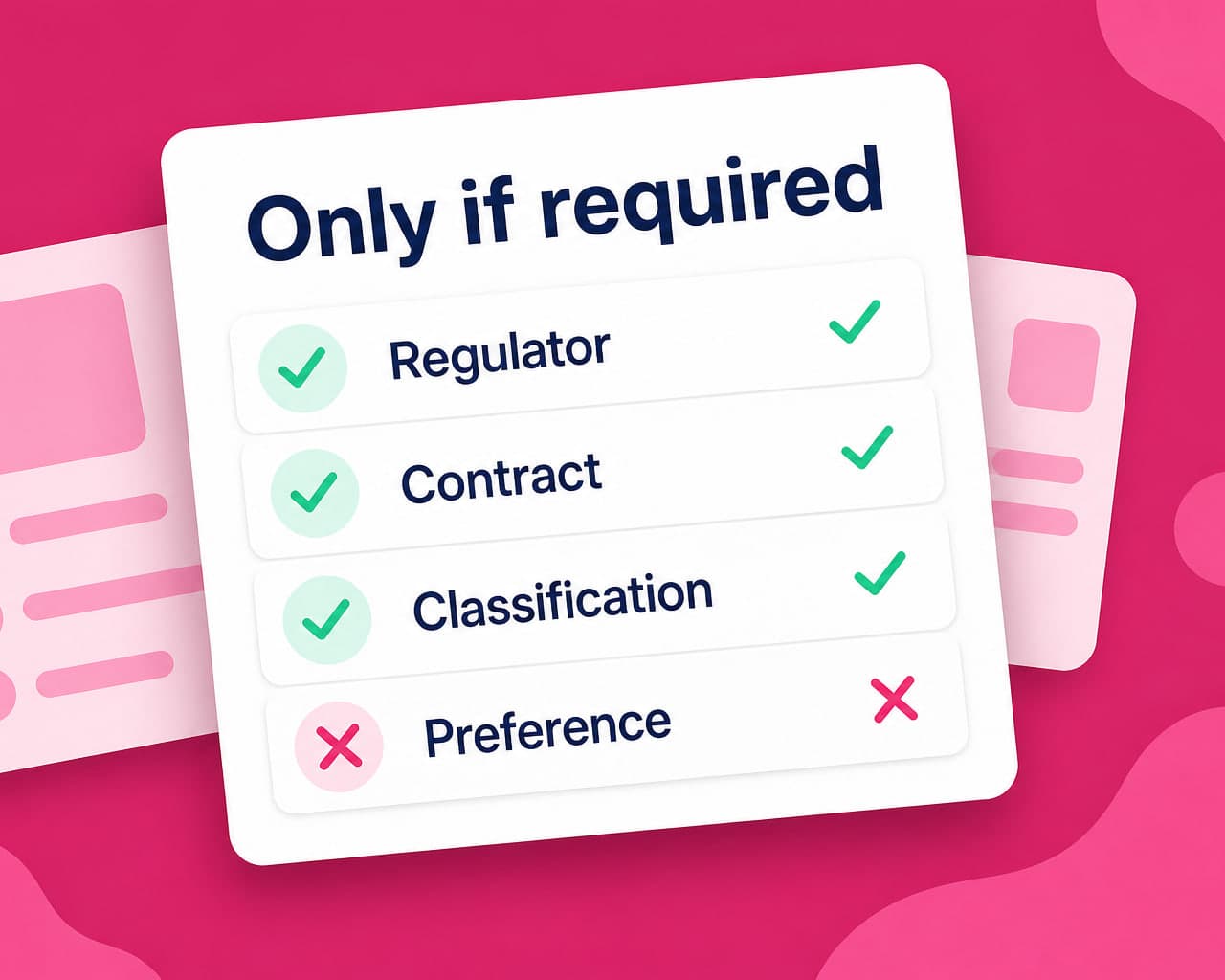
Quick answer — On-premise AI translation runs the models on hardware you own, so content never leaves your network. It is worth it when a regulator, a contract or a classification requires it — and rarely worth it otherwise, because you take on GPU capacity and model upgrades yourself.
Vitra.ai Universe runs multi-tenant, in a dedicated region, or fully air-gapped.
Three reasons that hold up
Most on-premise requirements trace back to one of three things, and it is worth knowing which one you are answering before you price anything. A regulator names the requirement. A customer contract forbids third-party processing of their data. Or the content is classified, and the question is settled before it is asked.
Everything else — general nervousness about cloud, a preference for control, a sense that it must be safer — is usually answered better by a dedicated region with per-organization keys and storage than by taking delivery of GPUs.
What actually moves on-premise
| Component | Runs locally | Note |
|---|---|---|
| Speech recognition | Yes | Fine-tuned models on your GPUs |
| Machine translation | Yes | The bulk of the compute |
| Text to speech | Yes | Voice libraries ship with the install |
| Language models | Yes | Sized to your hardware |
| Translation memory | Yes | Stays inside the boundary |
| Frontier third-party models | No | They are an API somewhere else |
That last row is the trade. The newest commercial model is a network call, and a deployment with no external calls cannot make it.
For most translation work the gap is smaller than people expect, because a memory-first cascade answers a large share of segments before any model runs. For the hardest generative work, the gap is real.
What it costs beyond the licence
GPU capacity you size, buy and keep busy. An upgrade path, because models improve and yours will not unless somebody schedules it. And an operations burden that lands on a team who did not previously run inference.
Budget for the second year, not the first. The install is a project with an end date; keeping models current is a standing commitment, and it is the part that quietly decays.
Choosing between three shapes
Multi-tenant cloud is the default and suits most organizations. A dedicated region gives you data residency without hardware. A fully air-gapped install gives you isolation and hands you the operational load.
Pick the least isolation that satisfies the actual requirement. Isolation is not free and it is not a security posture on its own — an air-gapped system with no access control is not safer than a cloud tenant with one.
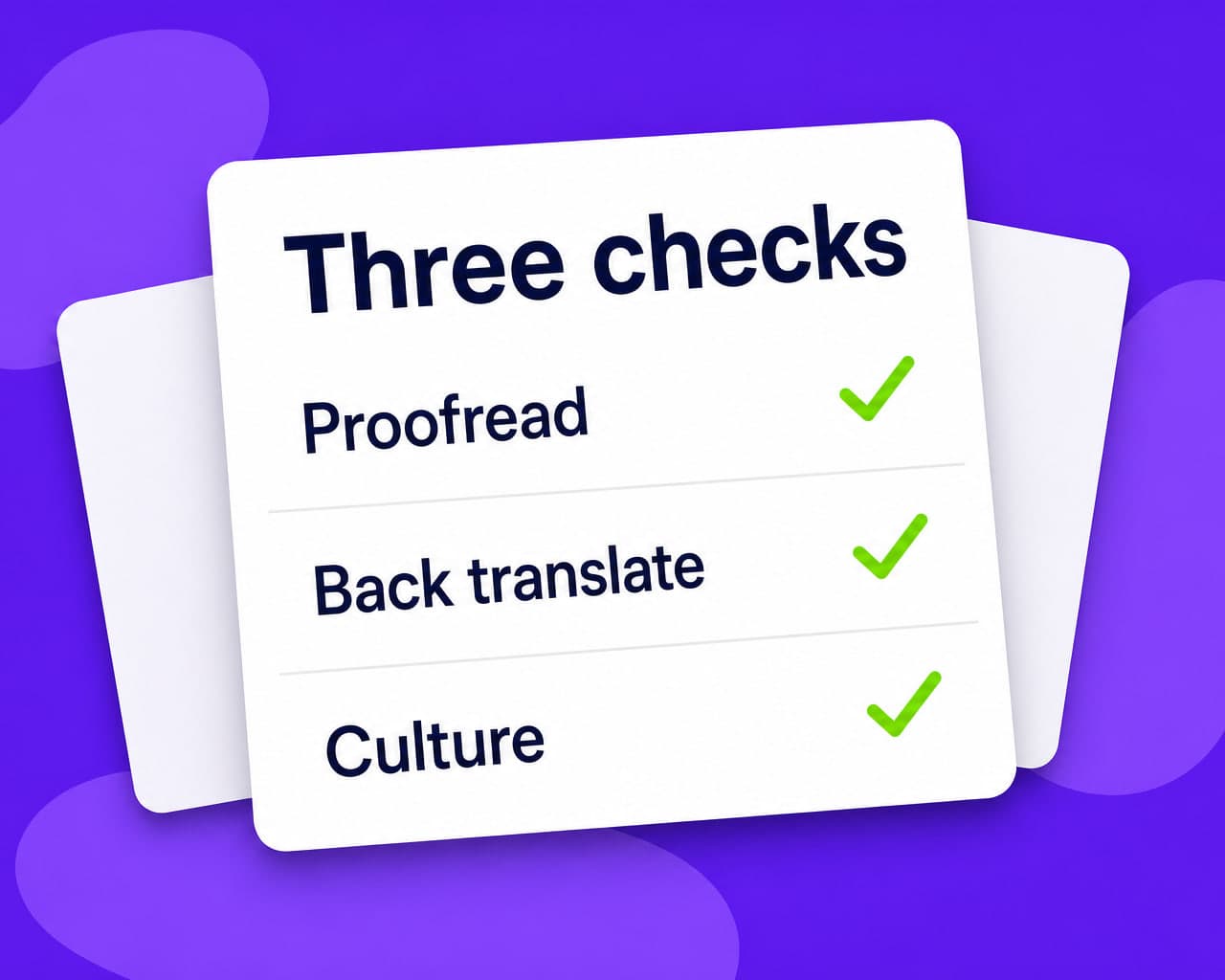
Run quality control inside whichever shape you choose, because the review evidence matters more to an auditor than the deployment topology does. Client confidentiality raises the same question earlier — machine translation in legal work.
FAQ
When is on-premise AI translation actually necessary? When a regulator names it, a customer contract forbids third-party processing, or the content is classified. General discomfort with cloud is usually answered better by a dedicated region with your own keys and storage.
Does on-premise translation mean losing the best models? You lose access to frontier models that exist only as a hosted API. Fine-tuned speech, translation and text-to-speech models run locally, and a memory-first cascade answers many segments before any model is called.
What is the hidden cost of running translation on your own hardware? Keeping it current. The install has an end date but model upgrades do not, and a deployment nobody schedules upgrades for quietly falls behind. Budget for the second year rather than the first.
Is on-premise more secure than a cloud tenant? Not automatically. Isolation removes one class of risk and adds operational responsibility. An on-premise system without access control and audit logging is not safer than a well-configured multi-tenant one.