Quick answer — Continuous localization translates on the change rather than in batches, so translated content never falls far behind the source. It requires content in a system that can emit change events and a review band that does not gate everything.
Vitra.ai Universe creates, translates, adapts and publishes from one place.
Batches assume a finish line
The project model works when content is finished, translated and shipped. That describes a manual, a annual report, a launch campaign. It describes almost nothing else any more. A product page changes weekly, help content changes with every release, an app ships fortnightly.
Batching those means translated versions are permanently a cycle behind, and the gap is largest exactly when it matters — right after a release.
What continuous actually requires
| Requirement | Why |
|---|---|
| Change events | Something has to say what changed |
| Segment-level memory | Retranslate the paragraph, not the page |
| Review band by risk | Or every change waits for a person |
| Rollback | A bad change must be revertible per language |
| Publishing that does not need a human | Otherwise the queue just moves |
The first row is the real prerequisite. Content in a CMS or a repository can emit a change; content in a folder of documents cannot, and no amount of workflow design fixes that.
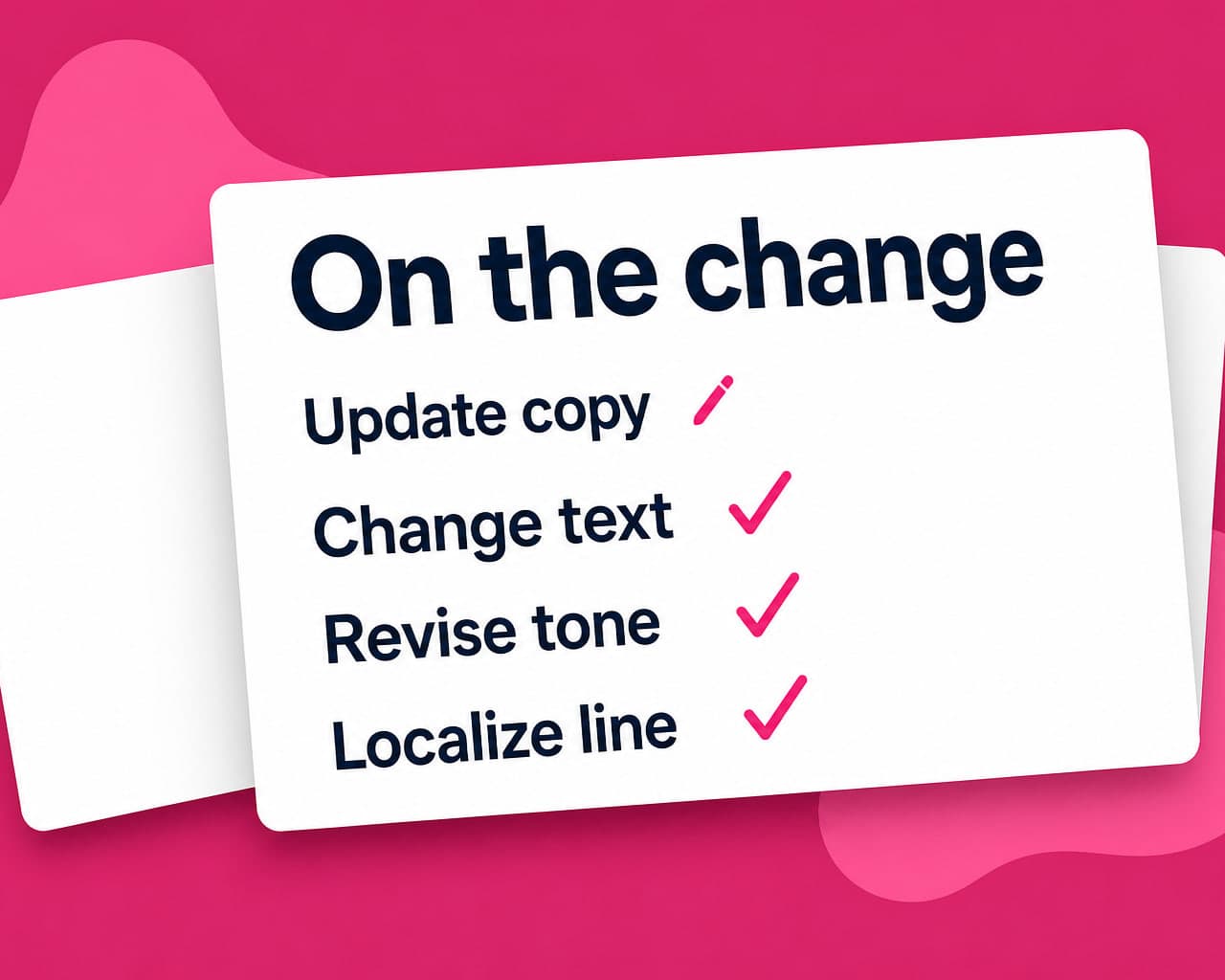
Translate the change, not the document
This is what makes the economics work.
A page with one edited paragraph should cost one paragraph, not a page. Segment memory makes the unchanged text an exact reuse, so the marginal cost of keeping forty languages current is small enough that teams stop deferring updates.
Deferred updates are the actual failure of batch localization — not that it is slow, but that it makes people avoid changing things.
Where the gate goes
Not on everything, or continuous becomes batch with extra steps.
Let low-risk changes publish and route only flagged or high-consequence changes to a reviewer, using quality control to decide which is which. That is the same risk-band logic as human-in-the-loop translation, applied per change rather than per project.
What to watch
Lag: how far behind the source each language is, in hours.
If it grows, something is gating that should not be, or memory coverage is thin for that language. Both are fixable, and neither is visible without measuring the lag itself — which almost nobody does, and which is the number that tells you whether continuous localization is actually continuous.
The workflows around it
Continuous localization is one pattern among several. The others most teams run are multilingual campaign automation, the brief-to-published production sequence, approval for regulated content, and repurposing one piece across formats.
The operational scaffolding is translation SLAs you can meet, a multilingual content calendar, and a launch checklist for multi-market moments.
Where a stale page gets acted on rather than merely misread, the case for triggering from the source update is stronger still — immigration service content.
FAQ
What is continuous localization? Translating on the change rather than in scheduled batches, so translated content stays close to the source. It suits content that changes constantly, such as product pages, help centres and apps.
What does continuous localization require? Content in a system that can emit change events, segment-level memory so only edited text is retranslated, a review band by risk, per-language rollback, and publishing that does not need a human.
Why is batch localization a problem for changing content? Because translated versions stay a cycle behind, and the gap is widest right after a release. It also makes teams defer updates, which is the more damaging effect.
What should be measured in a continuous pipeline? Lag — how many hours behind the source each language runs. Growing lag means something is gating that should not be, or memory coverage is thin for that language.