Quick answer — Podcast localization runs from a transcript: publish translated transcripts and show notes first, dub only formats where the voices are the draw. Overlapping speech and length make dubbing expensive.
Vitra.ai Universe turns one story into every edition.
Long, unscripted and overlapping
An hour of conversation with three people talking over each other is the hardest audio to process and the least efficient to dub.
It is also, in most publisher catalogues, the majority of the output.
That combination argues for a staged approach rather than dubbing everything.
Transcript first
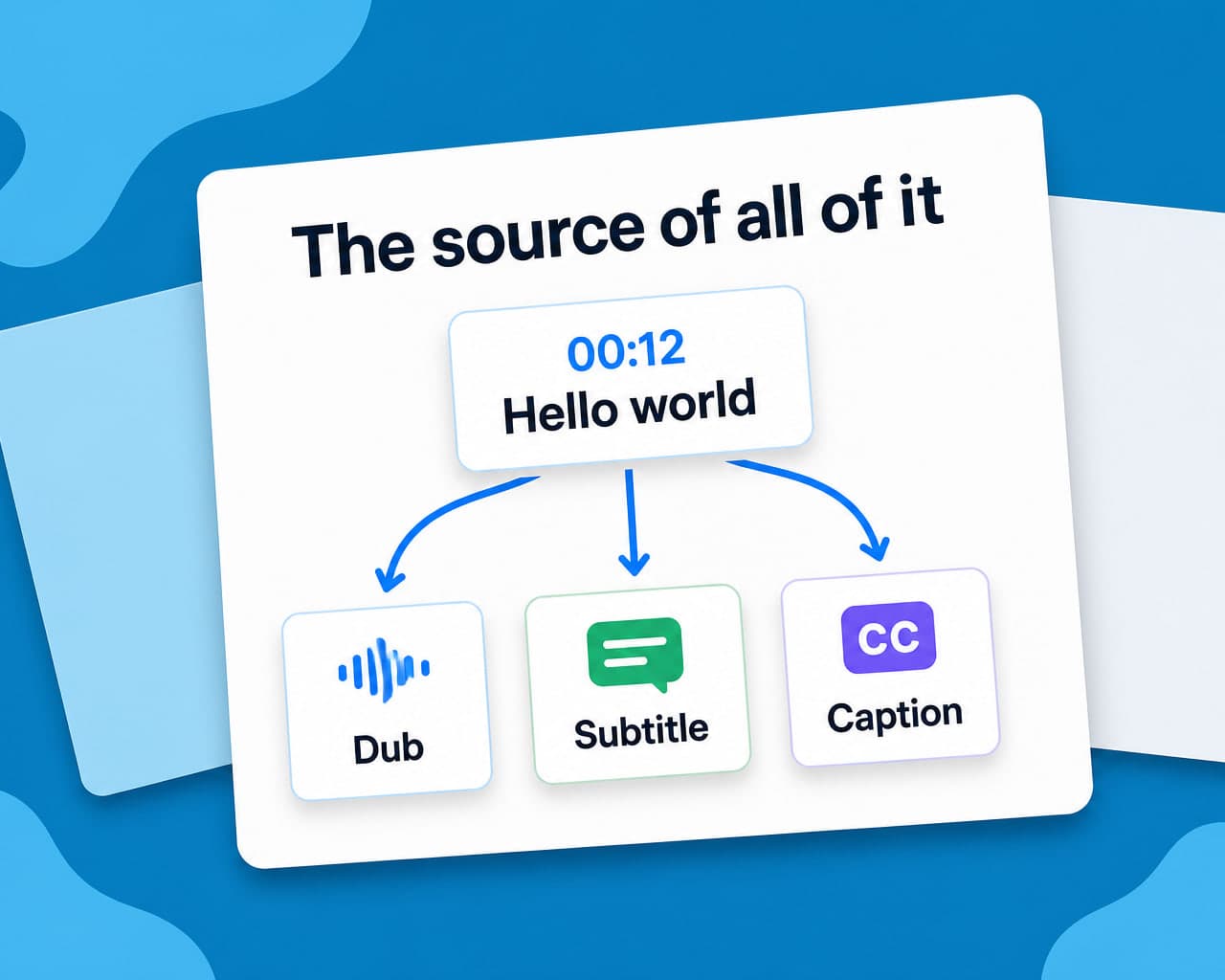
A translated transcript is cheap, immediately useful and does most of the work. It makes the episode searchable in the target language, which is where discovery comes from. It serves people who would rather read. And it is the input for everything else, so nothing is wasted if you dub later.
Show notes and chapter titles come with it, and those are what appear in podcast directories.
What justifies a dub
| Format | Dub |
|---|---|
| Narrative and documentary | Yes — the production is the value |
| Single-host explainer | Often |
| Interview, two speakers | Sometimes |
| Panel or roundtable | Rarely — diarization and overlap costs |
| Live or unedited | No |
Speaker diarization does the heavy lifting on multi-voice audio, splitting who is speaking so each maps to a distinct target voice — without it a panel becomes one voice and is unlistenable. Video dubbing handles that stage, and the same pipeline serves audio.
Where the host's own voice is the draw, cloning it keeps the recognition that a substitute voice loses.
What to fix before translating
Unscripted speech transcribes messily — filler, false starts, crosstalk, half-finished sentences.
Cleaning the transcript before translation is what stops you paying to translate noise, and it typically removes a meaningful share of an hour-long episode.
Run quality control on the result, keep terminology in memory so guests and topics are named consistently across episodes, and publish the translated transcript even when you do dub — the two serve different people.
FAQ
Should podcasts be dubbed or transcribed for other languages? Transcribe first. Translated transcripts and show notes are cheap, make episodes discoverable in the target language, and become the input if you dub later, so nothing is wasted.
Which podcast formats justify dubbing? Narrative and documentary work, where the production is the value, and single-host explainers. Panels and roundtables rarely justify it because overlapping speech makes them expensive to process.
How is multi-speaker audio handled? Through speaker diarization, which splits who is talking so each voice maps to a distinct target voice. Without it a panel collapses into one voice and becomes unlistenable.
What should be done before translating a podcast transcript? Clean it. Unscripted speech produces filler, false starts and crosstalk, and editing those out first avoids paying to translate noise that nobody wants to read anyway.