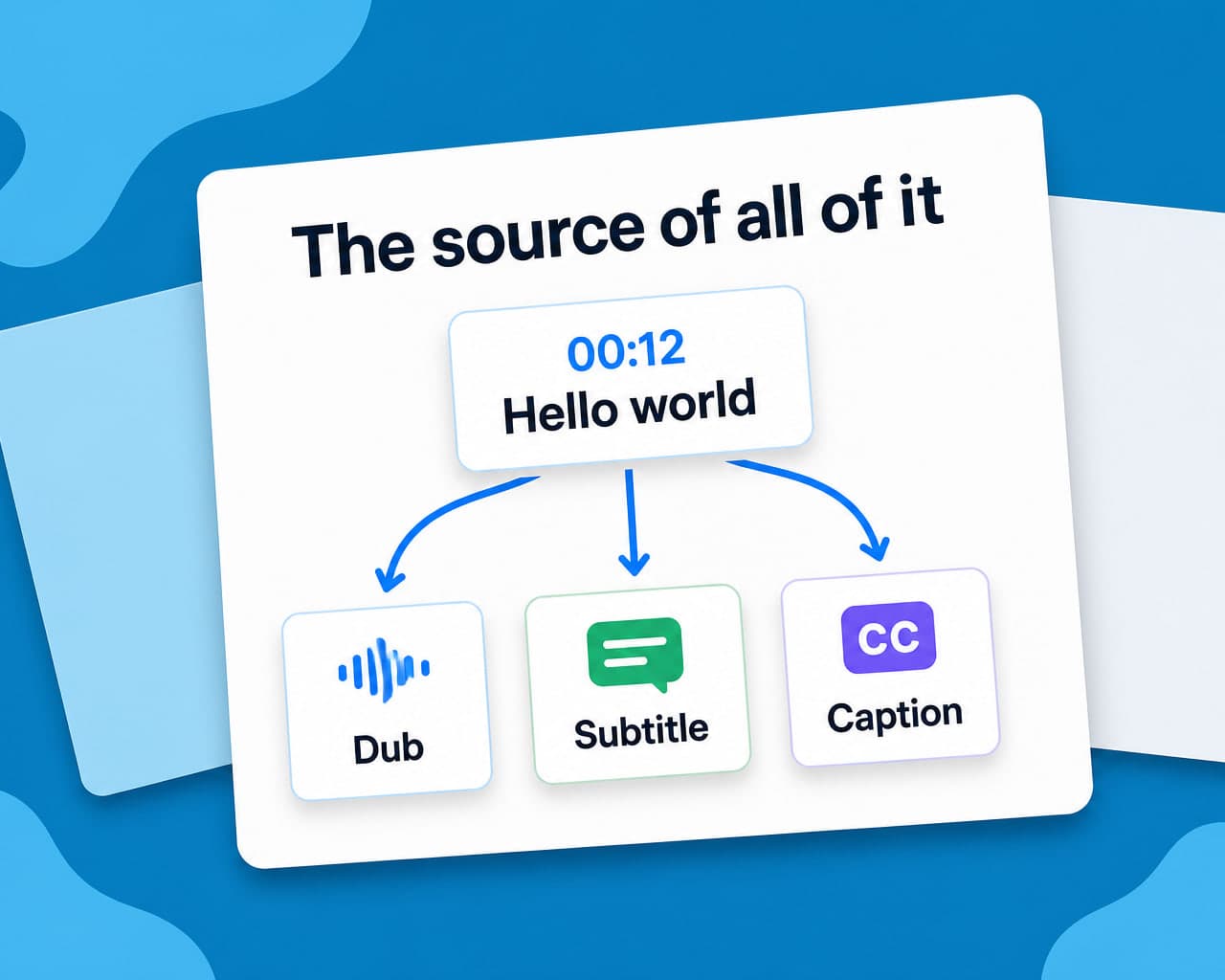
Quick answer — A dialogue list is the timecoded transcript of everything spoken and seen on screen, and it is the source every dubbed and subtitled version is built from. Get it wrong once and the error propagates into every language.
Vitra.ai Universe handles the dub, the captions and the artwork around them.
One document, every language downstream
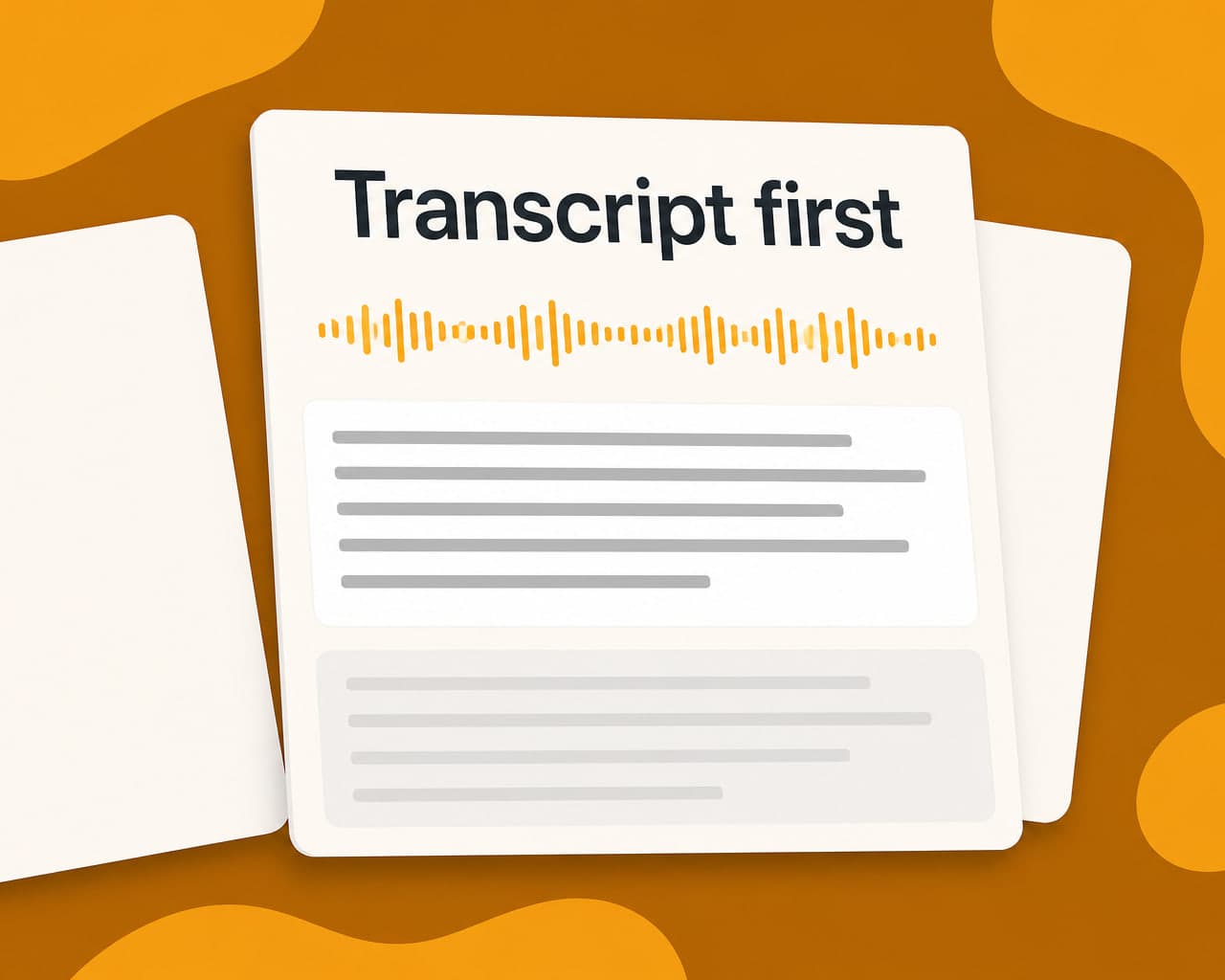
Nothing in localization is translated from the film. It is translated from the dialogue list, which means the list is the single point where an error becomes thirty errors. A good one is boring and complete. A bad one is a transcript.
What actually belongs in it
| Element | Why it is there |
|---|---|
| Timecoded dialogue | Anchors every subtitle and every dub line |
| Speaker labels | Decides voice casting and caption attribution |
| On-screen text | Signs, texts, chyrons — often forgotten entirely |
| Song lyrics, with rights status | Some can be translated, some cannot |
| Idioms and wordplay, annotated | The translator needs the intent, not the words |
| Culturally specific references | Flags what will not travel |
The annotations are the part that separates a useful list from a transcript. A pun that works in English needs a note explaining what it is doing, because the translator's job is to reproduce the effect and they cannot guess the intent from the surface.
On-screen text is the usual omission
Signs, handwritten notes, phone screens, newspaper headlines, location titles.
They carry plot, they are missed by anyone transcribing audio, and they surface weeks later when a territory asks why a subtitle file has a gap where a character clearly read something. Capturing them at list stage costs minutes; capturing them after the dub is booked costs a session.
Formats and handover
Most vendors will accept a spreadsheet or a Word document with a fixed column order, and the format matters less than consistency across episodes.
What matters more is that the timecodes are frame-accurate against a named version of the picture. A list built against an early cut and delivered against a locked one produces drift that nobody notices until a QC pass.
Keep the approved terminology alongside it. Character names, invented place names and recurring phrases should be fixed once and reused, which is what a translation memory does across a series rather than an episode.
From there the list feeds both routes — video dubbing for the audio, and the subtitle pass for the text — and a quality control check against the list is what catches a language version that quietly dropped a scene.
What happens to it next splits two ways: the dubbing script for audio, and a subtitle pass for text.
FAQ
What is a dialogue list? A timecoded document containing every spoken line, speaker labels, and all on-screen text in a programme, with annotations explaining idioms and cultural references. Every dubbed and subtitled version is translated from it rather than from the picture.
What is the difference between a dialogue list and a transcript? A transcript records what was said. A dialogue list adds timecodes, speaker attribution, on-screen text, rights status for songs, and notes explaining what wordplay is doing so a translator can reproduce the effect.
What is most often missing from a dialogue list? On-screen text — signs, phone screens, headlines, location titles. Anyone transcribing from audio misses them, and they usually surface after the dub is booked, when a territory asks about a gap in the subtitle file.
Why do dialogue list timecodes drift? Because the list was built against an earlier cut than the one delivered. Timecodes have to be frame-accurate against a named picture version, or every downstream subtitle and dub line inherits the offset.