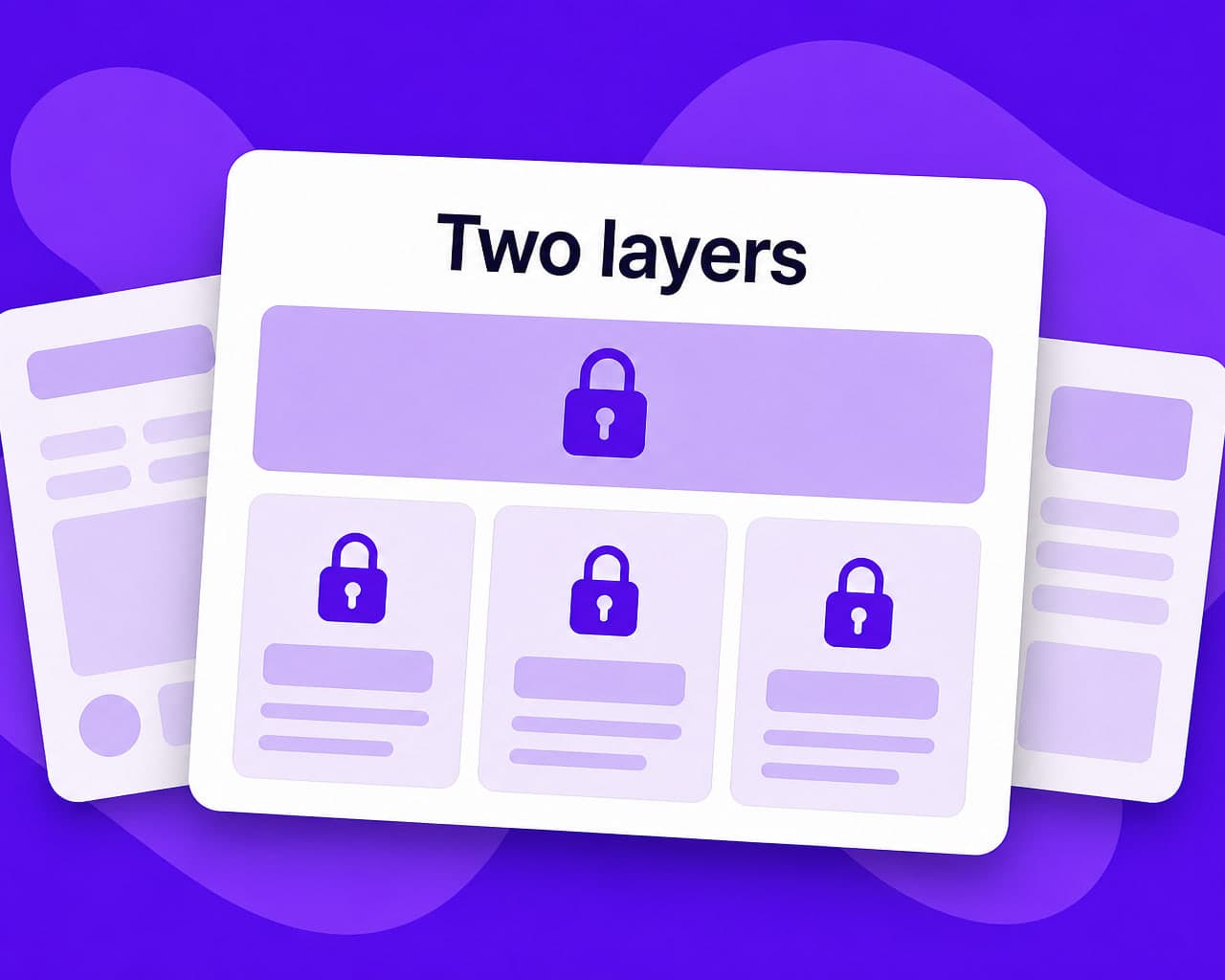
Quick answer — A legal glossary has two layers: firm-wide terms that hold across matters, and matter-specific defined terms that must not leak between them. Keeping those separate is what makes the glossary usable rather than dangerous.
Vitra.ai Universe keeps terminology fixed and every change traceable.
Two layers, kept apart
Firm-wide terminology covers the vocabulary a practice uses consistently — procedural terms, entity types, standard concepts, house style on rendering certain instruments.
Matter-specific terminology is different. Every contract defines its own terms, and those definitions are true only inside that document. Merging the two is the failure that makes legal glossaries dangerous. A defined term from one deal applied to another produces a document that is internally consistent and substantively wrong.
What belongs in the firm layer
| Category | Example of what is fixed |
|---|---|
| Procedural vocabulary | Consistent rendering across matters |
| Entity and instrument types | House choice where several are possible |
| Court and authority names | Official form, or left in source |
| Untranslatables | Terms with no local equivalent, kept and glossed |
| Client-preferred forms | Where a client has a house term |
| Do-not-translate items | Party names, case references, citations |
Concepts with no equivalent in the target system are worth their own note. A common approach is to keep the source term and add a short gloss on first use rather than substitute a local concept that carries different consequences, but that is a decision for the responsible lawyer rather than a default.
Ownership
One owner per language, and it should be someone who reviews the firm's translated work rather than a central function that does not.
Every reviewer correction is a candidate entry: if the same term was fixed twice, it should have been pinned. The quality control record is where that pattern shows up, because it logs what was flagged and why.
Client-specific preferences belong in a client layer that sits above the firm layer and below the matter layer, so a client's house term wins without leaking to other clients.
Pinning, not publishing
A glossary that has to be consulted gets skipped under deadline, and legal work runs on deadlines.
Entries pinned in translation memory cannot be overwritten by a fuzzy match, which is what turns a decision into something the pipeline enforces — the same mechanism described in glossary management, applied where the cost of drift is higher.
Version it alongside the matters it governs, because a question about why something was worded a particular way arrives years later, and the answer is a glossary version that still has to exist.
Contract defined terms stay with their contract. The wider discipline is brand consistency across languages.
FAQ
What are the two layers of a legal glossary? Firm-wide terminology that holds across matters, and matter-specific defined terms that are true only inside one document. Merging them produces work that is consistent and substantively wrong.
How should untranslatable legal concepts be handled? Commonly by keeping the source term and adding a short gloss on first use, rather than substituting a local concept that carries different consequences. The responsible lawyer decides, not the pipeline.
Who should own a legal glossary? One owner per language, and someone who actually reviews the firm's translated work. Every repeated reviewer correction is a candidate entry that should have been pinned already.
Why pin terms rather than publish a glossary? Because a glossary that must be consulted gets skipped under deadline. A pinned entry cannot be overwritten by a fuzzy match, so the decision is enforced rather than recommended.