Quick answer — Insurance video subtitles matter because social and in-app video autoplays without sound, and because accessibility rules treat captions as a requirement. Use a sidecar caption file rather than burning text into the frame.
Video dubbing generates subtitles and dubbed audio from the same source.
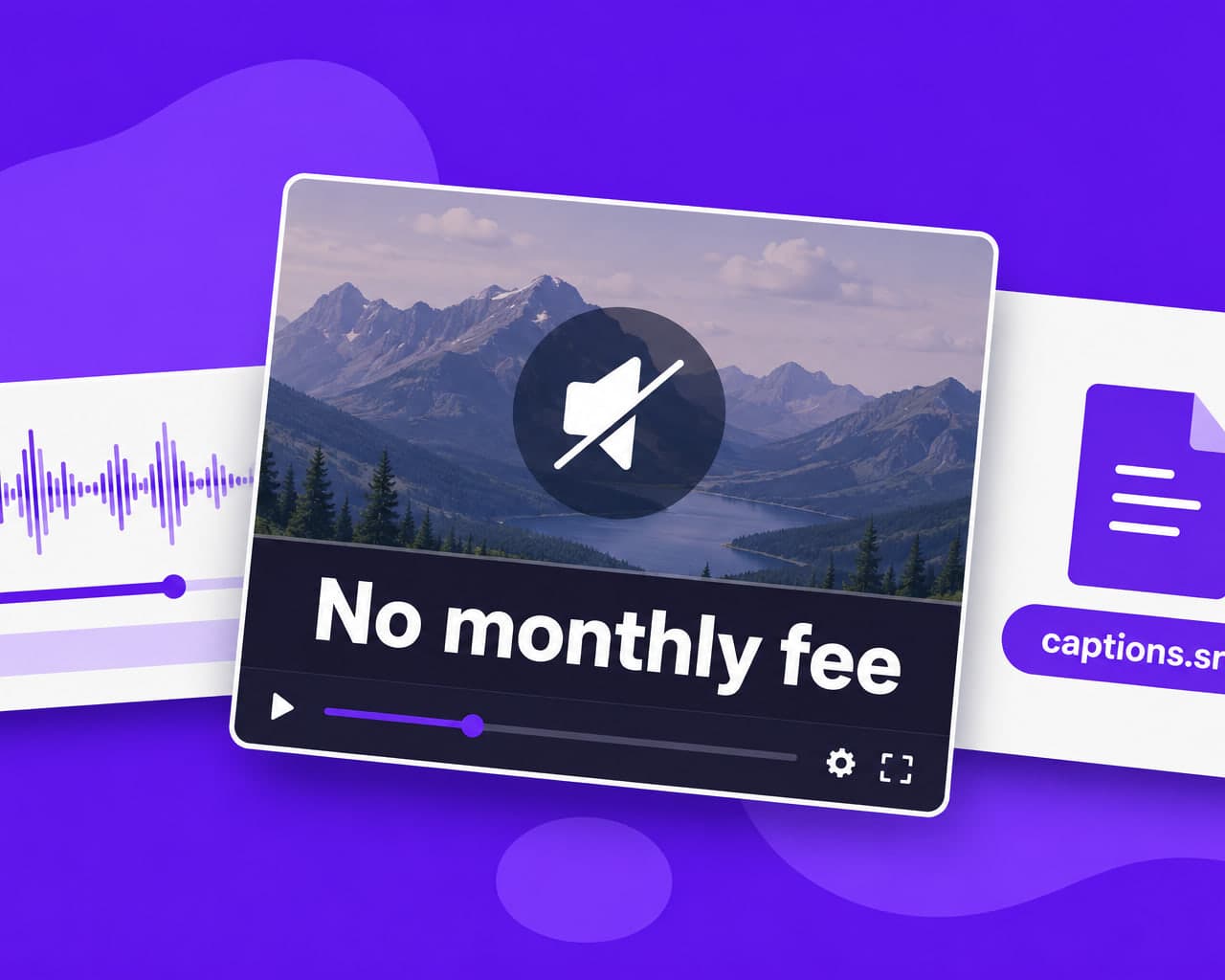
Muted is the default
Video in a feed autoplays silently. So does most in-app video and anything on a screen in a branch or broker office. An insurance explainer that only works with audio is one most people scroll past.
Burned in versus sidecar
Burning captions into the frame is easy and costs three things.
| Burned into the frame | Sidecar caption file |
|---|---|
| Not machine readable, invisible to search | Indexable transcript |
| A text fix means re-rendering | A text fix is a file edit |
| One language per rendered file | Several tracks, one video |
| Cannot be resized by the viewer | Respects accessibility settings |
That last row is the compliance one. Accessibility guidance generally expects captions the user can control, and a picture of text controls nothing.
Accuracy matters more here than elsewhere
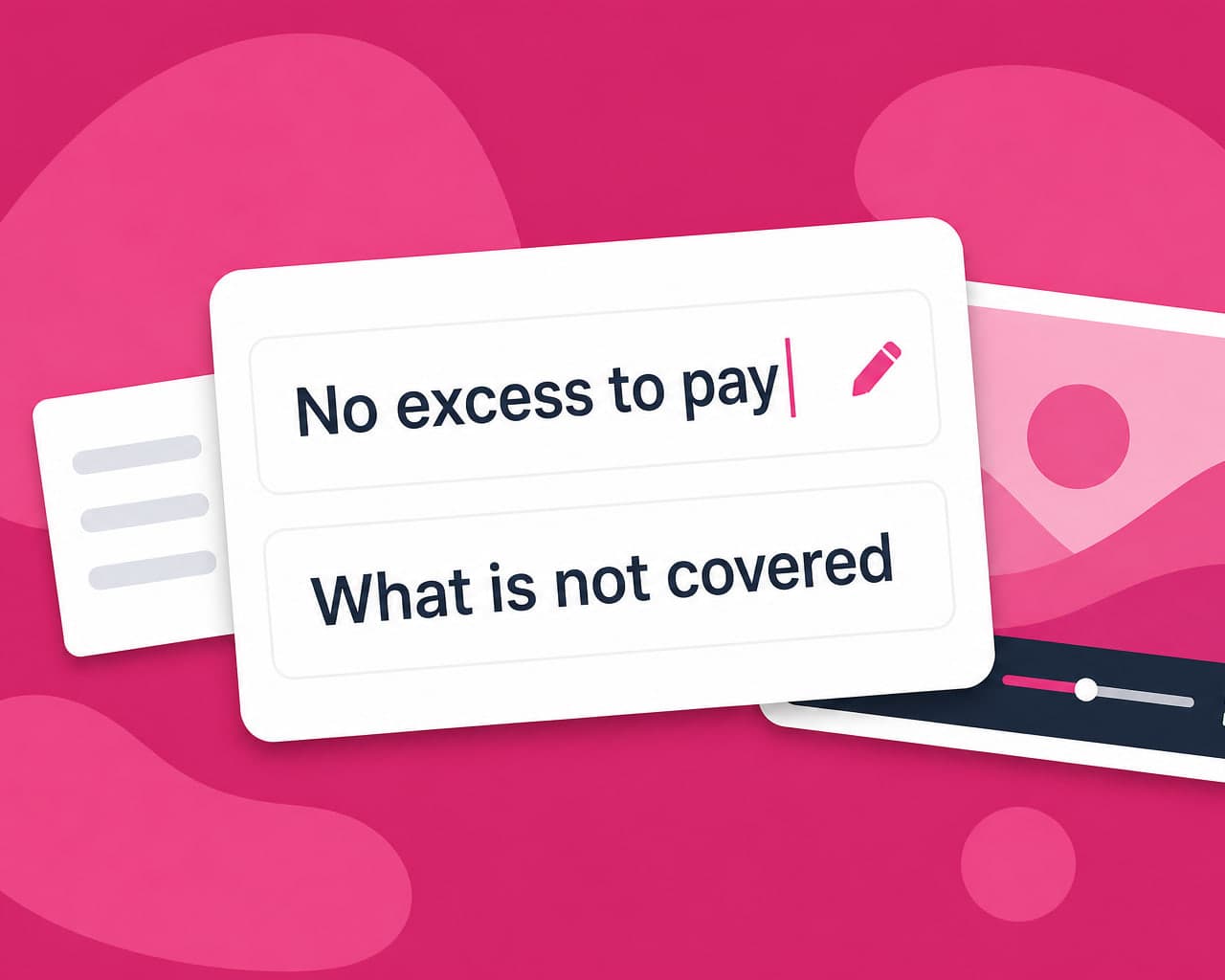
An auto-generated caption that turns "no excess" into "no access" is a small error in most industries. On an insurance product video it is a statement about cover, sitting on screen in writing.
Insurance vocabulary is exactly where generic speech recognition degrades — product names, statutory terms, currency figures, "indemnity", "subrogation". A glossary pass fixes most of it, and generating captions from the same source as the dubbed audio stops the two saying different things when the script changes.
The reach argument nobody makes
A caption file is a transcript: text, in the market's language, describing your product. It is the only part of a video a search engine can read, and insurers publish a lot of video that is currently invisible to search.
Where the accessibility obligation bites
Insurance is explicitly in scope for European accessibility rules, and captions are among the most visible requirements. It is also one of the cheapest to satisfy, which makes leaving it undone hard to explain.
Where to start
If those videos are still English-only, dubbing is the next step, and producing at scale is how you get more of them. Add sidecar captions to the videos already embedded on product pages. No new production, and it is the cheapest indexable content an insurer has sitting unused. Quality control on the caption file catches the terminology errors before they publish.
FAQ
Why do insurance videos need subtitles? Because much of it plays in places without sound - a broker's office, a bancassurance counter, a feed. Insurance video also gets watched by someone helping a relative, often on a shared device where audio is not an option.
Should captions be burned in or a separate file? A separate file, and insurance has an extra reason. Captions here get corrected more often than most, because a benefit figure or a statutory term changes - and a sidecar file is a text edit where a burned-in caption is a full re-render.
Why are caption errors riskier for insurers? Because an error becomes a written statement about cover. Speech recognition degrades on statutory terms and product names, so no excess turning into no access is a compliance problem rather than a typo.
Do subtitles help an insurer's search visibility? Yes, and insurers have more of it sitting unused than most. Product explainers, claims walkthroughs and adviser training are all published as video with no text equivalent, which is invisible to search in every language.