Quick answer — AI video for insurers scales on reuse, not on filming more. Output rises when one master is reused across languages and product lines, and when approval moves to the script so the same compliance review does not repeat for every rendered version.
Video creation covers the reuse side and video dubbing the language axis.
Filming was never the constraint
Ask an insurance marketing team why they publish so little video and the answer is rarely camera availability. It is the queue: brief, legal, compliance, product sign-off, a benefit check, then a shoot day everyone attends. A second shoot day does nothing to that. Removing a review round does.
Two multipliers that need no camera
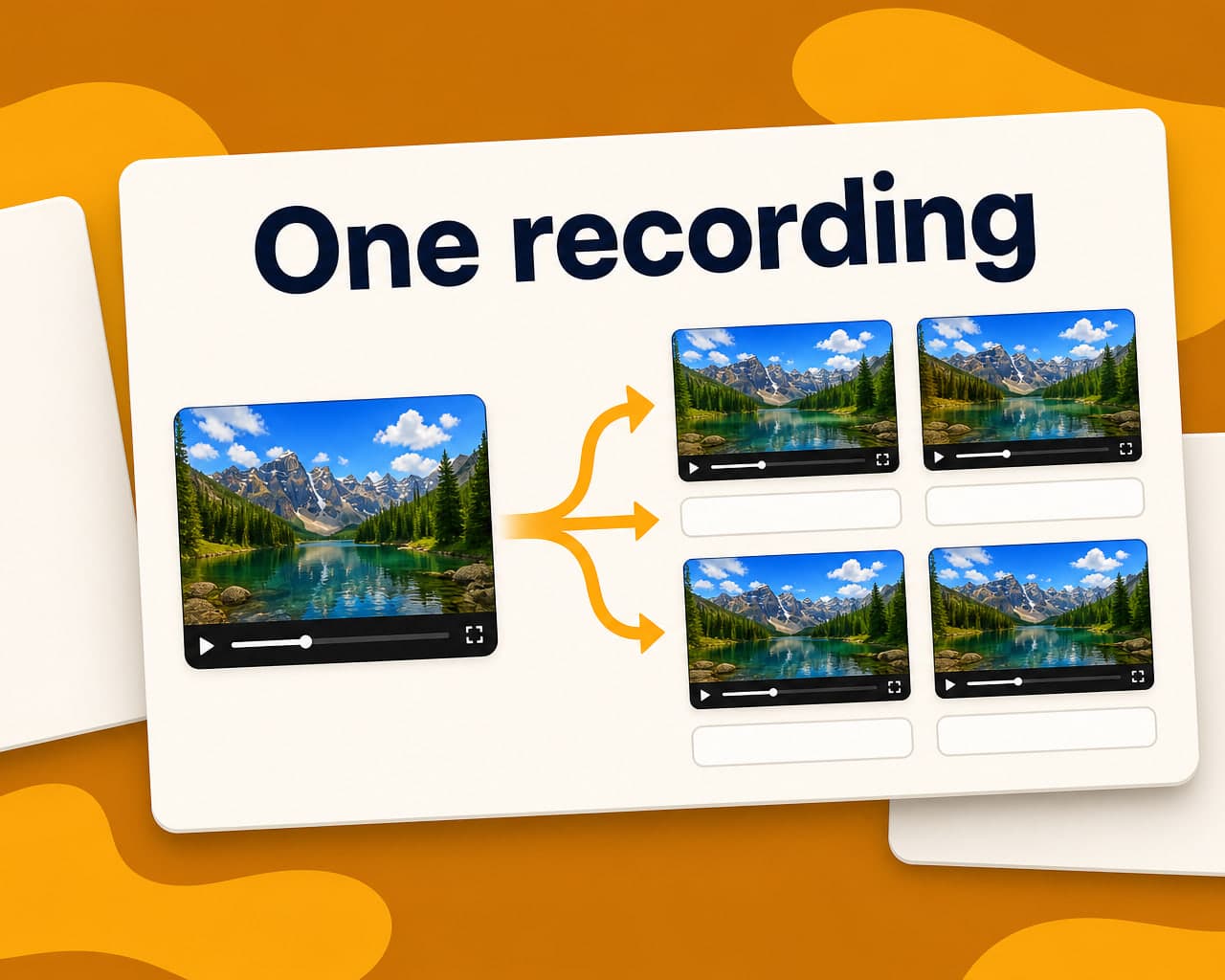
One master film, dubbed, becomes nine assets — production was paid once and each extra language costs a fraction of it. Insurance explainers also share structure: how a waiting period works, how to claim, what an excess is. The same recording with a different opening and limit serves a different product line.
| Approach | Assets from one shoot |
|---|---|
| One film per product | 1 |
| Dubbed into nine markets | 9 |
| Nine markets, three product variants | 27 |
None of the third row involves booking a studio.
Approve the script, not the render
This is the hinge, and it is where governance and throughput turn out to be the same problem.
If every rendered version goes through full compliance review, review cost scales with output and the whole thing seizes around the fifth asset. Worse, a wrong benefit limit found in a finished video has already been published as a statement about cover — where the same error caught in the translated script is a text edit taking minutes.
So the regulated fields get locked at the script: benefit limit, excess, waiting period, exclusion. Variants inherit an approval instead of queuing for a new one, which is also what makes video personalization safe to use at all.
Settle these before the first render
Where is the media processed? A brand film is low sensitivity. An internal module naming systems, controls and claim thresholds is not, and nor is anything featuring an identifiable adviser or customer.
Do you have consent for the voice? If a named executive or adviser's voice is cloned, written consent covering the use, the languages and what happens when they leave is not optional.
Customer footage is its own category. Testimonials and claims stories show real people describing real events, so dubbing that footage changes what someone appears to say about their own claim. It needs its own policy, not a footnote to the executive one.
What not to scale
Nine languages of a video nobody watched in English is nine times nothing. Insurance has a specific version of this trap: more brand video while the claims explainer stays in one language. Multiply the asset that answers a question, not the one that states a positioning.
Where to start
Find the explainer that generated the fewest follow-up calls last year. Dub it into two markets and build two product variants — four new assets, no shoot, one approval. Use it to test the contract answers rather than the output quality, because output rarely blocks a rollout and procurement does.
FAQ
Why do insurers produce so little video? The approval queue rather than production capacity. Brief, legal, compliance, product sign-off and a benefit check all precede a shoot day everyone has to attend, and adding shoot days does nothing to that sequence.
How does compliance approval scale with insurance video volume? Badly, if every rendered version needs full review - the programme seizes around the fifth asset. Locking benefit limits, excesses and exclusions at the script lets every variant inherit one approval.
Is dubbing customer testimonial footage different from other video? Materially. It changes what a real person appears to say about their own claim, which is a different consent question from a paid spokesperson and deserves its own written policy.
Which insurance video should be scaled first? The one that answers a question rather than states a positioning. Producing more brand video while the claims explainer stays in a single language is the specific trap insurers fall into.