Quick answer — Write a translation style guide as decisions a team can apply: who the reader is, how formal the language should be, which regional conventions to follow, and what good wording looks like. Examples are more useful than a page of adjectives.
Translation style guides in Vitra TMS bring that guidance into the content workflow.
Describe the reader before the tone
“Warm but authoritative” is a reasonable brand ambition. It does not tell a translator how to address a customer in German, whether a help article should use contractions, or how a date should appear in a booking confirmation.
Start with the reader and the job. A first-time customer setting up a device needs direct instructions. A procurement team comparing technical specifications needs precision. A policyholder reading an exclusion needs wording checked by the appropriate specialist.
Those uses may share a brand voice without using the same sentence style.
Make the recurring decisions explicit
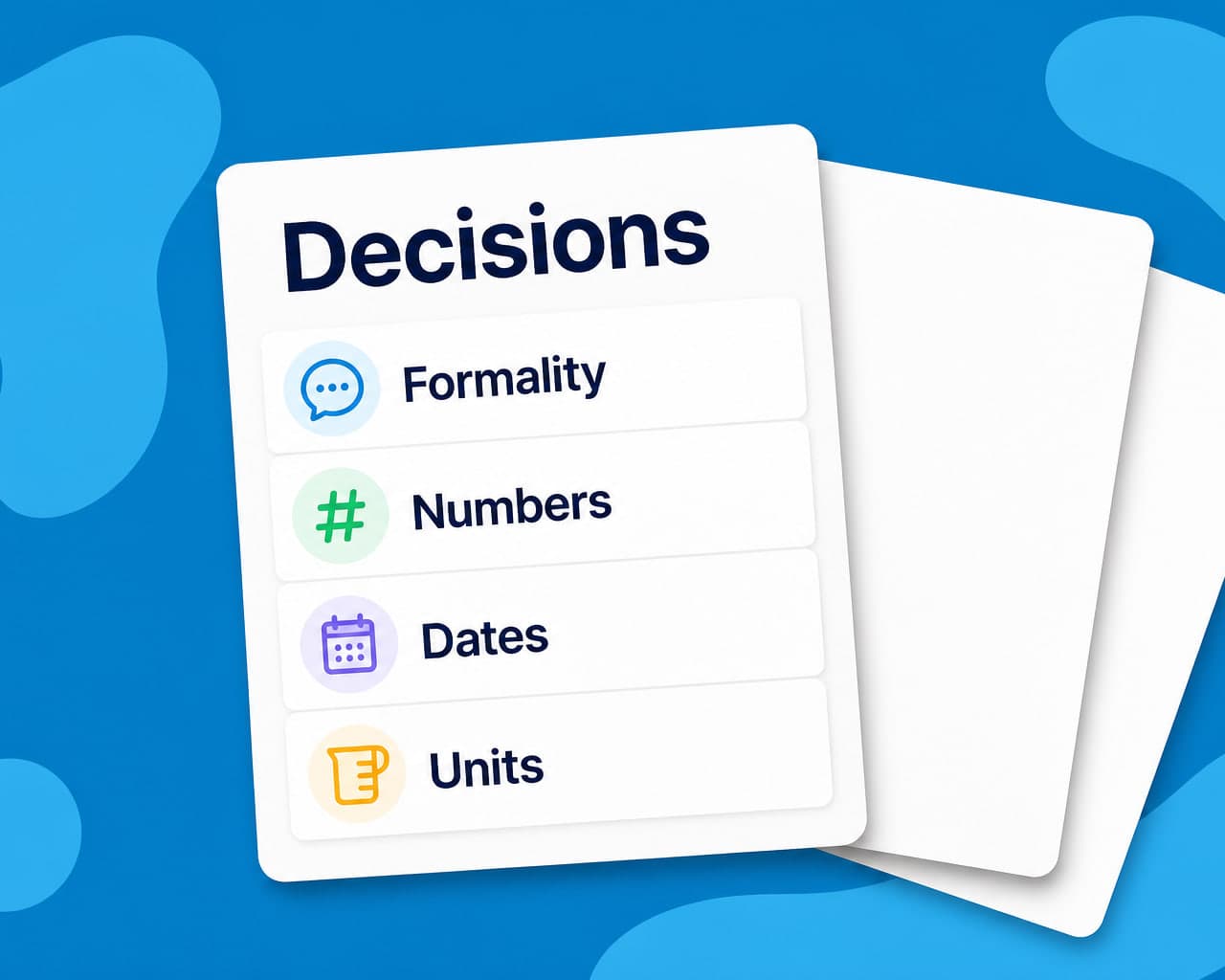
Set decisions by language and market where necessary. The following table is an example of choices a team might make, not a universal writing standard.
| Decision | A usable example |
|---|---|
| Audience | First-time users of the app, not experienced administrators |
| Formality | Use the agreed formal address in German support content |
| Instructions | Prefer a direct action before the explanation |
| Numbers | Use the target market's decimal and grouping conventions |
| Dates | Spell out the month where a numeric date could be ambiguous |
| Units | Use the units required by the market and product documentation |
| Product names | Refer to the approved glossary and do-not-translate list |
| Help content | Keep one clear action per step |
| Claims | Preserve the approved qualification and ask for specialist review |
Currency placement, grammatical formality, and punctuation do not behave identically in every language. Let a qualified local reviewer settle the rule. Do not simply translate the English guide and assume it has answered the local question.
Show the rule in a sentence
Take a hypothetical device setup instruction:
Too vague: “To optimize your experience, please ensure the device has sufficient battery capacity.”
Clearer: “Charge the device before using it.”
The second example makes the action obvious. The context still matters: it is a battery instruction, not a payment notice. A style rule improves readability; it cannot supply missing product meaning on its own.
For each important rule, add a small before-and-after example and explain the change. Use real product content where permission allows, or clearly label an illustrative example. Reviewers can then discuss a sentence against a shared decision instead of guessing what “friendly” means.
Keep the resources distinct
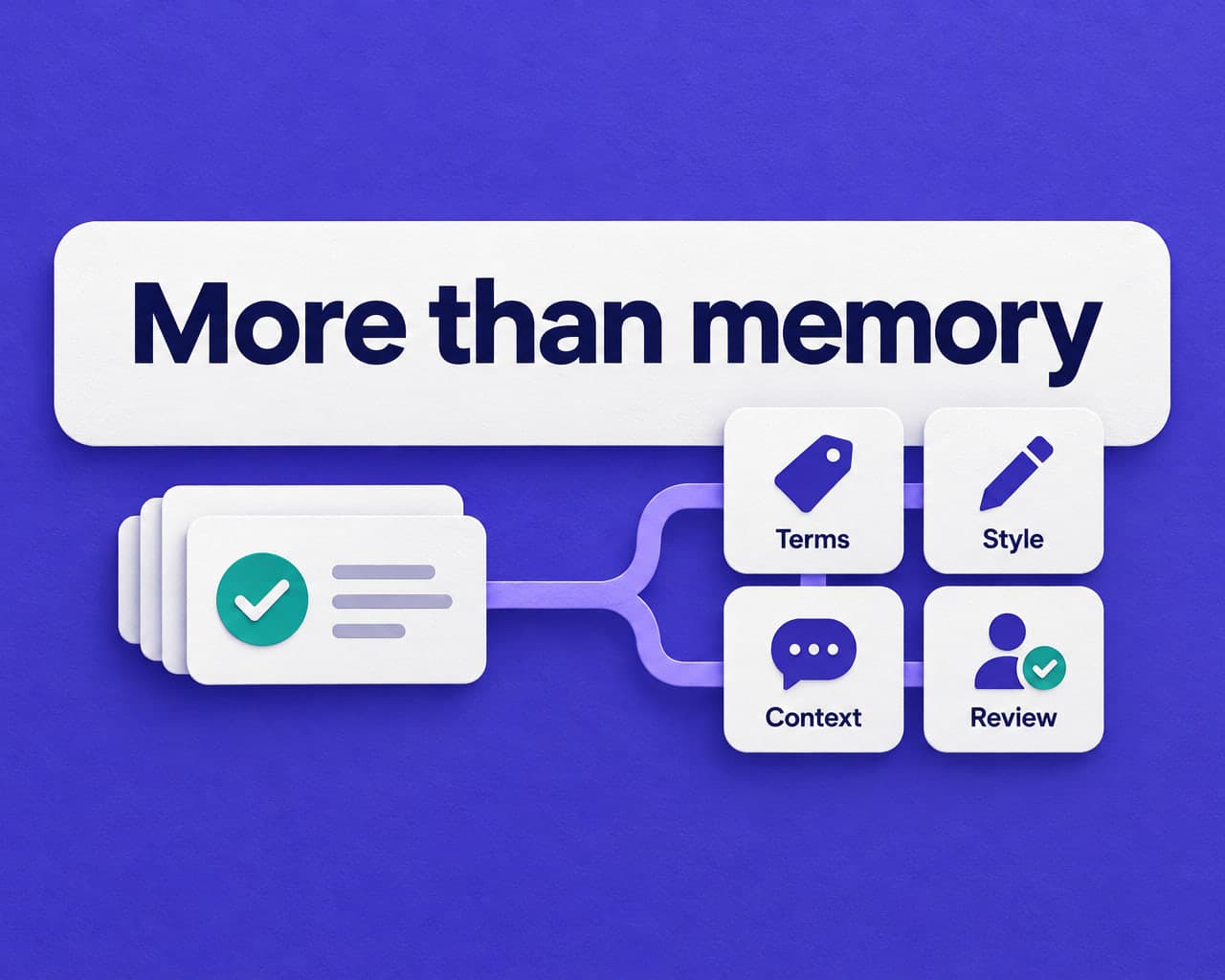
The glossary guide covers agreed names and phrases. Vitra TB organizes concepts, preferred terms, alternatives, and usage. A style guide covers how the final language reads.
Vitra TM keeps reviewed translations. The context explains the product, audience, and intended use behind them.
They belong in one translation workflow, but they are not interchangeable. A correct product name does not make a paragraph natural. A natural paragraph does not prove that a claim is accurate.
Bring an existing guide into the workflow
In Vitra TMS, teams can upload existing style material, work with extracted or manually entered rules, and edit the language guidance. Check the rules before connecting them to a live project.
Extraction is a starting point. A PDF may contain illustrative examples, exceptions, and outdated instructions that should not become universal rules. Have an owner confirm which guidance applies to the relevant language and audience.
Then try it on a small, representative asset: an app screen, a help paragraph, and a short video script. Ask the reviewer whether the guidance helps them make consistent decisions in all three.
Update the guide when a decision changes
Keep the working guide current when the brand changes its tone, the product enters a new market, or a specialist review establishes a necessary exception. Tell the people using it what changed.
That does not mean every old asset should be silently rewritten. Decide which public content needs a refresh, which language versions need another review, and which approved wording should remain available.
The useful result is a guide that people can apply while doing the work—not a document that exists only for a brand presentation.
FAQ
What makes a translation style guide useful?
Specific decisions and examples. Set the audience, formality, regional conventions, and writing rules, then show what a suitable sentence looks like. A reviewer should be able to explain a correction by referring to the guide.
How long should a translation style guide be?
Keep the working guide short enough to use during a real job. Start with a few pages covering the decisions that matter, and link to detailed specialist guidance when needed. Length is less important than clarity, ownership, and practical examples.
What is the difference between a style guide and a glossary?
A style guide explains how the content should sound and read. A glossary sets wording for names and phrases. Terminology resources explain concepts, while translation memory keeps reviewed translations for reuse.
Can Vitra TMS use an existing style guide?
Yes. Teams can bring an existing guide into Universe and work with editable language rules, including regional guidance. Review the extracted or entered rules before using them, and connect the relevant guide to the translation resources.