Quick answer — Compare translation memory by the work it helps your team finish. Look at contextual reuse, the content formats involved, terminology, review, and migration—not simply whether the vendor describes the system as traditional, multimodal, or AI-first.
Vitra TMS brings adaptive memory into a context-first content workflow.
Keep what your current memory already does well
An established translation memory can contain years of useful, reviewed language. That is an asset, not something to discard because a new platform has a different label.
Many current localization systems support context, websites, software, AI, and automation. Their precise strengths differ. A document-heavy localization team and a team producing campaign videos may need different surrounding workflows even if both use translation memory.
The right evaluation starts with the job that is difficult today.
Compare the complete workflow
| Question | What to test |
|---|---|
| Can reviewed wording be reused? | A real source update, with the same target languages and reviewer |
| Does the job include enough context? | Product, audience, subject, and intended surface |
| Can terminology and style travel with it? | The same agreed term and writing rule in several formats |
| Can the team review the finished result? | The document, app screen, design, or spoken video—not just a text preview |
| Are approval states clear? | Whether draft and reviewed wording remain distinguishable |
| Can existing resources move safely? | A small memory import and separate terminology check |
| Does the next step stay connected? | The handoff from language work to creation, adaptation, or delivery |
Use the same content and acceptance criteria for each platform. Different sample assets can make a weak comparison look persuasive.
A campaign is a useful test
Take one approved product claim, a short explanation, and a brand term. Use them in a landing page, a design, and a video script.
In a disconnected workflow, each specialist may rebuild the brief or search a different folder for the approved wording. The problem is not necessarily the memory itself; it can be the handoff around it.
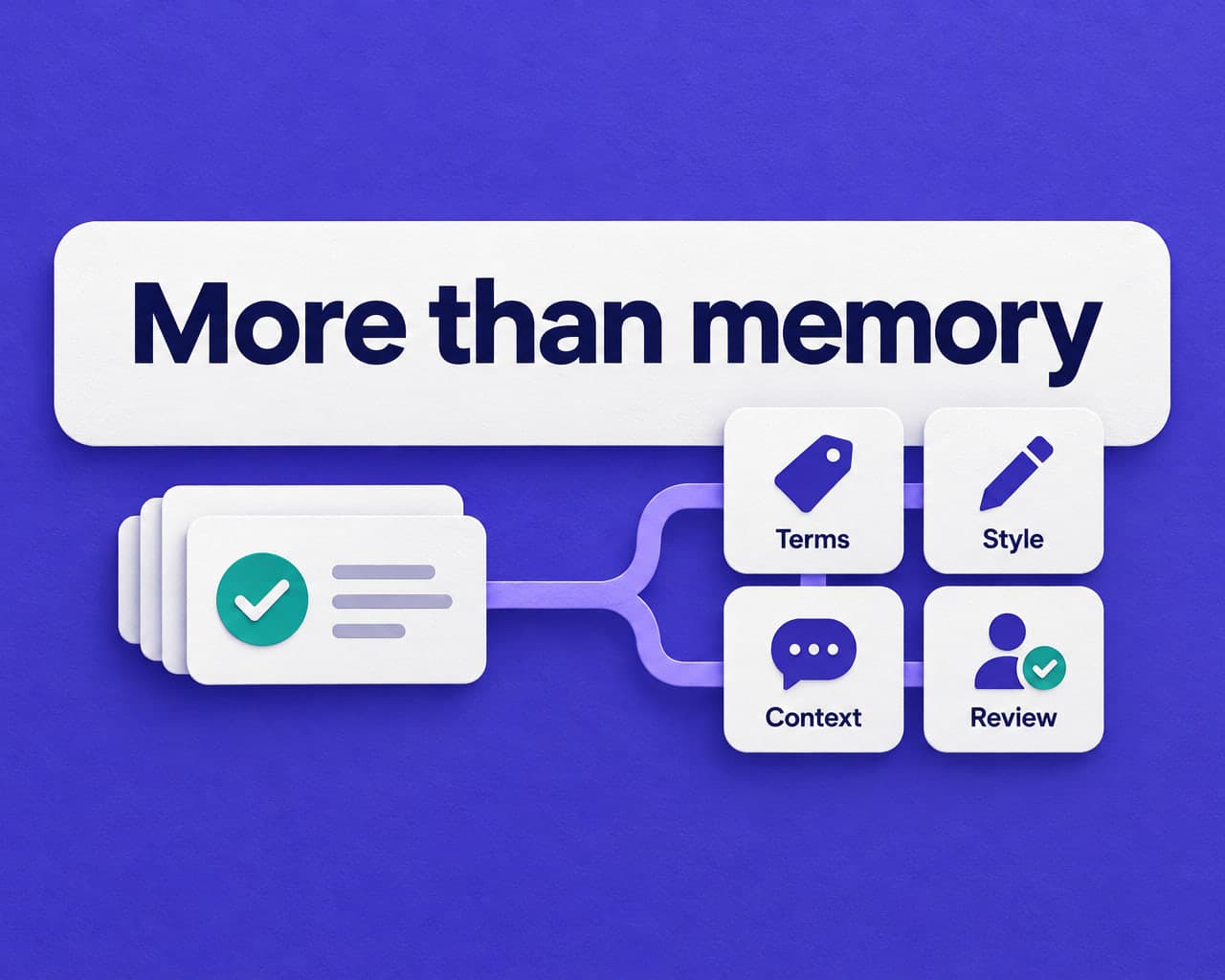
Vitra TM is the adaptive memory inside Vitra TMS. Contextual translation, terminology, glossary, and style guidance sit alongside it. Vitra Flow connects repeatable content steps and human approval inside Universe.
Ask the reviewer where the context was available, where the language decision carried forward, and where they still needed to intervene.
Consistency does not mean identical sentences
A subtitle has a reading-time constraint. An app button has a space constraint. A legal clause may need wording approved by a specialist. Reusing the same sentence everywhere is not automatically the correct result.
Keep the product meaning and agreed terminology consistent. Make necessary variants explicit, and review the finished surface. The multimodal memory guide explains that distinction with concrete examples.
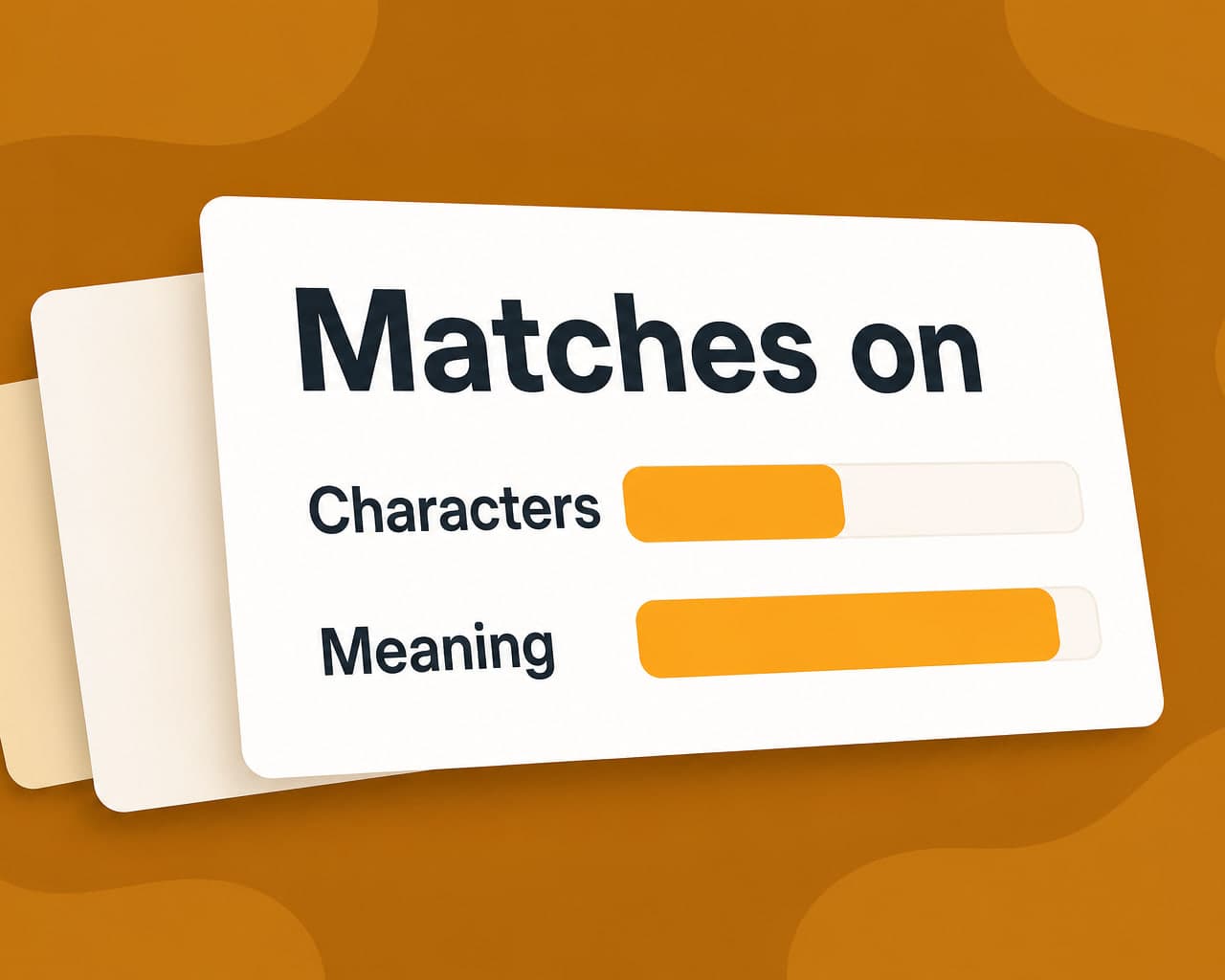
Context also prevents inappropriate reuse. “Charge” on a payment statement is not the same job as “charge” in a battery instruction, even when the source word matches.
Pilot the migration before moving the archive
Start with a small TMX sample of language resources you actually use. Include revised wording, product-specific terms, and a few examples that need careful review.
Check language codes, import completeness, review status, and how the team finds the resource during a job. Terminology, glossary, and style files may require different import workflows; do not assume that moving memory moves every resource.
Keep a recoverable copy of the original assets. Confirm export requirements and the integrations the rollout depends on, then decide whether to migrate, run alongside the existing platform, or keep the present setup.
A worthwhile pilot can conclude that the current system remains the better fit for a particular job.
Choose against your actual shortlist
Provider comparisons should identify strengths, sources, and a test—not invent pricing or imply that an unlisted feature does not exist.
The Vitra comparison collection includes established TMS and localization platforms, with a specific pilot for each. For example, a desktop-heavy translation team should consider different criteria from a team localizing app releases or dubbing campaign footage.
That is the practical difference between buying a label and choosing a workflow.
FAQ
What should we compare in a multimodal translation memory?
Compare how reviewed wording, terminology, context, and approval reach the content formats your team uses. Test the complete job rather than assuming a traditional or AI-first label tells you what a platform supports.
Are traditional TMS platforms limited to document translation?
No. Many established platforms support websites, software localization, AI, context, and automation. Check each provider's current capabilities and your own integration requirements instead of treating the category as one identical product.
What does context add to translation memory?
It helps explain when reviewed wording is suitable: the product, audience, domain, and intended use. A payment phrase and a battery instruction can share an English word while requiring different target-language wording.
Can existing translation memories be migrated?
Vitra TM supports imports including TMX. Start with a representative sample, check language codes and review status, and test terminology and style resources separately. Confirm export and connector requirements before a full migration.