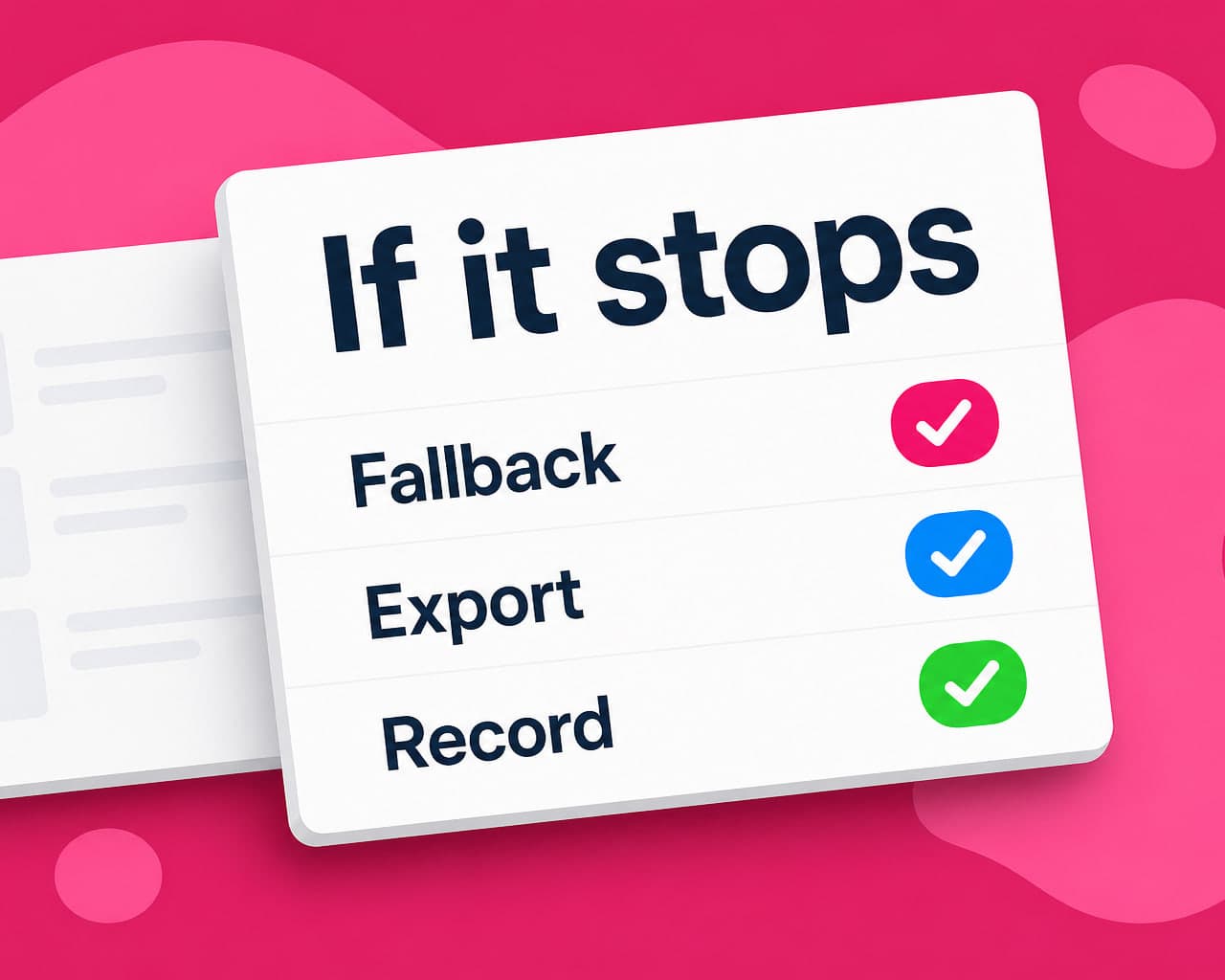
Quick answer — Localization continuity comes down to three things: a fallback provider per workflow, a translation memory you can export, and an audit record of what was approved. Losing the memory is the only truly unrecoverable failure.
Vitra.ai Universe runs multi-tenant, in a dedicated region, or fully air-gapped.
Rank the failures before planning for them
Not all outages are equal, and treating them equally produces a plan nobody follows.
| Failure | Effect | Recovery |
|---|---|---|
| One model provider down | That workflow stalls | Route to another provider |
| Platform region unavailable | Publishing pauses | Failover region |
| Vendor relationship ends | Migration project | Export and re-platform |
| Translation memory lost | Years of approved language gone | None |
| Reviewer unavailable | Risk-gated content waits | Widen the reviewer pool |
Only one row has no recovery. That ordering should drive the plan, and usually does not — most continuity documents spend their length on uptime and none on the asset.
Provider fallback is a configuration, not a project
Being able to choose which provider serves which workflow is ordinary operational hygiene, and it is also the continuity answer: when one provider degrades, the workflow routes elsewhere.
Test it before you need it. A fallback nobody has exercised is a hypothesis.
The output will differ slightly between providers, which is exactly why quality control sits after generation rather than being trusted to any single model.
The memory is the asset
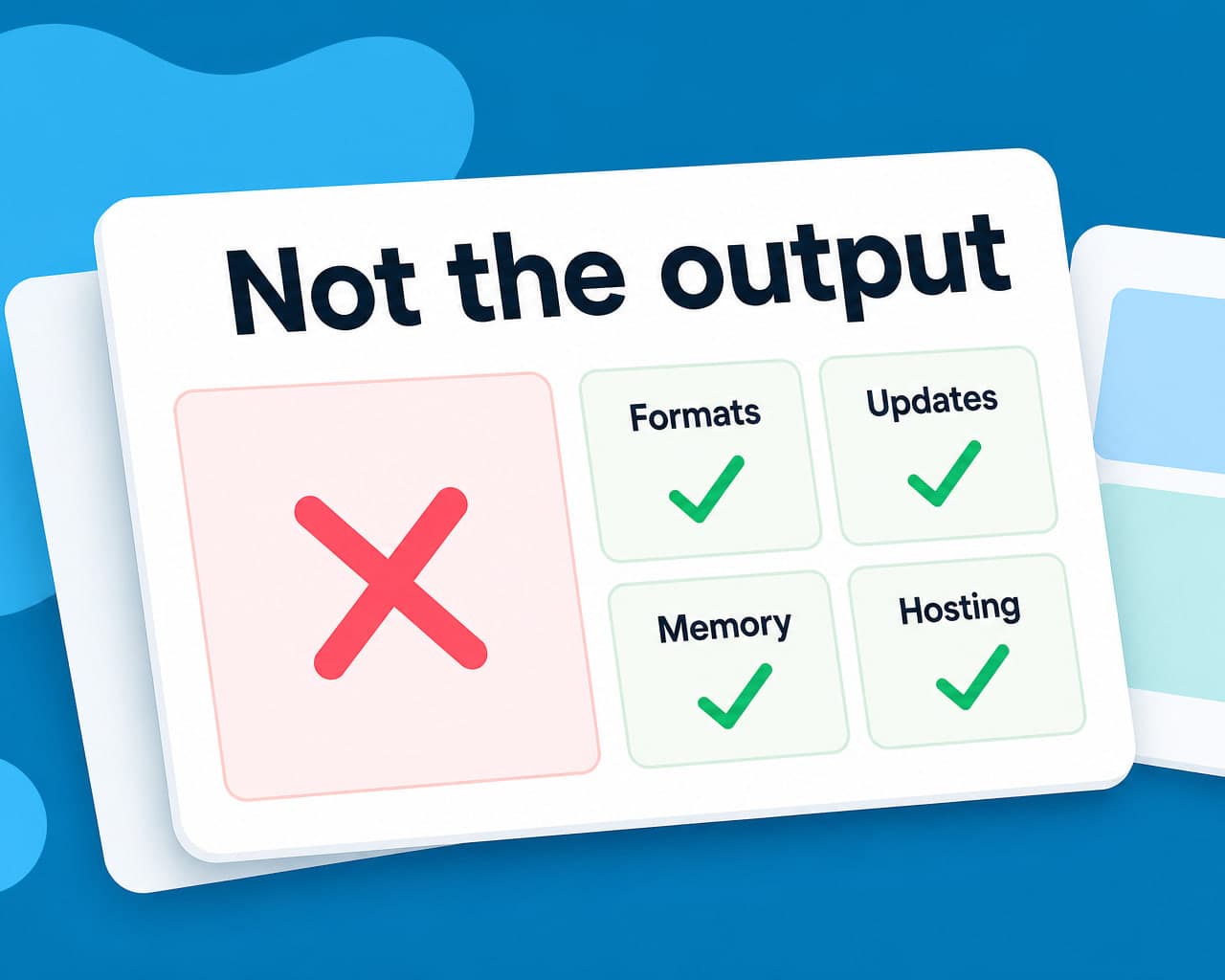
Everything else is replaceable. Models improve and get swapped, platforms get migrated, teams change. Translation memory is the accumulated, reviewer-corrected language of your organization, and it took years of real work to build. Losing it means paying to re-approve wording that was already settled.
So the continuity requirement is concrete. Regular exports in a portable format, held somewhere you control, tested by actually reimporting one. An export you have never restored is a backup in the same sense that an untested fallback is a plan.
Keep the evidence with the content
An append-only usage and approval record answers the question that arrives after an incident: what was published, in which language, approved by whom, against which version of the glossary.
That record is also what makes a migration survivable, because the next platform inherits decisions rather than starting from a pile of files with no provenance.
Store it where the content lives, for the reasons set out in data residency. Alerts have to be ready before the incident, not during it — emergency alert translation.
FAQ
What is the least recoverable failure in localization operations? Losing the translation memory. Models, platforms and teams are all replaceable, but accumulated reviewer-corrected language represents years of work and rebuilding it means paying to re-approve settled wording.
How should provider outages be handled? By routing each workflow to an alternative provider, configured in advance and actually tested. Output will differ slightly between providers, which is why an independent quality check sits after generation.
How often should translation memory be exported? On a regular schedule, in a portable format such as TMX, stored somewhere you control. Restore one periodically — an export nobody has reimported is not yet known to work.
What record matters after a localization incident? An append-only log of what was published, in which language, approved by whom and against which glossary version. It answers the post-incident question and makes any later migration survivable.