Quick answer — App Store listings are localized per storefront, and the keyword field plus the title and subtitle carry the search weight. Screenshots drive the install decision, and most teams leave them in the source language.
Vitra.ai Universe creates, translates, adapts and publishes from one place.
Localization here is search plus persuasion
Two separate jobs happen on a listing page.
Search: whether your app appears when somebody types a phrase in their language. That is driven by a small number of indexed fields with hard limits. Persuasion: whether they install once they arrive. That is driven almost entirely by the screenshots.
Teams usually translate the description, which is the field that does least of either.
What carries weight
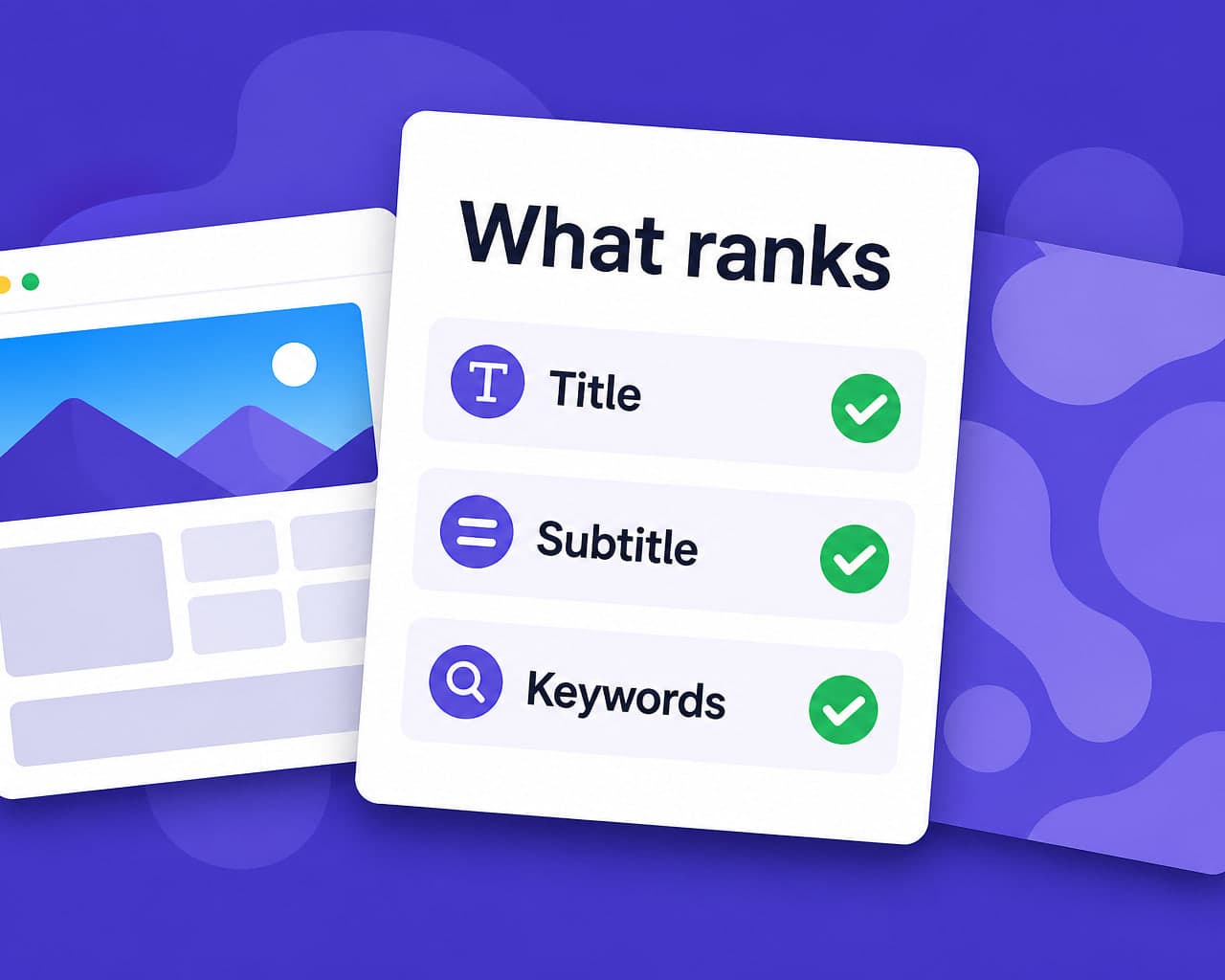
| Field | Indexed | Note |
|---|---|---|
| App name | Yes | Highest weight, very tight limit |
| Subtitle | Yes | Second highest |
| Keyword field | Yes | Not shown to users |
| Description | No | Persuasion, not discovery |
| Screenshots | No | Decides the install |
| Promotional text | No | Editable without review |
The keyword field is the one that rewards research rather than translation. Nobody sees it, so it is purely a list of the phrases people in that market actually type — and translating your English keywords produces the phrases an English speaker would type in another language.
Screenshots are the conversion lever
Most screenshots carry caption text overlaid on the UI, and that caption is usually the only thing a browsing user reads.
Leaving it in English while the description is translated is the most common gap, and it is image translation work rather than a listing task — the caption is pixels.
The device frames and UI inside the screenshot should show the localized app too, or the screenshot is advertising an experience the user will not get.
Storefront-specific rules
Listings are per storefront, and a market may have local requirements about what can be claimed, age ratings, or categories.
Promotional text can be updated without a review cycle, which makes it the right place for anything time-sensitive rather than embedding a date in the description.
Keep the terminology aligned with the app itself through memory, so a feature named one way in the listing is named the same in the UI a user meets a minute later — and see Play Store listings for how the other store differs.
FAQ
Which App Store listing fields affect search? The app name, the subtitle and the keyword field. The description is not indexed for search, which is why translating only the description rarely changes install numbers.
Should App Store keywords be translated? No, researched. The keyword field is never shown to users, so it should contain the phrases people in that market actually type rather than translations of your English keywords.
What drives installs once someone reaches the listing? Screenshots, and specifically the caption text overlaid on them. That caption is often the only thing a browsing user reads, and it is usually left in the source language.
Where should time-sensitive listing content go? In promotional text, which can be updated without a review cycle. Embedding dates or offers in the description means a full review to change them.