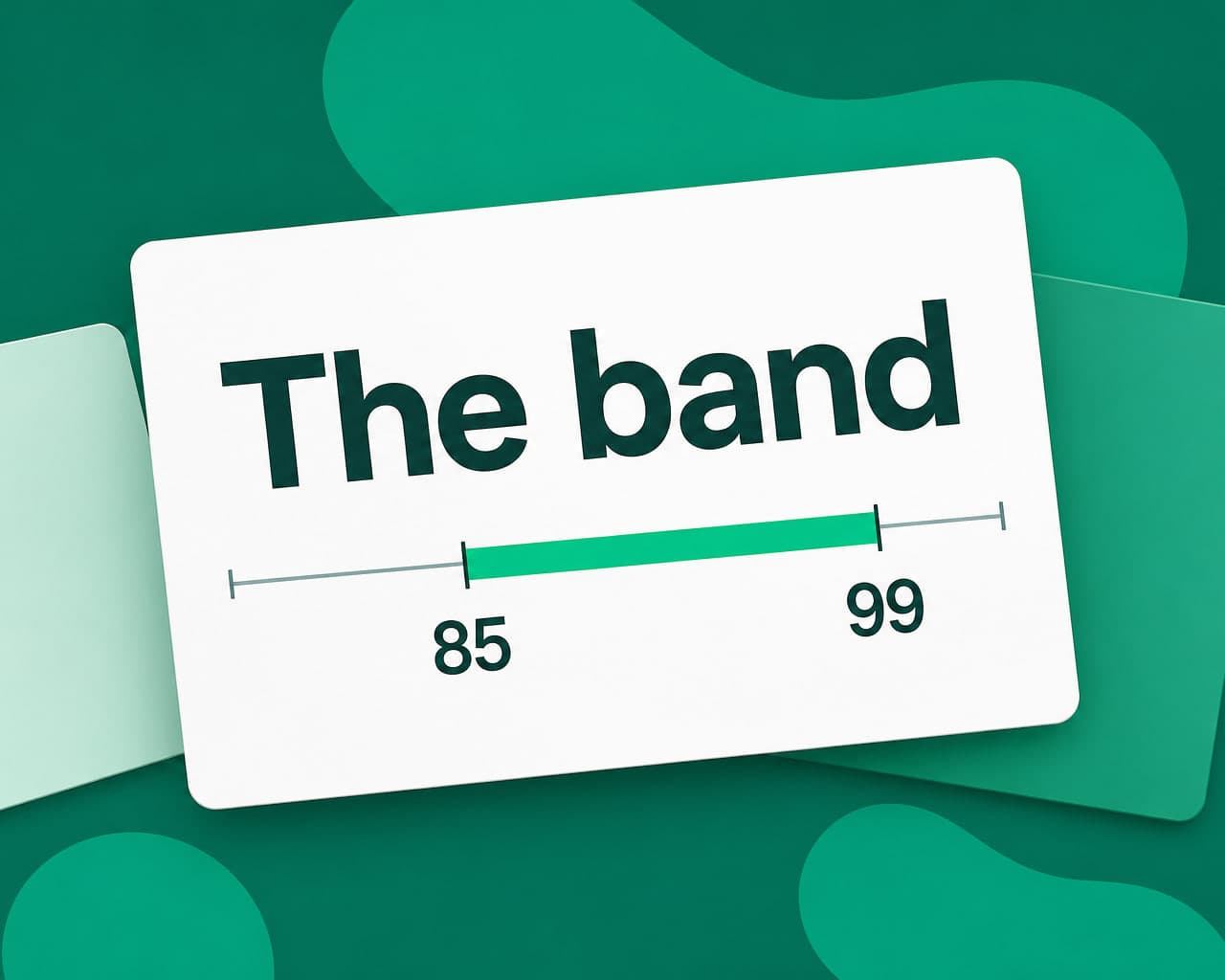
Quick answer — Set the useful fuzzy band between 85 and 99 percent. Above 95 an edit is trivial, between 85 and 94 it is real work worth paying for, and below 85 reviewing the match usually costs more than translating fresh.
Vitra.ai Universe keeps one memory and one quality gate across every format.
What the number actually measures
Character overlap between a new segment and one already in memory. Not meaning, not difficulty — how many characters line up. That distinction explains most of the confusion about where to set the band. A 95 percent match can be a one-word change that inverts the sentence, and a 70 percent match can be the same sentence with a rewritten opening.
The bands, and what each is worth
| Match | What it usually is | Sensible handling |
|---|---|---|
| 100% | Identical segment | Reuse, no review |
| 95–99% | A number, a name, light punctuation | Reuse, quick confirm |
| 85–94% | Genuine edit needed | Pay for the edit, not the segment |
| 75–84% | Reading both to decide | Rarely worth it |
| Below 75% | Coincidental overlap | Treat as new |
The band below 85 is where programmes lose money without noticing. A translator must read the source, read the suggested match, decide what is reusable and edit — which frequently takes longer than translating the sentence outright, while the invoice records a discount.
The 100 percent trap
An exact character match is not always an exact meaning match.
The same string can need different translations in different places: a button label and a heading, a word that is a noun in one context and a verb in another. Context matters and character matching cannot see it.
That is why exact matches on short segments — under about five words — deserve a confirmation step rather than silent reuse. Long segments are safe; short ones are where the false friends live.
What semantic matching changes
It moves work out of the bad band.
A rephrased sentence that scored 70 percent on characters may be a full meaning match, so it gets reused instead of retranslated.
The cascade tries exact, then fuzzy, then meaning, and calls a model only for real gaps — which is covered in agentic translation memory.
Set the fuzzy band anyway. Semantic matching does not remove the need for a threshold, it just means fewer segments fall into the range where a human is paid to compare two sentences and conclude nothing.
Track edit distance on the 85–94 band specifically. If it is climbing, the memory is filling with near-duplicates, and quality control corrections are probably not writing back.
FAQ
What is a good fuzzy match threshold? Between 85 and 99 percent is the useful band. Above 95 percent the edit is trivial, and below 85 percent a translator usually spends longer comparing the match to the source than translating fresh.
Why can a 100 percent match still be wrong? Because character matching cannot see context. The same string may need different translations as a button label and as a heading, so short exact matches deserve a confirmation step rather than silent reuse.
What does a fuzzy match percentage measure? Character overlap with a segment already in memory, not meaning or difficulty. A 95 percent match can be a one-word change that inverts the sentence, which is why the number alone is a weak signal.
Does semantic matching remove the need for thresholds? No, but it moves work out of the unprofitable band. A rephrased sentence scoring low on characters can be a full meaning match, so fewer segments land in the range where comparison costs more than translating.