Quick answer — Brand voice survives translation when terminology is pinned in a glossary and tone is written down as a brief, both applied at translation time. Reviewers cannot enforce it after the fact, because each reviewer only ever sees one language.
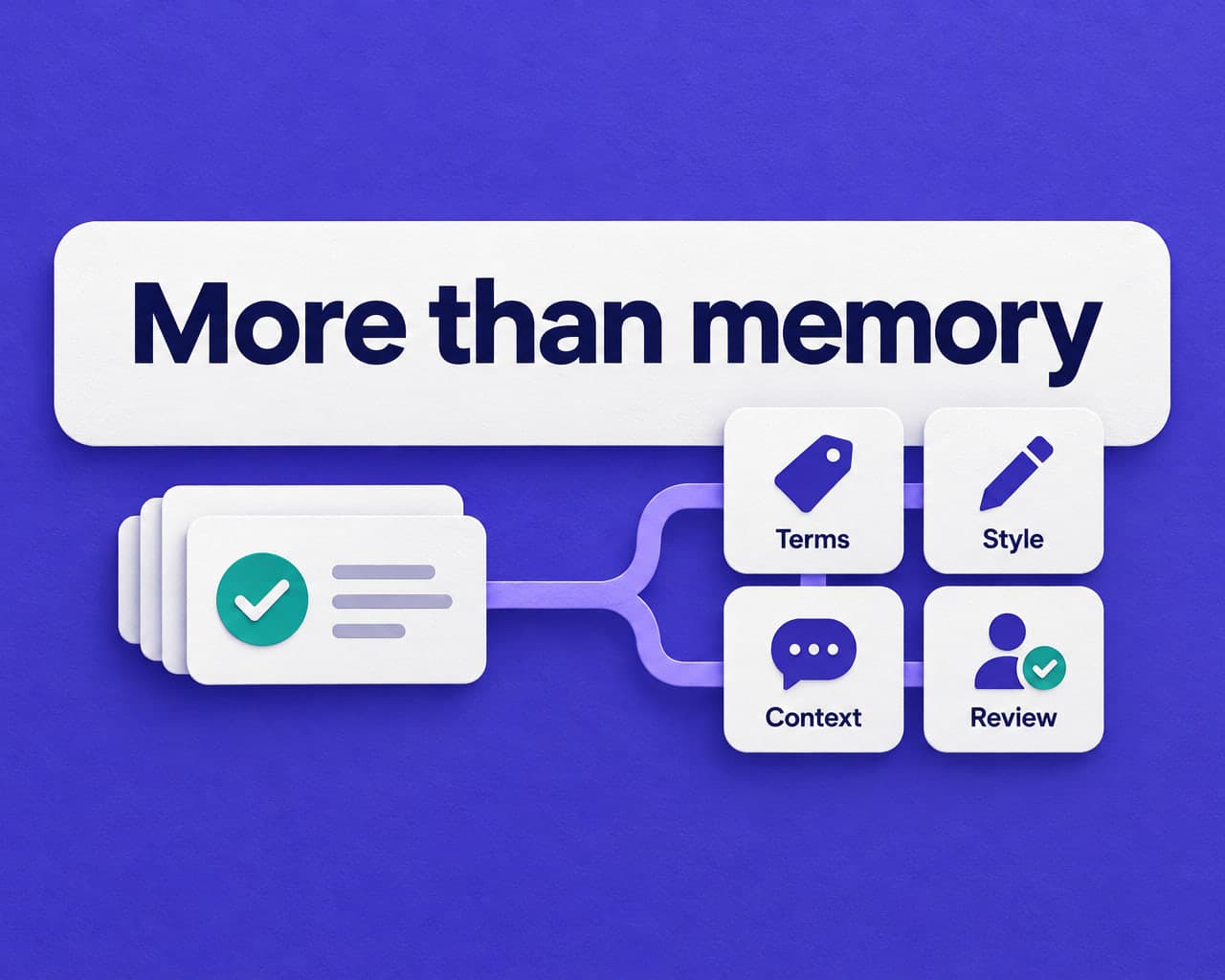
Vitra.ai Universe keeps one memory and one quality gate across every format.
Why reviewers cannot fix this
Ask five in-market reviewers to keep the brand voice consistent and you get five consistent voices.
Each reviewer sees their own language and nothing else. None of them can tell that the German reads formal and corporate while the Spanish reads warm and casual, because none of them is reading both. Consistency across languages is structurally invisible to per-language review. It has to be specified in advance or it does not happen.
The two artifacts that do work
A glossary fixes what things are called. A tone brief fixes how they are said.
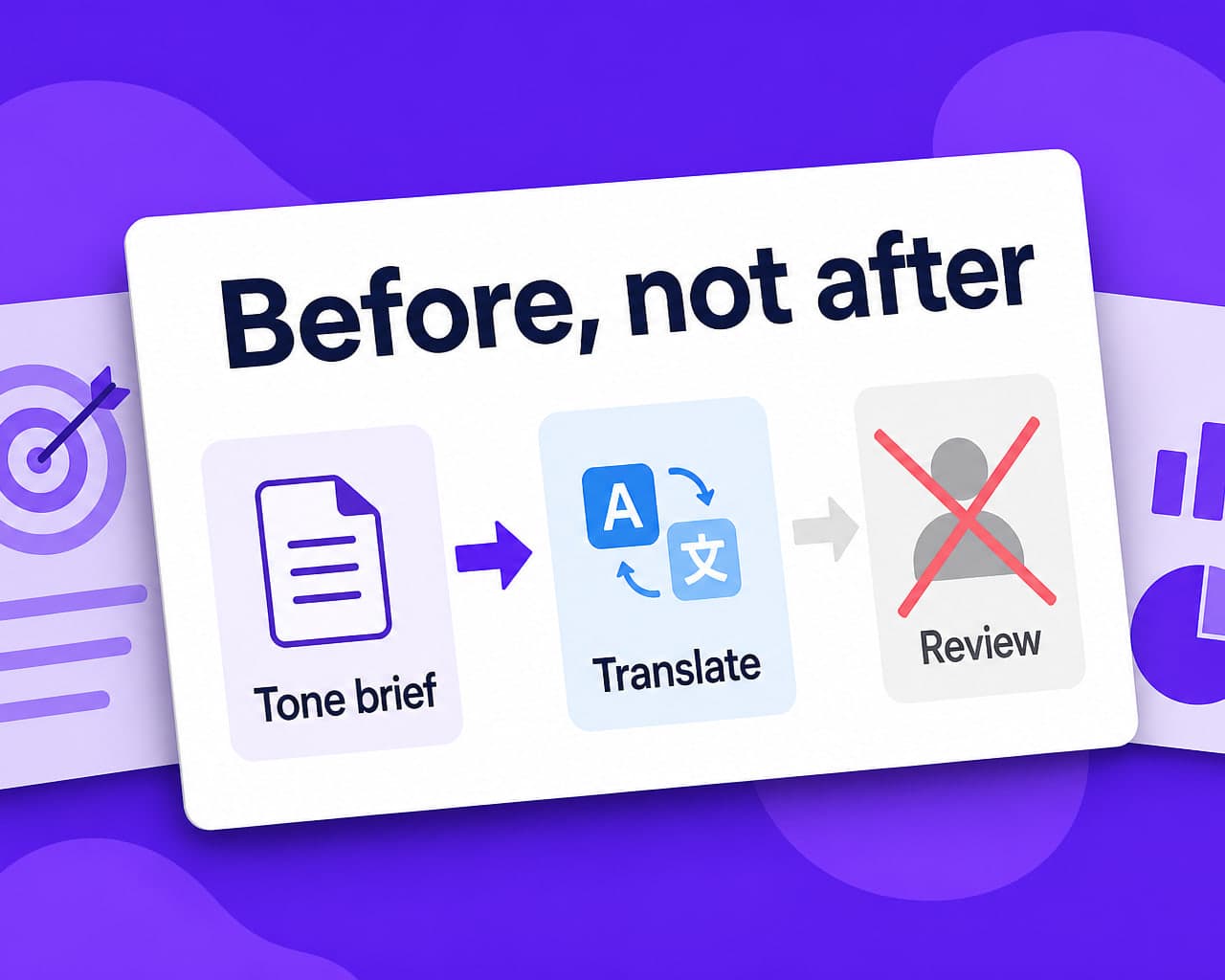
Both get applied at translation time rather than checked afterwards — tone, terminology and target-language font equivalents resolved while the translation is produced, with domain vocabulary tuned against your own material.
That ordering is the whole trick. Checking tone after the fact means asking someone to rewrite; setting it before means the first output is already right.
Writing a tone brief people can follow
Adjectives are useless. "Confident but approachable" produces nothing repeatable.
| Instead of | Write |
|---|---|
| Friendly | Second person. Contractions allowed |
| Professional | No exclamation marks. No rhetorical questions |
| Clear | Sentences under 25 words. One idea per sentence |
| Trustworthy | Name the limitation before the benefit |
Every line is a decision a translator can apply and a checker can verify. Give three before-and-after examples per language and the brief becomes usable in an afternoon.
Where tone must change
This is the part strict consistency gets wrong.
Formality is not portable. German and Japanese encode a formality decision in grammar that English simply does not make, so "keep the same tone" is not an instruction that can be followed — someone has to decide du or Sie, and that decision belongs in the brief per language rather than being left to whoever translates first. Humour rarely survives. Directness that reads as confident in one market reads as rude in another.
So the brief should say what must not vary — terminology, claims, the order of argument — and name what is expected to vary. Quality control then checks against that, and corrections write back to memory so the voice holds on the next job rather than being re-argued.
FAQ
Why can't reviewers keep brand voice consistent across languages? Because each reviewer only sees their own language. Nobody is comparing the German against the Spanish, so divergence in formality or warmth is structurally invisible to per-language review.
What should a tone brief contain? Decisions, not adjectives. Sentence length limits, whether contractions are allowed, punctuation rules, and whether limitations come before benefits — each verifiable, with three before-and-after examples per language.
Should brand tone be identical in every language? No. Formality is grammatical in German and Japanese in a way it is not in English, so someone must decide du or Sie per language. The brief should name what must not vary and what is expected to.
Is it better to check tone before or after translation? Before. Applying tone and terminology at translation time means the first output is already right, where checking afterwards means asking a reviewer to rewrite work that was avoidable.