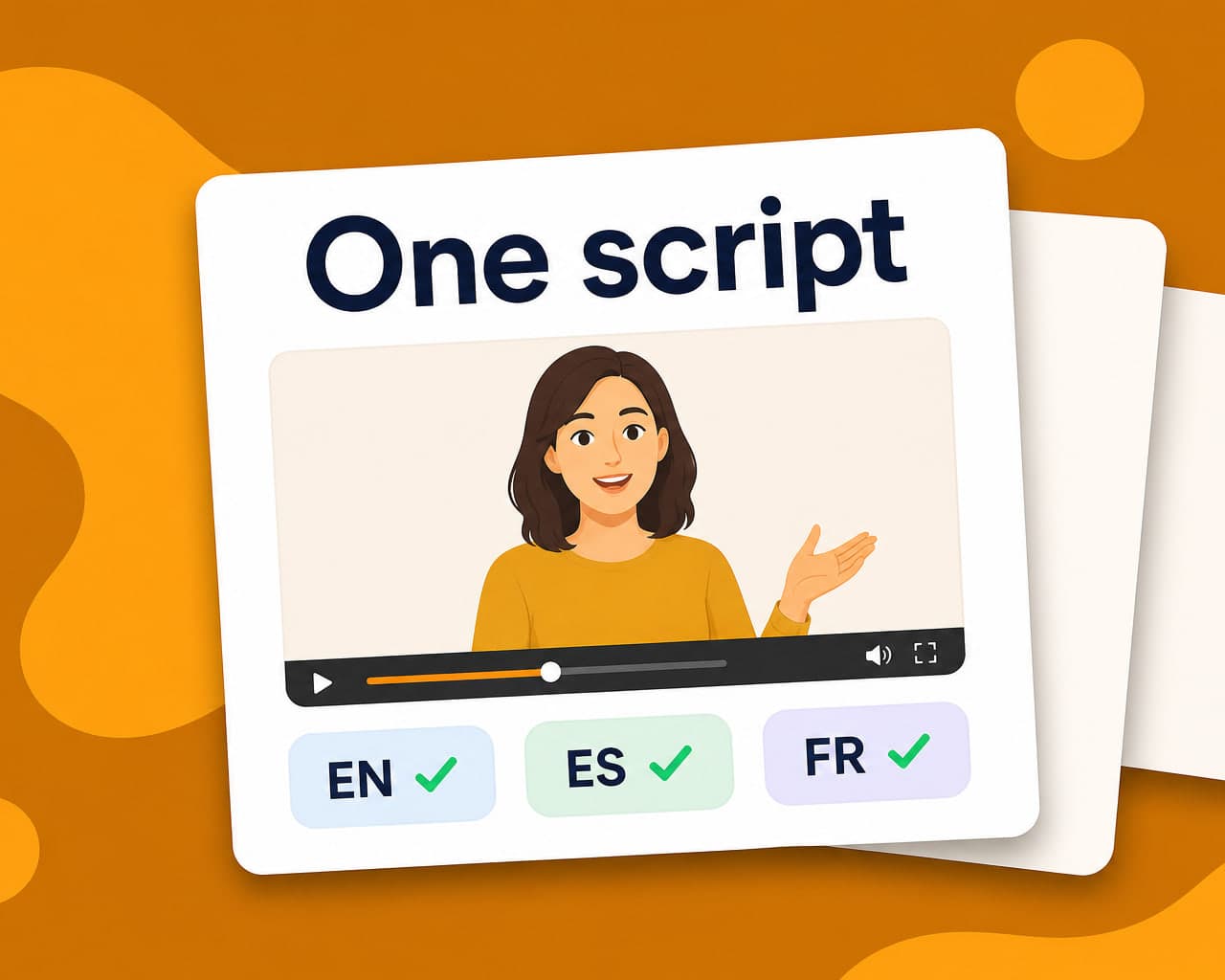
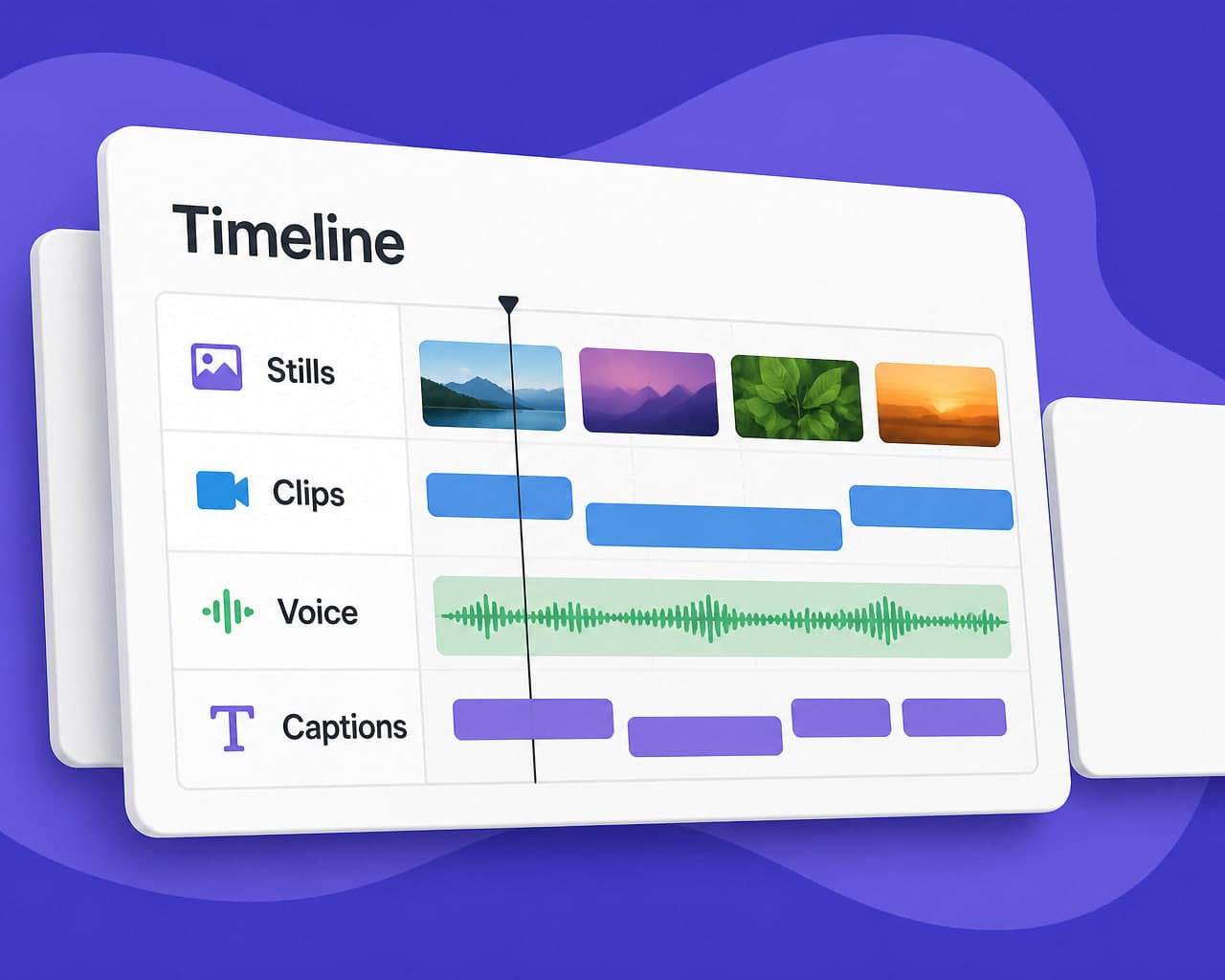
Quick answer — Most finished AI video is not one model output. It is a composition — generated stills animated by code, generated clips for hero moments, a synthetic voice track, and captions — assembled on a timeline. Choosing between those layers is the real decision.
Video creation covers the composition side of this in Vitra.ai Universe.
The single-prompt myth
The demos show a prompt going in and a finished film coming out. Real production does not work that way, because a generative video model gives you a few seconds at a time with no memory of what it produced before.
What actually ships is assembled. A script, a voice track, a set of visuals, and a composition step that puts them on a timeline with timing, captions and brand treatment.
Three visual strategies, three cost profiles
| Strategy | What it is | Relative cost |
|---|---|---|
| Motion graphics | Kinetic type and shapes, no generation at all | Lowest |
| Illustrated | Generated stills, animated by code — pans, parallax, masks | Middle |
| Cinematic | Generated video clips for the moments that need them | Highest, slowest |
The middle row is the one most teams underrate. A well-animated still reads as video to a viewer scrolling a feed, costs a fraction of a generated clip, and does not suffer the consistency problem that generated footage does.
Cinematic is worth it for a hero beat. Using it for a whole ninety seconds is how budgets disappear.
The layers underneath
Script. Usually the part teams skip and always the part that decides whether the video works.
Voice. Synthetic narration, optionally with a cloned voice. Cheap relative to everything else and the biggest single driver of perceived quality.
Visuals. One of the three strategies above, or a mix — most real videos are illustrated with one or two cinematic beats.
Captions. Not optional. Most feed video plays muted, so captions are how the first three seconds land.
Composition. The step that makes it a video rather than a slideshow: timing, transitions, brand colours, logo treatment.
Where generated video still fails
Duration. Clips arrive in a handful of seconds at a time, so anything longer is stitched, and stitching is where continuity breaks.
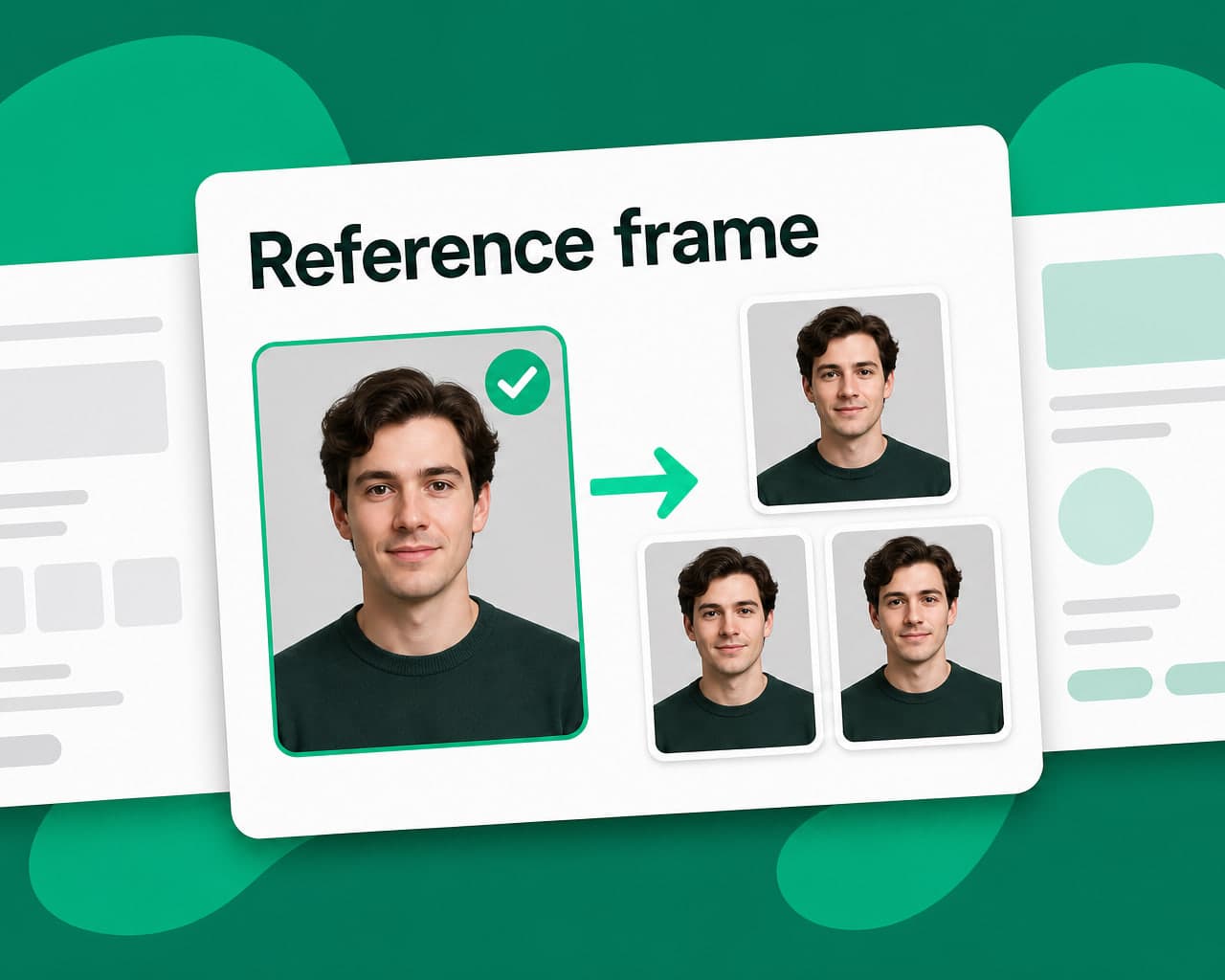
Consistency. The same prompt run twice gives you two different people. There is a technique that fixes this and it is worth knowing about separately.
Text. Generative models render text unreliably. Anything with a price, a legal line or a product name should be composited afterwards, not generated.
Hands and faces at close range. Improving, still the first thing a viewer notices.
What this means for a plan
Budget for the composition step, not just the generation. Decide the strategy per scene rather than per video. And put the check that catches an unusable output — quality control — before the render, not after, because re-rendering is where the cost actually sits.
Where to start
Take a script you already have and produce it three ways: motion graphics only, illustrated, and one cinematic beat inside an illustrated cut. The cost gap will make the strategy decision for you.
For translating video you already have rather than generating it, see how to dub a video.
FAQ
Can AI generate a finished video from one prompt? Not in practice. Generative models produce a few seconds at a time with no memory between clips, so finished video is assembled from a script, a voice track, visuals and a composition step.
What are the main AI video generation approaches? Motion graphics with no generation at all, illustrated video where generated stills are animated by code, and cinematic where clips are generated. Cost rises sharply across those three.
Why does AI video struggle with text on screen? Generative models render lettering unreliably. Anything carrying a price, a legal line or a product name should be composited over the video afterwards rather than generated into it.
What is the most underrated AI video technique? Animating a generated still. It reads as video to someone scrolling, costs a fraction of a generated clip, and avoids the character-consistency problem that generated footage has.