
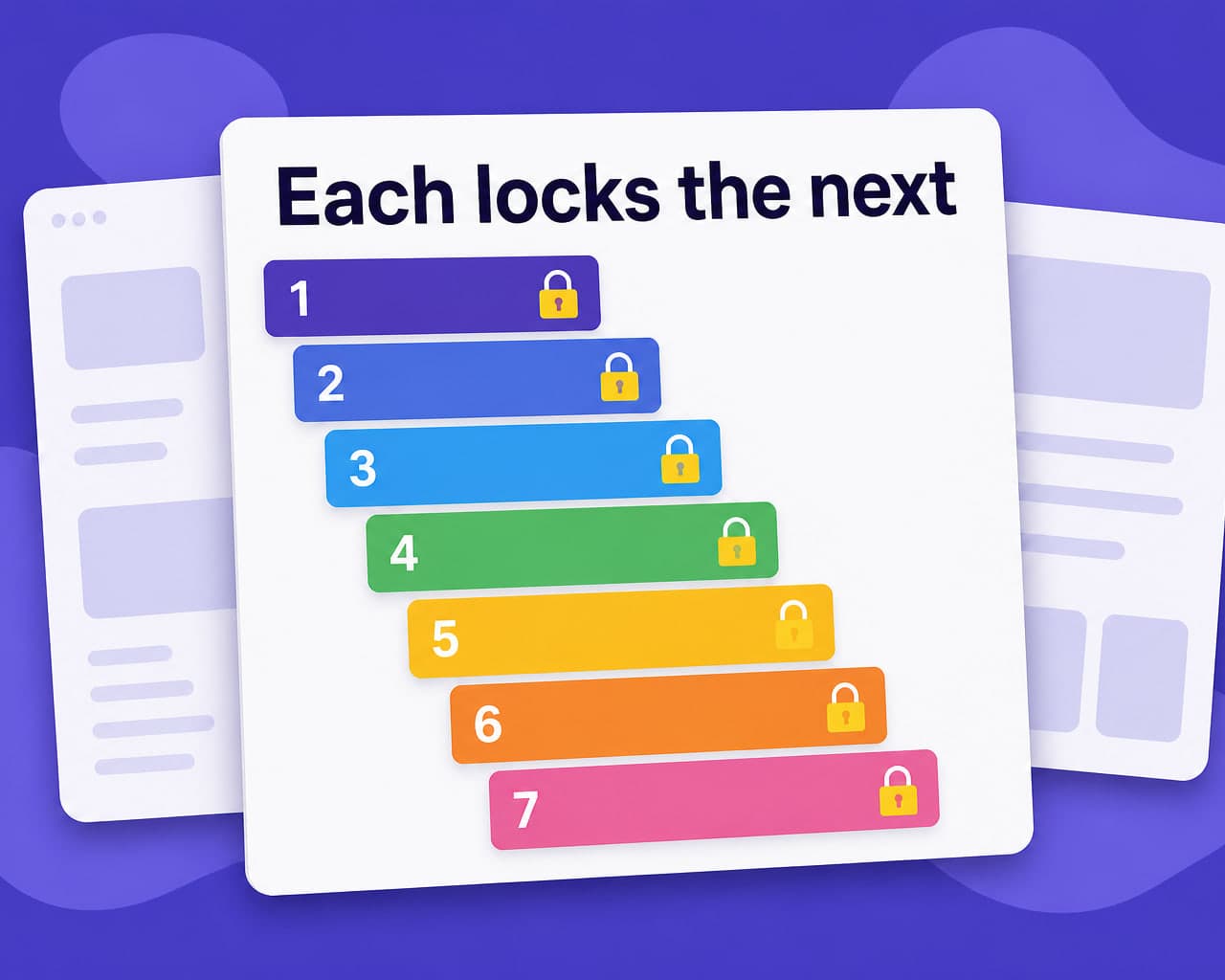
Quick answer — Game localization runs in seven stages: scope, terminology, string extraction, translation, voice, integration, then LQA. The order matters because each stage locks decisions the next depends on, and skipping terminology is what causes the expensive rework.
Vitra.ai Universe keeps character voice and terminology intact across every language.
Seven stages, in this order
| Stage | What it locks |
|---|---|
| Scope by market | Which languages, text-only or full voice |
| Terminology and character bible | Names, items, abilities, tone per character |
| String extraction | Text out of code, with context and limits |
| Translation | The words, against the bible |
| Voice recording | Performance, once the script is final |
| Integration | Strings and audio back into the build |
| LQA | What the player actually sees |
The sequence is not a preference. Voice cannot be recorded before the script is final because a re-record costs a session, and integration cannot be checked before the build accepts the strings.
Terminology first, always
Skipping this is the most expensive mistake in the list.
An item, ability or faction named inconsistently across dialogue, UI, the store page and the tutorial produces a player who cannot tell whether two things are the same thing. Fixing it after voice recording means re-recording every line that says it. A character bible does the same job for tone: who is formal, who swears, who uses archaic phrasing. Without it each translator makes those calls independently and the cast drifts — the argument in dialogue translation.
Pin both in a glossary and hold them in memory so a general match cannot overwrite them and the sequel inherits the same decisions.
Extract with context, not just strings
A string handed over as btn_confirm_02 with no screenshot, no character limit and no note about whether it appears on a button or in a log will be translated wrongly often enough to matter.
Send the limit, the screen, the speaker and whether it repeats. That is the difference between a translation and a guess, and it costs nothing at extraction time.
Text-only or full voice
Decide per market rather than globally. Voice is the largest line item and the one that most changes the experience, so a common shape is subtitles everywhere and voice in the markets that expect it.
Subtitles are not a fallback — they carry the story for most players, which is why subtitle standards matter as much as the translation.
Build LQA in, do not bolt it on
The last stage is where truncation, overlapping text, wrong-gender lines and context errors surface, because they are invisible in a spreadsheet and obvious on screen.
Budget it before it is needed. A schedule that ends at integration has no room for the pass that finds what shipping would have exposed, and quality control on the extracted text does not substitute for seeing the build.
The pieces, in detail
Text splits three ways: dialogue carries the characters, UI strings fight fixed art, and subtitles are read by more players than most teams assume.
Audio is voice over, where everything expensive happens after the booth.
Then the surfaces outside the build: the store page for Steam and consoles, mobile listings which work differently, and the trailer, which has to be planned before picture lock.
FAQ
What order should game localization run in? Scope, terminology and character bible, string extraction with context, translation, voice recording, integration, then LQA. Each stage locks decisions the next depends on.
Why does terminology come before translation? Because an item or ability named inconsistently across dialogue, UI and the store confuses players, and fixing it after voice recording means re-recording every line that mentions it.
Should every market get voice acting? Decide per market. Voice is the largest cost and the biggest experience change, so a common approach is subtitles everywhere and full voice only in markets that expect it.
What does LQA catch that a text review cannot? Truncation, overlapping text, wrong-gender lines and context errors. These are invisible in a spreadsheet and obvious in the running build, which is why the pass has to be budgeted in advance.