Quick answer — Voice interfaces need spoken register rather than written translation, a wake word that survives local phonetics, and recognition tested against real accent variation. Error prompts matter most, because that is when the interface has already failed.
Vitra.ai Universe keeps one product vocabulary across box, app, page and video.
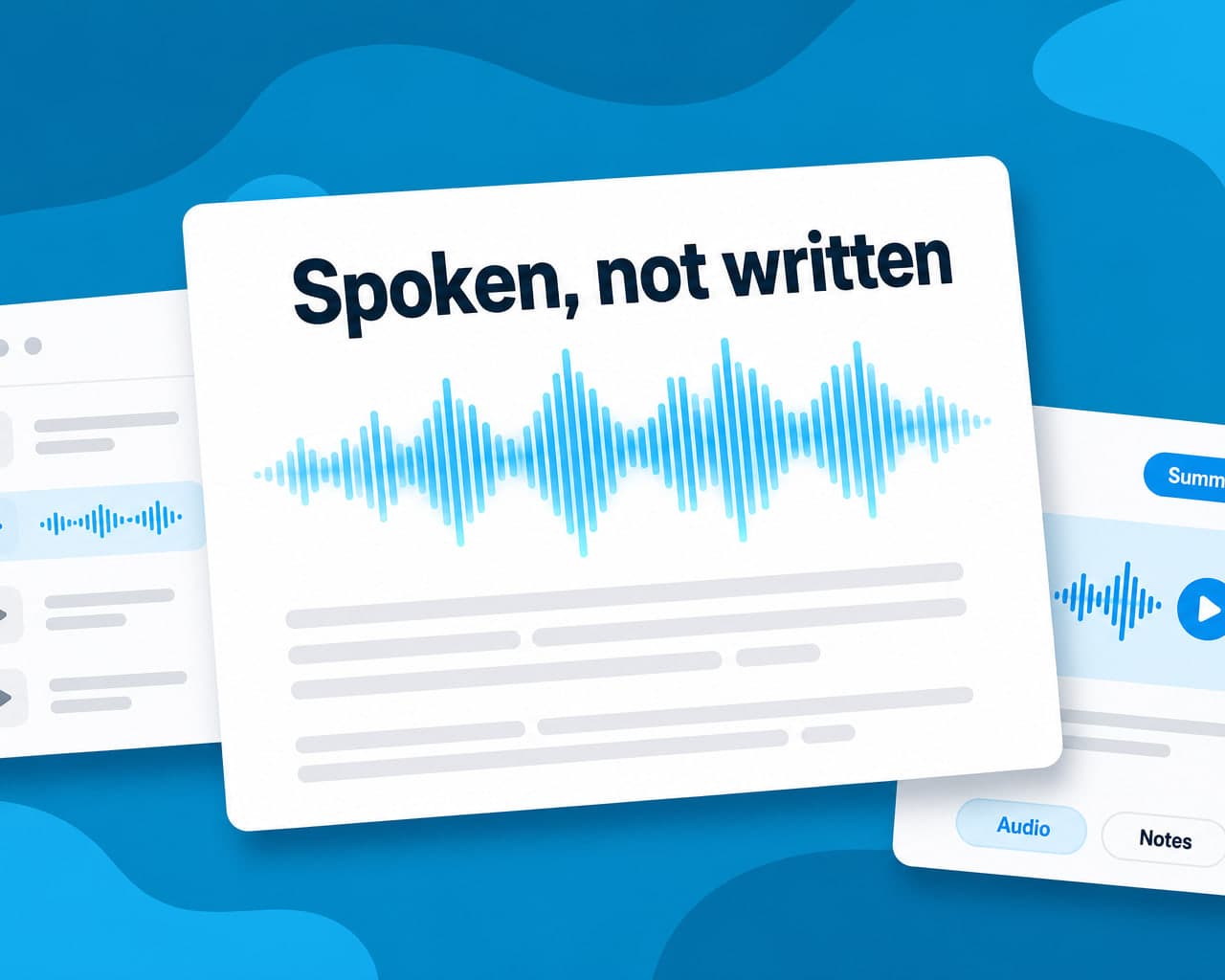
Written language is not spoken language
A prompt that reads well on a screen frequently sounds wrong when spoken, and the gap widens in translation.
Written translations tend towards formality, and formality is more marked in speech than in text. A device that addresses its owner the way a bank letter would is not incorrect, it is uncomfortable, and it is a defect that no text-level review catches because on the page the sentence is fine.
Prompts have to be written for the ear and reviewed by listening.
The wake word travels badly
A wake word chosen for English phonetics can be hard to pronounce, easy to confuse with a common local word, or unfortunate in meaning elsewhere.
| Property | Why it matters |
|---|---|
| Pronounceable in the target language | Recognition rate |
| Phonetically distinctive | False wakes and misses |
| Not a common word | Constant accidental triggering |
| Acceptable in meaning | Brand risk |
| Consistent with the product name | Recall |
Changing a wake word after launch is close to impossible, since the customer has learned it and the documentation is printed. The screening belongs alongside the product naming work, well before tooling.
Recognition varies more than the demo suggests
Accent, dialect, background noise, code-switching and the habit of mixing English product terms into another language all reduce recognition, and none of them appear in a scripted test.
Command coverage has to include the ways people actually phrase a request in that language, including the impolite short forms and the phrases that mix languages. Testing only the phrasing from the documentation measures the documentation.
Error prompts are the priority
Almost every voice interaction that matters goes wrong at least once, and what the device says then determines whether the customer tries again. A prompt that only reports a failure to understand is a dead end. One that offers the nearest valid action recovers the interaction, and getting that right per language is worth more than polishing the successful path. Keep these consistent with the companion app error copy, so a customer who hears one thing and reads another is not confused twice.
Voice output and workflow
Synthesised speech carries brand character, and pace, warmth and formality should be a deliberate choice per market rather than a default. Video dubbing covers the voices used in demo content, and the same character decisions should carry across.
Prompt sets change with every firmware cycle, so translation has to run on the release trigger rather than in batches — agentic workflows attach it to the build and hold anything new for a listening review before it ships. Prompt sets are product strings, so they belong in software localization.
FAQ
Why do translated voice prompts sound wrong? Because written translation drifts towards formality, which is far more noticeable in speech than on a screen. Prompts have to be written for the ear and reviewed by listening rather than by reading.
What makes a wake word work in another language? It has to be pronounceable and phonetically distinctive in that language, uncommon enough to avoid constant false triggering, and acceptable in meaning. Changing it after launch is effectively impossible.
How should voice recognition be tested per market? Against real accent and dialect variation, background noise and code-switching, using the phrasings people actually say. Testing only the documented commands measures the documentation, not the product.
Which prompts deserve the most attention? Error prompts. Most voice interactions fail at least once, and whether the device offers a recoverable next action decides whether the customer tries again or stops using the feature.