
Quick answer — Decide which language version governs and say so in the document. Translating terms without a governing-language clause creates ambiguity, and in some consumer markets a local-language version is expected regardless.
Vitra.ai Universe ships product and customer content in every language.
The question to answer first
If the English and German terms differ, which one binds? Most SaaS companies never answer this, publish a translation as a convenience, and discover the ambiguity during a dispute. A governing-language clause, present in every version, removes it. That is a decision for counsel rather than for localization — but localization is where it surfaces, and raising it before publishing is cheaper than after.
Translate for comprehension, bind in one language
The common arrangement: one governing version, clearly stated, with translations offered for understanding and labelled as such.
| Element | Handling |
|---|---|
| Governing language clause | In every version, unambiguous |
| Defined terms | Consistent, and consistent with the product |
| Liability and indemnity | Translated with legal review |
| Jurisdiction and venue | Translated exactly, never localized |
| Consumer rights sections | May be mandatory in local language |
| Effective date | Same across versions |
Jurisdiction is the row that gets mishandled. Translating a venue clause is fine; adapting it to name a local court is a substantive change, not a translation, and it should never happen in a localization workflow.
Some markets expect the local language
In several consumer markets, terms presented only in a language the customer does not read are weak or unenforceable regardless of what the governing clause says.
Whether that reaches your product depends on whether you sell to consumers there — which is exactly the kind of question to settle per market before scoping, rather than translating everything defensively.
Defined terms are the translation risk
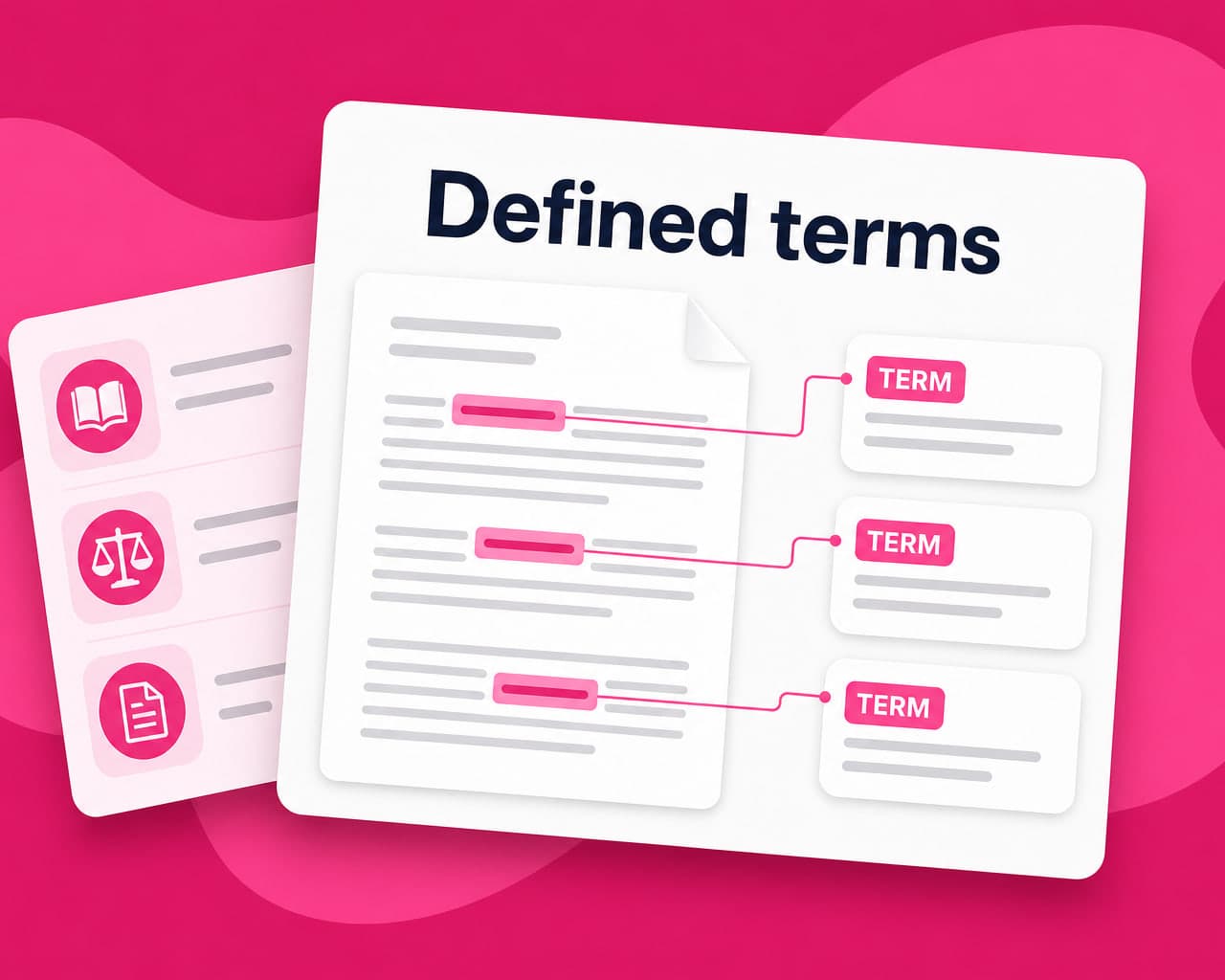
Terms of service are built on defined terms — Service, Subscription, Content, Confidential Information — and each carries a specific meaning set inside the document.
Pin them in a glossary and hold them in memory so they resolve identically throughout, and run a back-translation comparison on liability, indemnity and termination clauses, where a shifted qualifier changes the obligation while reading perfectly.
Version and archive every language
When a customer asks which terms applied when they signed up, the answer has to be retrievable per language and per date.
Quality control keeps the record of what was checked alongside it, which is the part that makes the archive usable rather than merely complete.
Which language version prevails is a separate question, and a contractual one — governing law and jurisdiction.
FAQ
Which language version of terms of service governs? Whichever the document says, which is why a governing-language clause should appear in every version. Publishing translations without one creates ambiguity that surfaces during a dispute.
Do terms have to be in the local language? In several consumer markets, terms presented only in a language the customer does not read are weak or unenforceable. Whether that applies depends on whether you sell to consumers there.
What must never be changed in translation? Jurisdiction and venue. Translating the clause is fine; adapting it to name a local court is a substantive legal change and must not happen inside a localization workflow.
What is the main translation risk in terms of service? Defined terms. Words like Service, Subscription and Content carry meanings set inside the document, so they must resolve identically throughout every translated version.