
Quick answer — An explainer article is already a video script in the wrong format. Turning copy into video works well for evergreen background pieces and badly for anything whose facts move week to week.
Vitra.ai Universe turns one story into every edition.
The script already exists
Newsrooms produce explainers constantly — how a policy works, why a market moved, what a ruling means. They are structured, ordered and self-contained. That is a video script that happens to be laid out as an article. Video creation takes the piece and produces script, voiceover, visuals and subtitles in one pass, which is what makes video viable on stories that could never justify a production crew.
What converts and what does not
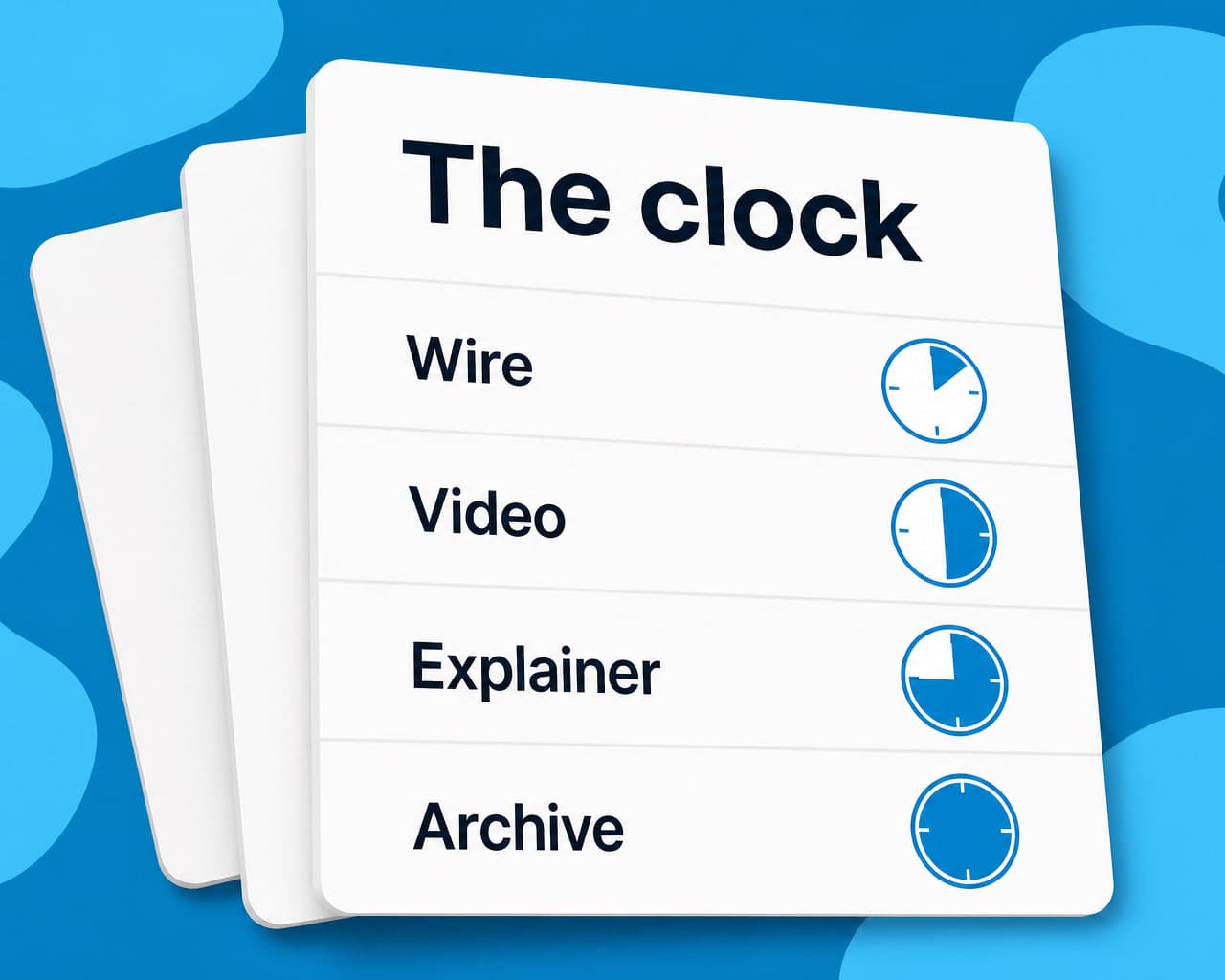
| Piece | Converts |
|---|---|
| Background explainer | Well |
| Process or mechanism | Well — visuals help |
| Data story | Well, with the charts as stills |
| Opinion and analysis | Poorly — it is a voice, not a sequence |
| Breaking news | No — outdated before it renders |
| Investigation | Only as a summary, not a substitute |
The test is whether the piece has a sequence. Explainers do — first this, then this, which is why that. Analysis frequently does not, and forcing it into a video produces a slideshow with narration.
Keeping it current
The failure mode is a video that outlives its accuracy.
An explainer video about a rule stays online after the rule changes, and unlike an article nobody notices it needs updating because it is not in the CMS workflow.
Two habits fix it. Date the video visibly, and keep the script in the same place as the article so an edit to one prompts a review of the other.
Languages come almost free
Once the script exists, additional languages are a re-voice rather than a reproduction — dubbing over the same visuals, with subtitles from the same script.
For a newsroom serving several language communities, that is the strongest argument for the format: the marginal cost of the second language is a fraction of the first, unlike with filmed pieces.
Run quality control before publishing, and keep terminology in memory so the video agrees with the article it came from.
FAQ
Can a news article be turned into a video automatically? Explainers convert well because they already have a sequence — first this, then this, which is why that. Script, voiceover, visuals and subtitles are generated from the existing copy.
Which stories should not become explainer videos? Breaking news, which is outdated before rendering finishes, and opinion or analysis, which is a voice rather than a sequence and turns into a narrated slideshow.
How do you stop explainer videos going stale? Date them visibly and keep the script alongside the source article, so editing the article prompts a review of the video. Videos sit outside the CMS workflow and are otherwise forgotten.
Is it expensive to produce explainer video in several languages? No, once the script exists. Additional languages are a re-voice over the same visuals rather than a new production, so the marginal cost is a fraction of the first version.