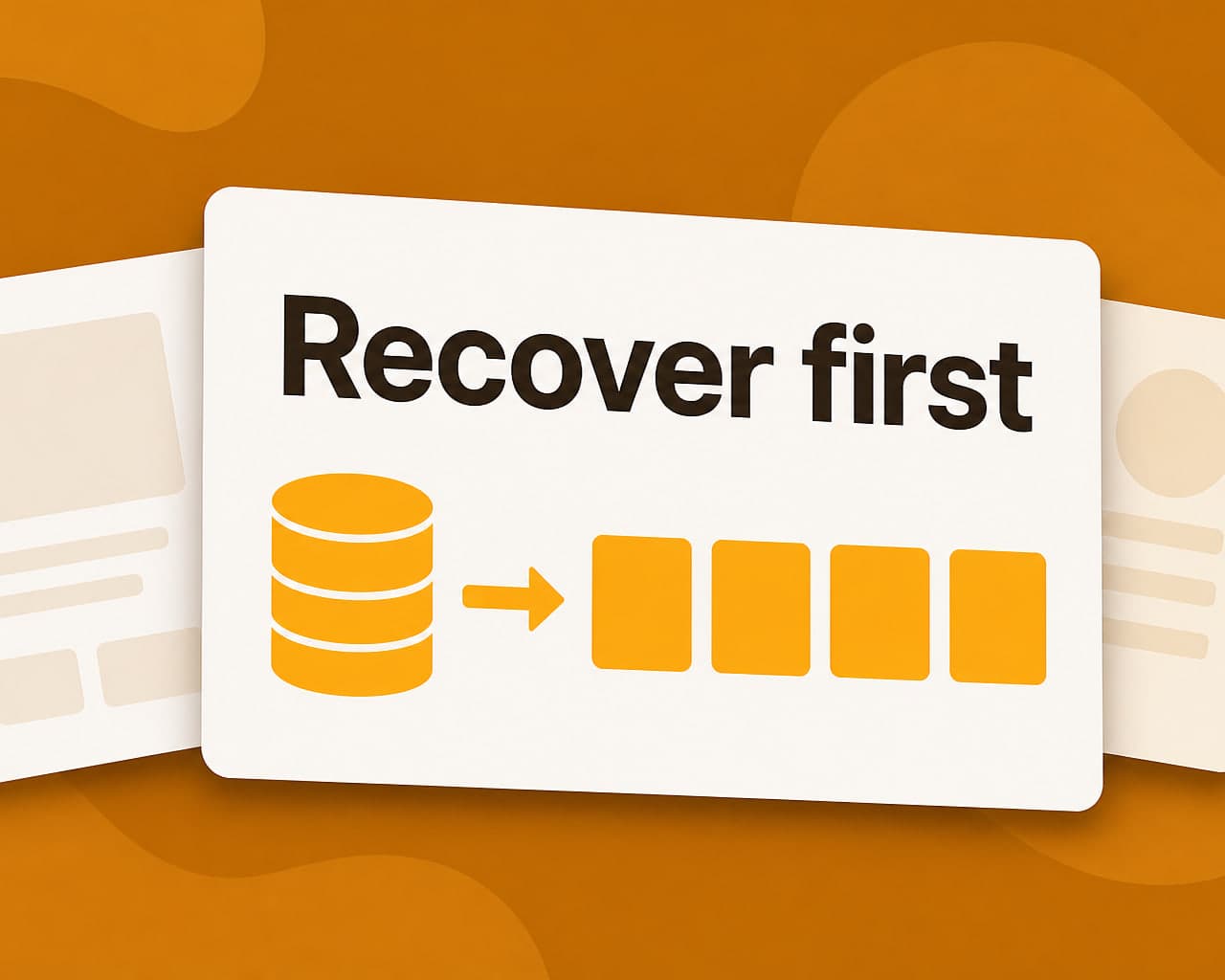
Quick answer — Before giving notice, recover your translation memory and glossaries and inventory where every asset lives. Then run four weeks: extract, pilot in parallel, migrate by content type, and cut over with the agency still on call.
Vitra.ai Universe creates, translates, adapts and publishes from one place.
Secure the assets before the conversation
The power in an agency relationship sits with whoever holds the accumulated language, and it is usually not you.
Two things to get first, in writing and in a usable format: the translation memory as TMX, and every glossary and style guide. That is years of approved wording and it is yours; recovering it after notice is given is markedly harder than before. Then inventory. In a typical vendor arrangement assets are in a portal, a shared drive, an email thread, a TMS you do not administer, and a designer's machine. Nobody has a list, and the list is the project.
Why the current setup feels chaotic
| Where things sit | Consequence |
|---|---|
| Agency portal | You cannot search it |
| Their TMS | Memory accrues to them |
| Shared drives | No version authority |
| Email threads | Approvals with no record |
| Designer machines | Layered source files unrecoverable |
| A tracking spreadsheet | Out of date within a week |
None of that is anyone's fault. It is what six tools and two organisations sharing a process with no system of record produces — the failure pattern that makes deadlines slip.
Four weeks
Week 1 — Extract and inventory. TMX and glossaries out. List every content type, every language, every live asset and where it lives. Import the memory and confirm match rates against real recent content.
Week 2 — Pilot in parallel. Take one live content type in two languages. Run it both ways — agency and platform — and compare output, turnaround and cost on identical input. Set the review band and name your in-market reviewers. Do not cancel anything yet.
Week 3 — Migrate by content type. Move the highest-volume, lowest-risk type first, usually marketing or product copy. Point the workflows at your own asset manager so output stops landing in someone else's portal. Add the second and third content types as each proves out.
Week 4 — Cut over. Move the remaining types, including the regulated ones, with reviewers gating them. Keep the agency on a reduced retainer for one month as a fallback you almost certainly will not use — the cost of that month is trivial against the cost of having no fallback.
Scale changes the sequencing, not the plan
A small team compresses this into two weeks because there is one content type and one approver.
An enterprise runs the same four weeks per business unit rather than for the whole company, in parallel, with a shared memory underneath — so unit three starts with the vocabulary units one and two already approved.
What actually changes afterwards
One place for every content type, one memory that keeps improving instead of accruing to a vendor, and an orchestrated run rather than a chain of handoffs.
The measurable version: cost per language falls with each one added, and the elapsed time between requesting and publishing stops being dominated by waiting for someone else.
FAQ
What should be secured before leaving a translation agency? The translation memory as TMX and every glossary and style guide, in writing and in a usable format. That is years of approved wording, and recovering it after giving notice is much harder.
How long does migrating off an agency take? Four weeks for most organisations: extract and inventory, pilot in parallel, migrate by content type, then cut over. A small team can compress it to two; an enterprise runs it per business unit in parallel.
Should the agency be cancelled immediately? No. Keep them on a reduced retainer for a month after cutover as a fallback. The cost is trivial compared with discovering a gap in regulated content with no alternative available.
Why do assets end up scattered with a vendor arrangement? Because six tools and two organisations share a process with no single system of record. Files sit in a portal, a shared drive, email threads and designers' machines, and no inventory exists.