
Quick answer — An LLM judge can flag possible translation errors and help organize review. Validate its findings on your own languages and content, keep uncertainty visible, and don't treat a fluent explanation as proof that the translation is correct.
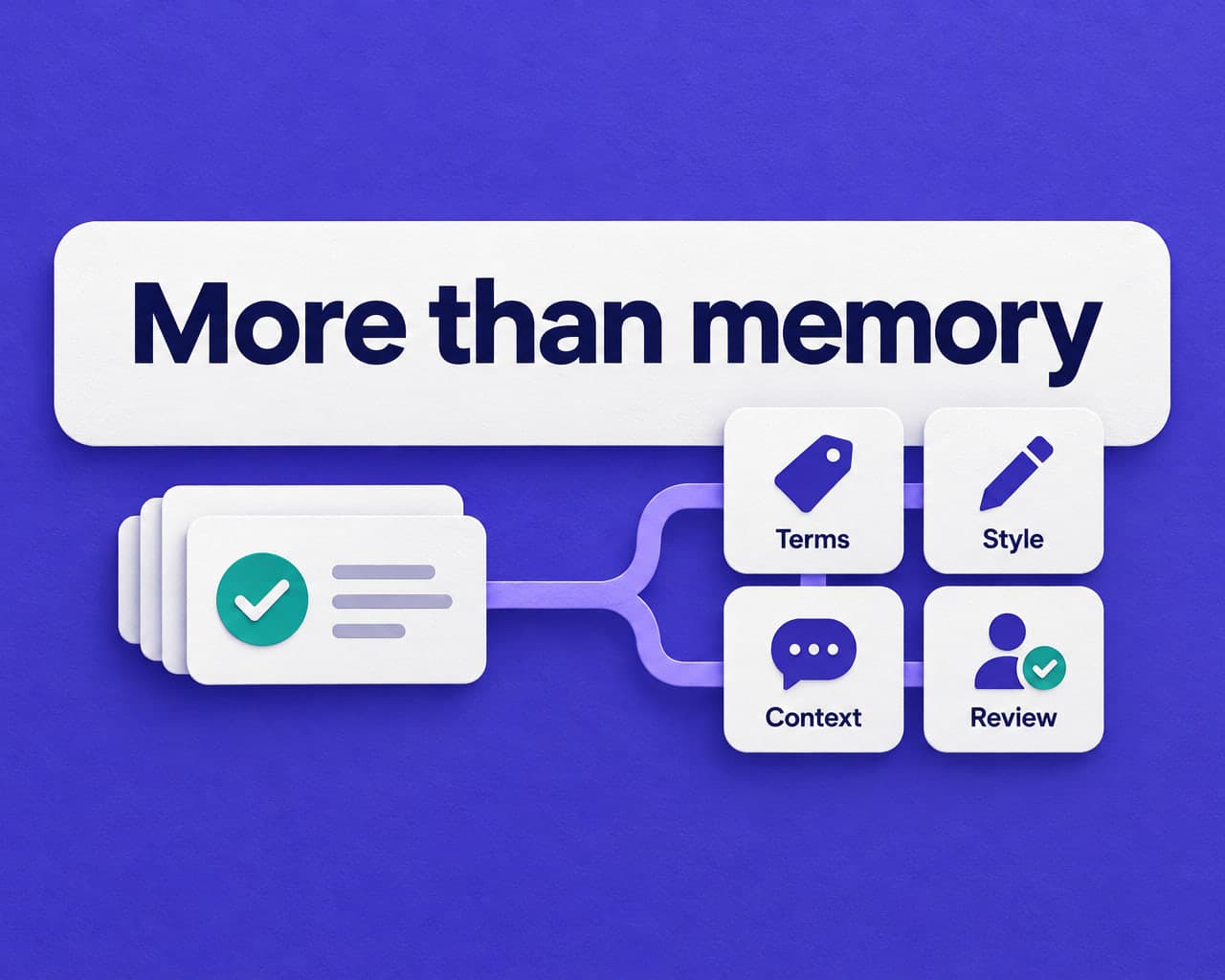
Vitra TMS connects context, language resources and human review. An automated evaluation is one input to that review.
What the research does and does not establish
LLM-based translation evaluation is a real research area. GEMBA studied translation-quality assessment with and without a reference. GEMBA-MQM studied identifying error spans using an MQM-based approach.
Those studies support testing the approach. They don't prove that a current model will judge your product terminology, campaign claims or rare language pair correctly. Record the model version and evaluation setup with the findings rather than borrowing a benchmark's result as your own.
Give the judge the same brief as the reviewer
A target sentence alone tells the judge little about what was supposed to happen. Include the source, audience, product meaning and approved terms. A reference translation can be helpful where you have one; it is another input to inspect, not a reason to disregard a valid alternative.
Ask for concrete findings:
| Field | What it should contain |
|---|---|
| Category | Meaning, terminology, omitted information, tone or another defined issue |
| Evidence | The source and target spans involved |
| Explanation | Why the wording may be unsuitable in this context |
| Severity | A proposed level using the team's rubric, not automatic approval |
| Uncertainty | What the judge cannot establish from the supplied material |
The translation brief template can help organize those inputs. Don't add unrelated documents just to make the prompt longer.
Test mistakes, not only scores
Use an approved sample alongside deliberately flawed versions. For a fictional battery instruction, include a version that drops “not,” one that uses the wrong product term and one that changes style without changing meaning.
Then ask a qualified language reviewer to compare the judge's findings with the actual issues. Record missed errors and false alarms. A system that flags every line can create as much review work as a system that misses the important warning.
Repeat the check on real content types. A good result on a product paragraph does not establish performance on legal wording, subtitles or a cropped campaign image.
Avoid turning a model choice into a guarantee
Testing a different judge model may reveal different mistakes. It doesn't automatically make the second result independent: models can still share training patterns, assumptions and evaluation weaknesses.
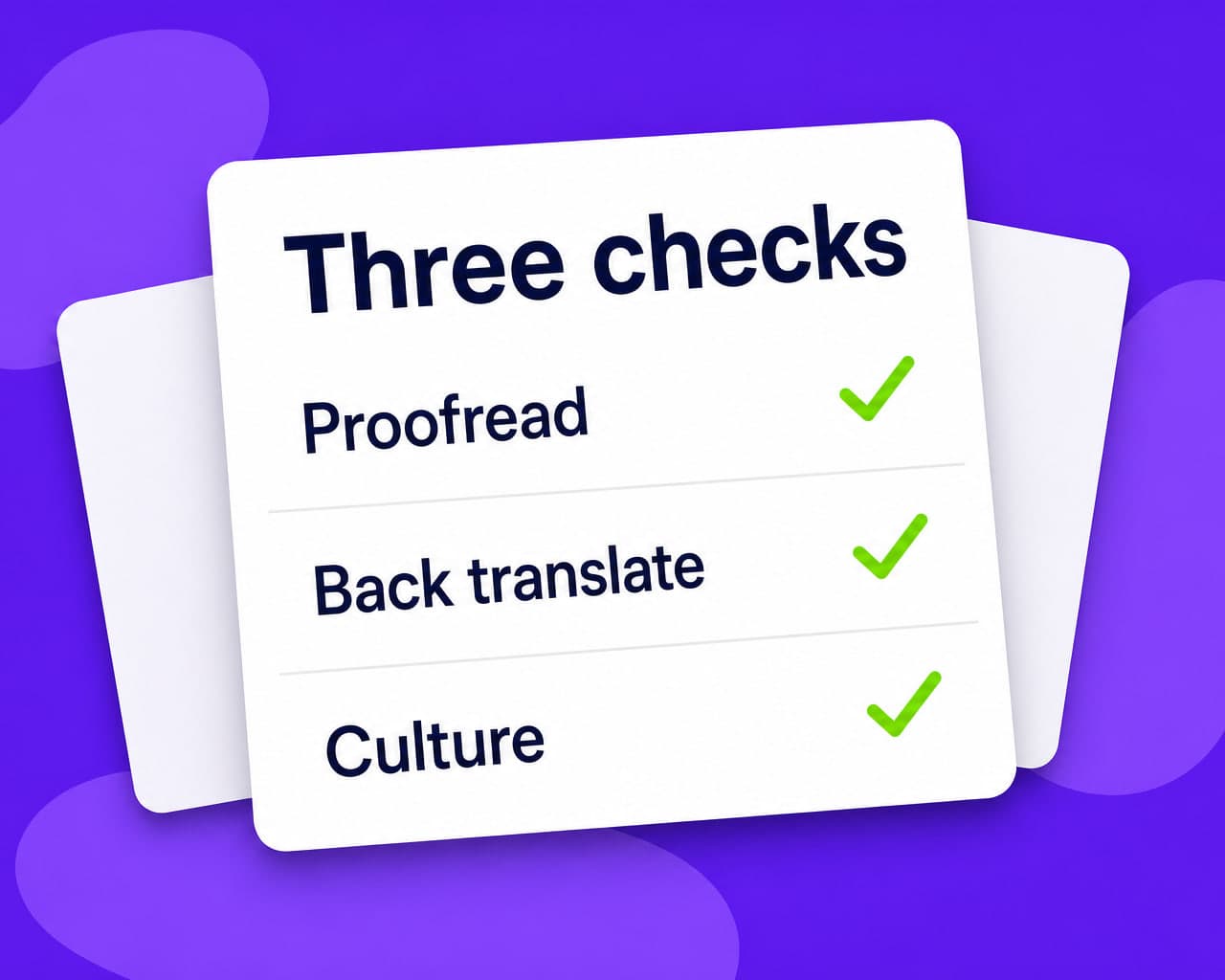
The same caution applies to back-translation. It can offer a useful view of meaning, but agreement between automated outputs isn't a substitute for examining the source and intended use.
Keep the judge's explanation separate from the reviewer's conclusion. “Possible missing qualifier” is a finding to investigate; “approved for publication” is a decision the accountable team makes.
Put findings into a usable review step
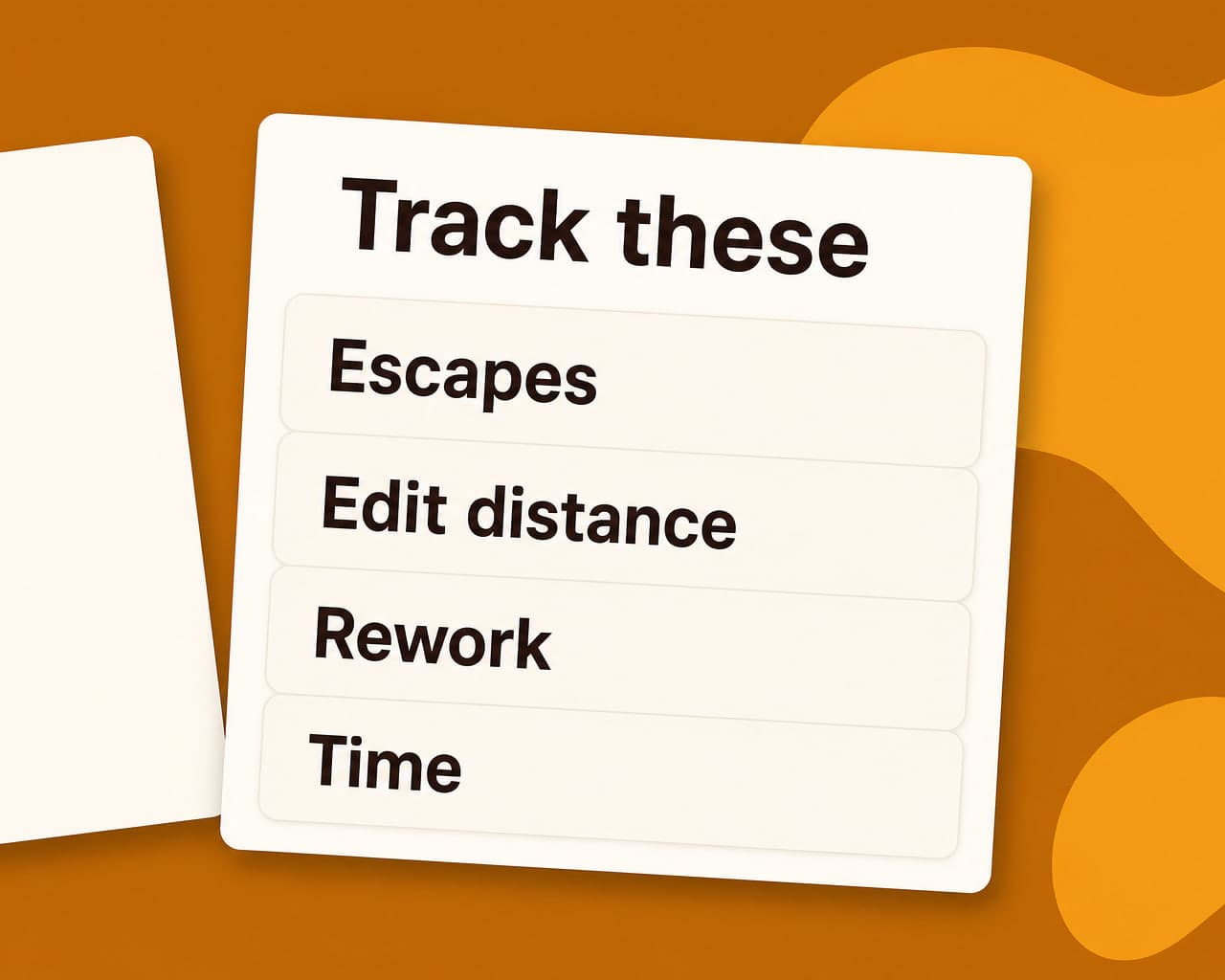
Show the flagged span, surrounding context and the finished asset to the reviewer. Let them accept, reject or correct the finding, and record the reason. Check whether the review is actually faster and whether important errors are still found.
Translation quality metrics should describe the observed work, not just the judge's confidence. Vitra Flow connects repeatable tasks and human approval; decide the review responsibilities before wiring automated findings into a workflow.
FAQ
Can an LLM reliably score translation quality? It can provide useful evaluation signals, but reliability depends on the model, language, source material and rubric. Test it against qualified reviewers on representative examples before relying on its findings.
What should an LLM translation judge receive? Provide the source, translation, audience, terminology and a clear review rubric. Ask for the exact source and target spans behind each finding, an explanation and an uncertain label where appropriate.
Should the judge use a different model from the translator? A different model can be worth testing, but it does not guarantee an independent or better check. Compare both setups against the same human-reviewed examples and examine the mistakes they share.
Does an LLM judge replace human review? No. It can help prioritize attention and describe possible issues. A qualified reviewer still needs to resolve important findings and the responsible team must make the release decision.