Quick answer — Contextual translation uses the audience, product meaning, and intended use of content to choose appropriate wording. A useful brief explains what the content is for, where it appears, and which language decisions are already approved.
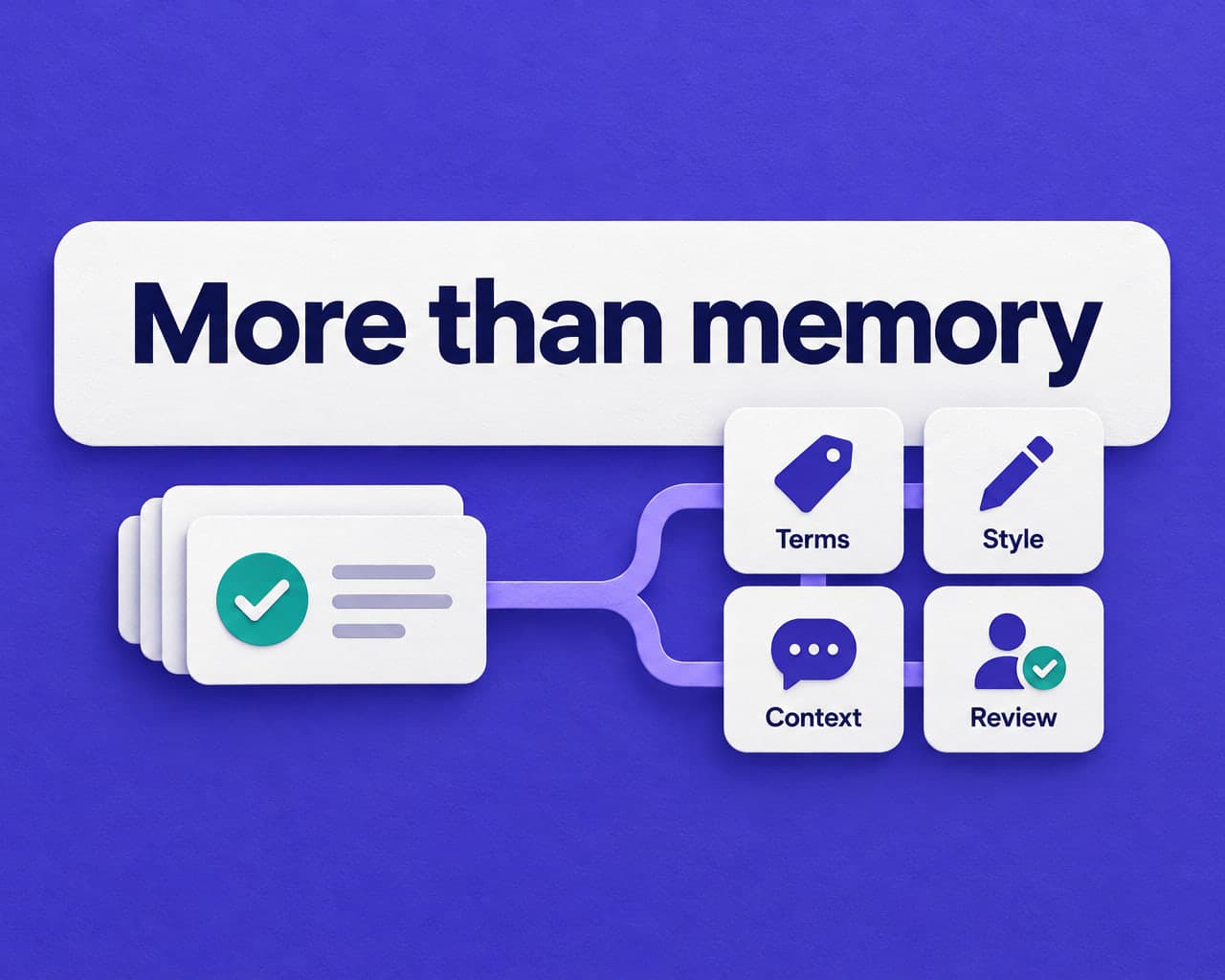
Vitra TMS connects that context with adaptive memory, terminology, glossaries, style guides, and human review.
The same word can describe three different jobs
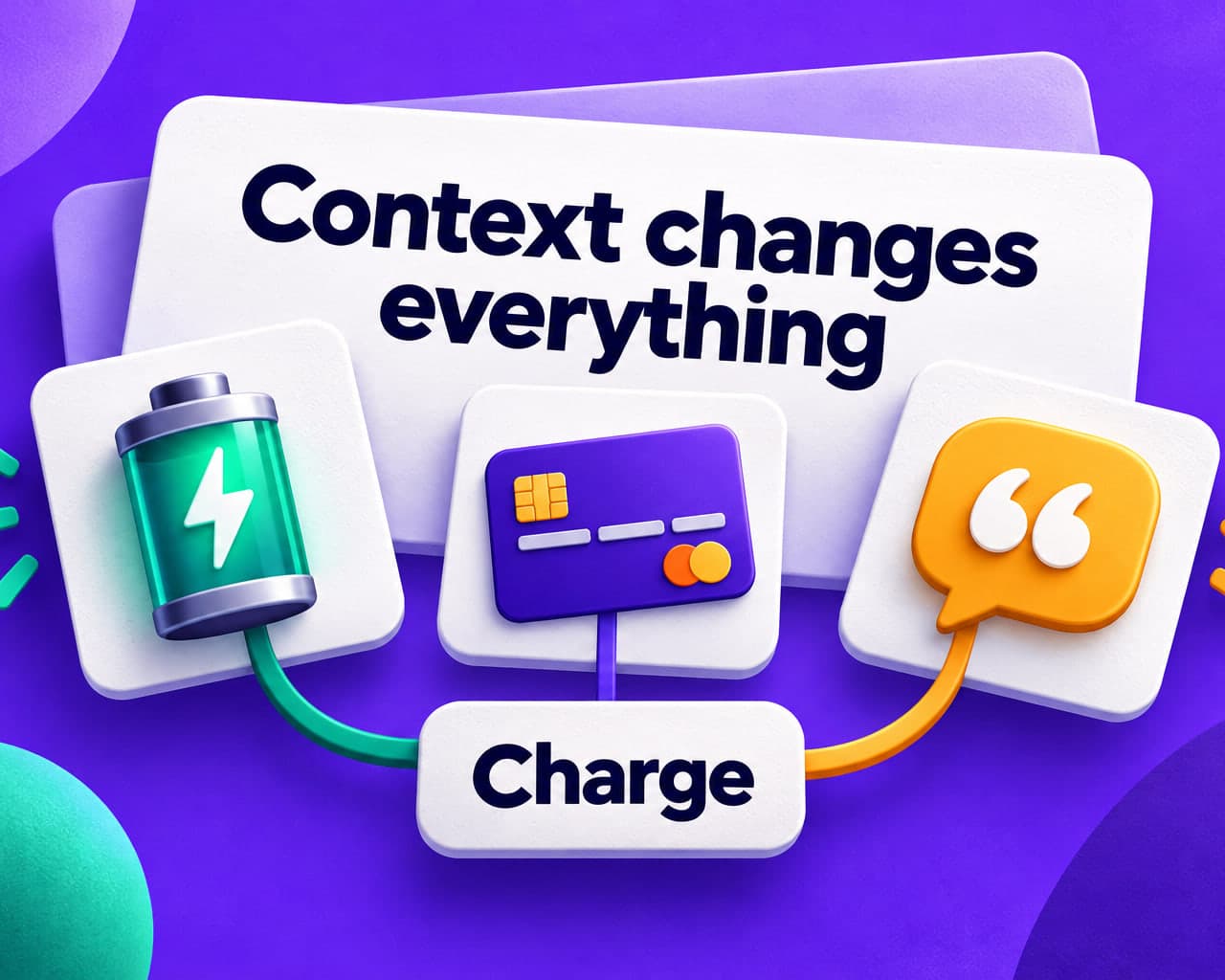
“Charge” is an ordinary English word. It's also a useful demonstration of why a translation needs more than a word list.
In a battery instruction, it describes putting power into a device. On a payment statement, it describes an amount billed. In a legal case summary, it can mean an accusation. A target language may use different words for all three. If the brief doesn't establish which situation applies, the reviewer has to recover that information after the translation is written.
| English source | Context | Illustrative Spanish wording |
|---|---|---|
| Charge before use. | Battery setup instruction | Carga el dispositivo antes de usarlo. |
| A service charge applies. | Customer payment information | Se aplica un cargo por servicio. |
| The charge was dismissed. | Legal case summary | Se desestimó la acusación. |
These are examples, not universal wording rules. Region, tone, legal meaning, and the exact product can change the right choice. The point is that the context changes the question the translator is answering.
You can try the same distinction in the interactive contextual translation illustration.
A good brief names the ambiguity
“Translate accurately and make it natural” doesn't tell the translator what is happening. “This is a button in a billing screen; it opens the list of fees” does.
The second instruction gives the work a location, an action, and a subject. It doesn't need to be long. In fact, a large pile of unrelated brand documents can make a brief less useful if the relevant decision is buried inside it. Start with the facts a reviewer would otherwise ask you to clarify.
For a product label, that may be a screenshot and a one-line description. For a campaign, it may be the offer, target audience, approved claim, and what the creative is supposed to make someone do. For specialist content, add the relevant definition and identify who is qualified to approve it.
The four parts of a useful contextual translation brief
Product and subject
Explain what the feature, service, or document actually means. Don't assume an ordinary word has an ordinary meaning in your product. A “workspace” might be a collaboration area, a physical office, or a saved layout. Tell the translator which one it is.
Include the facts that must remain true. If a trial excludes a feature, the localized copy cannot imply that the feature is included just because the sentence sounds better that way. Accuracy comes before fluency.
Audience and purpose
State who is reading and what they should understand or do. A new user and an experienced technician don't share the same assumptions. Neither does a buyer comparing offers and a customer trying to resolve a payment issue.
“For business users” is still broad. “For a new account administrator inviting colleagues for the first time” is a usable instruction. It helps the writer and reviewer decide which explanations belong in the text and which words should be avoided.
Content surface and constraints
A button, subtitle, voiceover, banner, and contract paragraph have different constraints. Say where the language will appear.
For a button, give the available space and the action it triggers. For subtitles, review reading time and line breaks. For a dubbed video, listen to pronunciation and pacing. In a design, check the actual layout after text expansion. Don't approve a text-only export and assume the finished asset will be equally good.
Approved language decisions
Bring the terms, names, and writing rules your team has already settled. Vitra TB holds concept-based terminology. A glossary sets direct wording and do-not-translate rules. A style guide explains tone and conventions. Vitra TM keeps translations that may be reusable.
These resources work together, but they can also conflict. An outdated glossary term might no longer describe a feature. A preferred phrase may not fit a short label. A marketing style rule may be inappropriate in a safety instruction. Make the conflict visible and let the right person decide rather than forcing a smooth sentence over the problem.
A brief you can copy and adapt
The structure below is deliberately short. Replace the example facts with your own; don't use “Nova” or this wording as a product claim.
Product: Nova, a collaboration app.
Audience: First-time account administrators.
Purpose: Explain that inviting colleagues does not add a setup fee.
Surface: Pricing page and a 20-second tutorial script.
Target: Spanish; confirm the intended market with the reviewer.
Approved term: setup fee -> cuota de alta.
Protected name: Nova; do not translate.
Voice: Clear, direct, helpful. Avoid unnecessary technical language.
Review: Product owner checks the claim; language reviewer checks Spanish.
The product owner and language reviewer have different responsibilities. The product owner knows whether the fee statement is true. The language reviewer knows whether the wording conveys that statement appropriately. Giving both the same brief makes their review easier to compare.
Keep the context current, not just available
Context ages. Products change, prices change, and a term that was accurate last quarter may now refer to a different feature. Reusable context needs an owner and a reason to be updated.
When the meaning changes, revisit the affected assets deliberately. Updating a memory description doesn't mean every existing translation has been rewritten or approved again. Check the source, translated versions, and finished formats that rely on the old fact. Keep review status visible so a new draft doesn't inherit the confidence of an earlier approval.
This is where Vitra TMS fits the wider content workflow: shared language resources and context, with people deciding when the result is ready. Better information can reduce avoidable corrections. It cannot remove the need to judge meaning.
FAQ
What is contextual translation? Contextual translation uses the audience, subject, product meaning, and intended use of content to choose suitable target wording. It considers more than an isolated source sentence.
What context should I give an AI translator? Explain the product, audience, purpose, and content format. Add approved terminology, protected names, style guidance, and relevant examples. Keep the brief specific to the job rather than filling it with unrelated material.
Does contextual translation remove the need for review? No. Context gives AI and reviewers better information. A qualified person still needs to check meaning, claims, terminology, tone, and the finished format, especially for specialist or sensitive content.