Quick answer — Build when the need is one narrow, stable task you can specify completely. Buy when the requirement is orchestration across content types, because the cost is in the workflow layer rather than in any single translation call.
Vitra.ai Universe creates, translates, adapts and publishes from one place.
The line is narrowness, not size
Plenty of teams should build. If the requirement is one atomic job — translate these strings, on this trigger, into these four languages, with no review step — that is a weekend of work against an API and it will run for years.
The line is crossed when the answer to "and then what" keeps going. Then it needs review. Then images. Then the video. Then a second brand with different terminology. Each of those is reasonable on its own and none of them is the thing you set out to build.
What building actually commits you to
| Layer | Looks like | Turns out to be |
|---|---|---|
| Translation calls | An API | Genuinely easy |
| Format handling | A library | One per format, forever |
| Memory | A database | Matching, cascade, write-back |
| Review | A queue | Roles, notifications, audit |
| Orchestration | A job runner | Retries, partial failure, ordering |
| Quality | A checker | The hardest part, and never finished |
| Multimodal | Later | A second system |
Only the first row is the thing anyone estimates. The rest is the product, and it does not stop being built — models change, formats change, a market asks for something.
Orchestration is where buying wins
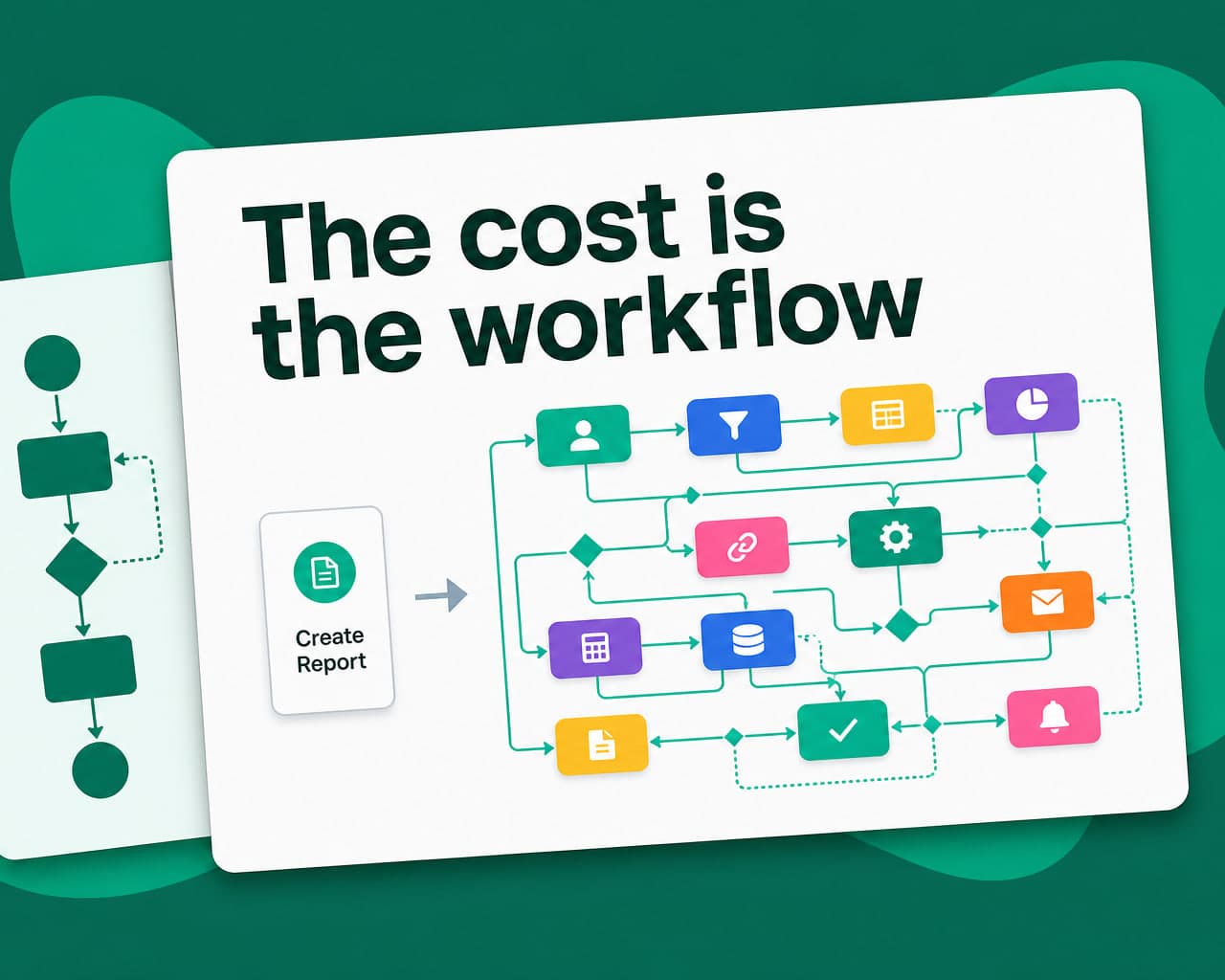
A single translation call has no interesting failure modes. A run that creates an asset, translates it into forty languages, adapts each into ten placements, gates two of them for review and publishes the rest has a great many.
Partial failure, ordering, retries that must not duplicate work, a reviewer who is on leave — that is workflow engineering, and it is the part that takes a team a year and is invisible in a business case.
Scale makes it worse rather than better, because the failure modes are combinatorial across content types.
The honest test
Ask what happens when the person who built it leaves.
A narrow script survives that. A half-built platform does not, and the usual outcome is a system nobody will change, working around it rather than through it.
Buy where the requirement is breadth — memory across every modality, quality control that returns findings, an asset manager holding the output — and build the one narrow connector that is genuinely specific to you.
That combination is almost always right, and it is rarely the way the question gets framed.
FAQ
When does building a localization system make sense? When the requirement is one narrow, stable task you can fully specify — translate these strings on this trigger into these languages, with no review step. That is a small build that runs for years.
What gets underestimated in a build? Everything after the translation call. Format handling, memory matching and write-back, review roles and audit, orchestration with partial failure and retries, and quality checking, which is never finished.
Why is orchestration the argument for buying? Because a single translation call has no interesting failure modes, while a run spanning creation, forty languages, ten placements and two review gates has many, and they compound across content types.
What is the practical test for build versus buy? Ask what happens when the person who built it leaves. A narrow script survives that; a half-built platform becomes a system nobody will change, and teams work around it rather than through it.