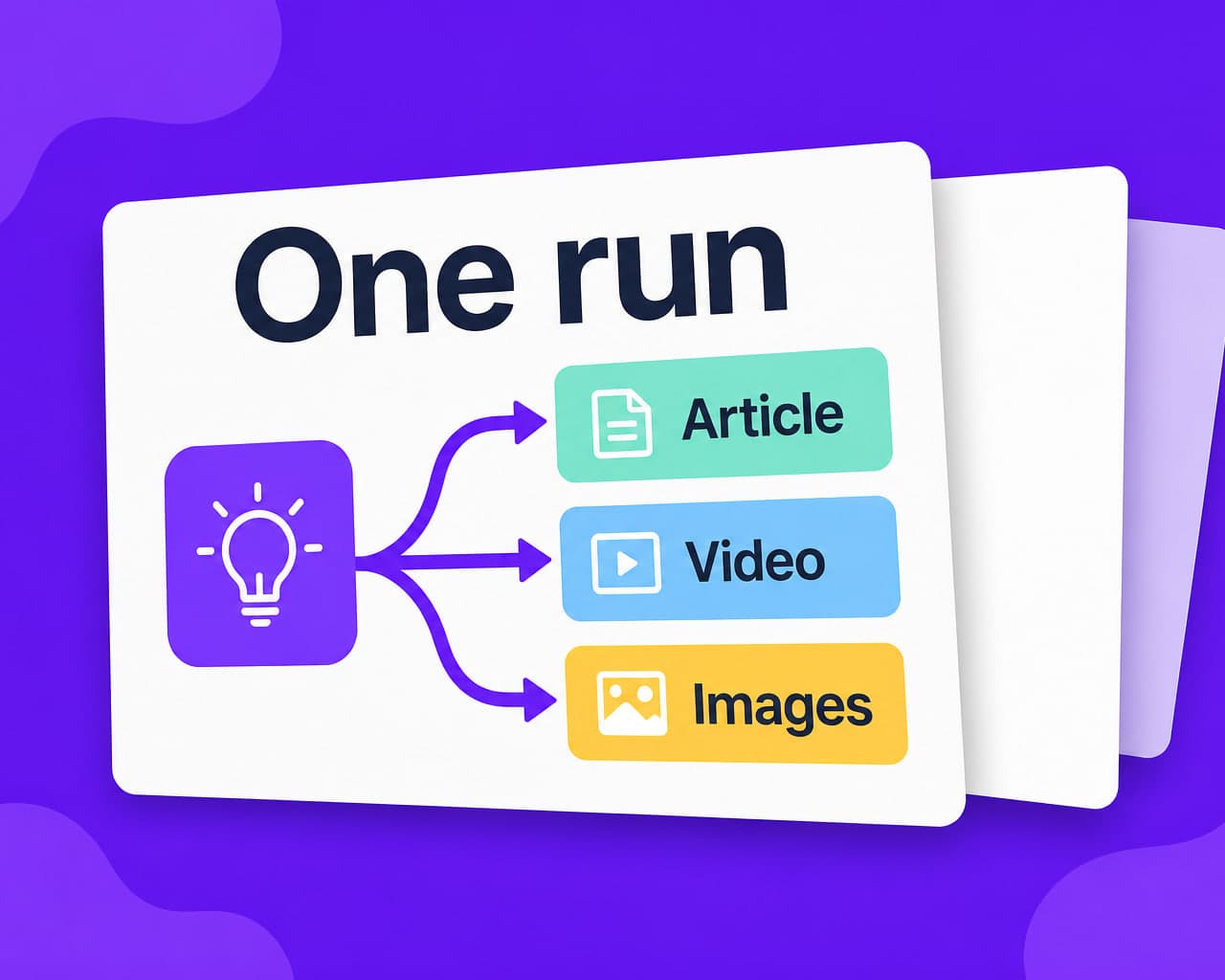
Quick answer — A translation management system organizes language work. A connected content platform can also create and adapt the assets around it. The categories overlap, so choose against a real workflow: the brief, language resources, finished formats, review, and next handoff.
Vitra Universe connects creation, translation, personalization, and human review. Vitra TMS is its context-first translation system.
The buyer's question has become wider
A localization request may start as a document. It may also start as a campaign idea that does not have a finished source asset yet.
Imagine the marketing team needs a product image, a short tutorial video, a landing-page explanation, and versions for several markets. Someone must create the source, agree on its claims, translate it, adapt the design and timing, review the results, and prepare them for the right channels.
Translation is essential. It is not the only job.
Do not judge a category by its oldest example
Many established TMS platforms now describe AI, context, automation, websites, software, and multimedia work. Some content platforms also offer language-management tools. Neither label tells you how well a particular job will work.
An experienced localization team may value an established translator environment, vendor processes, or a connector it has already configured. A campaign team may need creation and personalization connected directly to the language decisions.
Keep both requirements visible. Switching tools is worthwhile only if the new workflow solves a real need.
Map the work before the shortlist
| Job | What the team needs to establish |
|---|---|
| Brief | Product facts, audience, purpose, source material, and approved claims |
| Creation | A source asset worth adapting, not just an attractive preview |
| Translation | Language resources, contextual meaning, and target-market wording |
| Adaptation | Design fit, aspect ratio, subtitle timing, or spoken delivery |
| Personalization | Approved variables, correct audience data, and safe claim handling |
| Review | A responsible person checking the finished asset |
| Delivery | Supported output formats and the actual destination workflow |
A platform does not need to do every task natively to be useful. A reliable connection to an existing tool may be the best option. Test the permissions, inputs, and outputs that connection requires.
Where Vitra TMS fits inside Universe
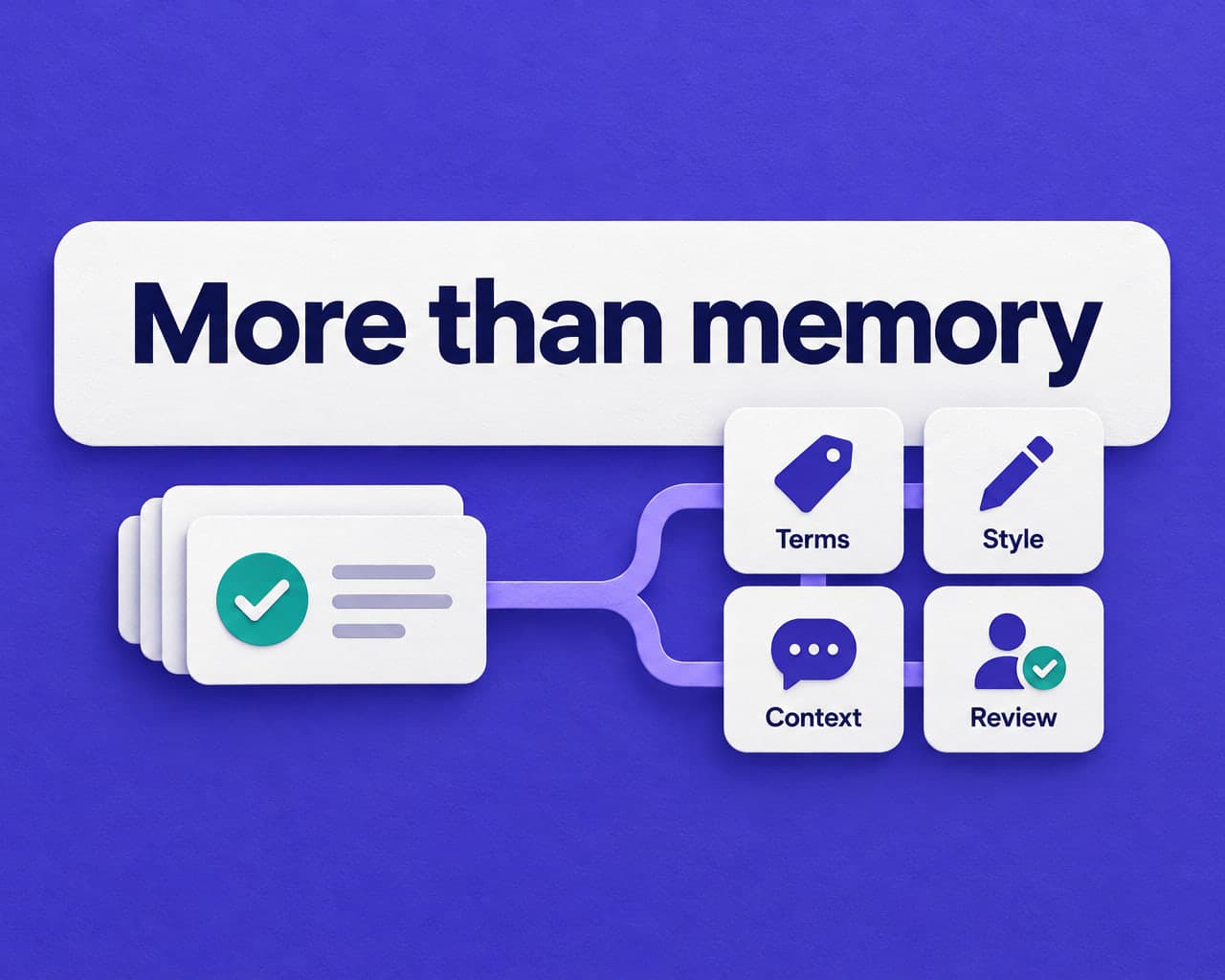
Vitra TMS brings together adaptive memory, terminology, style guides, glossary, context, and human review. Vitra TM keeps reviewed translations useful for future work. Vitra TB organizes concepts and multilingual terms.
These resources give the language job more than an isolated sentence. They explain the product, audience, and purpose, and provide the wording the team has already decided.
Universe connects that job to creating images and videos, adapting designs, dubbing footage, and personalizing approved content. Vitra Flow links repeatable steps and places human approval where the workflow needs it.
The benefit is the connection between decisions and assets—not a promise that context makes every draft correct.
Evaluate a complete campaign
Use a hypothetical device launch. The source headline says “Ready when you are,” the setup instruction says “Charge before use,” and the approved product name must stay unchanged.
A useful pilot includes:
- A landing-page paragraph explaining the product.
- An image with the headline and name inside the design.
- A short tutorial script and its dubbed output.
- The same terminology, style guidance, and reviewer for each target language.
Check whether “charge” keeps its battery meaning, the product name remains consistent, and the image and video preserve the approved claim. Review the actual layout and spoken result.
These checks are more revealing than submitting one sentence to each platform and comparing which answer appears faster.
Compare cost against the finished scope
Words can be a useful unit for text. Credits can be a useful way to account for different jobs. Neither alone describes the cost of an entire campaign.
Include source creation, translation, media processing, manual corrections, review time, connectors, and export or delivery work. Document what is included in the evaluated plan and what requires another service.
Vitra's pricing page explains the free starting credits and the option to subscribe or top up. Use your pilot's actual jobs to understand usage rather than assuming one credit covers every format equally.
Keep review and handoffs deliberate
A reused translation may still need checking when the product claim changes. A local headline may need a different example. A subtitle may need a shorter variant without changing the meaning.
Let AI and agents handle repeat work. Give people the context, source, and finished surface needed to judge what matters. For medical, legal, financial, or other specialist claims, use the appropriate qualified reviewer.
Before a wider rollout, ask what happens after approval. Can the next team find the current asset and its resources? Is the required destination connected, or will the team export a supported format? Do not assume that an export button proves automatic publication.
The platform comparison collection gives each provider a specific pilot and links to its official information. Start there, then test with the content and constraints your team actually has.
FAQ
How is an AI content platform different from a translation management system?
A TMS organizes multilingual language work and its resources. A content platform can also create, adapt, and personalize the assets around that work. There is overlap: compare each platform's current capabilities and the complete job your team needs to finish.
How should we compare the cost of a content workflow?
Compare the finished scope, not only a word rate or a credit price. Include creation, translation, media processing, editing, review, required integrations, and delivery. Use the same content, language set, and acceptance criteria for each provider.
Do you still need human translators with an AI content platform?
Qualified people remain important for meaning, local relevance, specialist terminology, and high-stakes claims. AI can handle repeatable steps, while the team decides where expert review and explicit approval are required.
What can go wrong when each format uses a separate tool?
The brief, approved terminology, review decision, or current source can get lost at a handoff. Separate tools can work well when those connections are managed. Test whether your workflow keeps the relevant context and assets available to the next person.