Quick answer — Amazon's main image must sit on a pure white background, fill most of the frame, and be large enough to zoom, with no added text, logos or props. Secondary images are far looser, which is where the rest of the selling happens.
Vitra.ai Universe generates, adapts and translates the whole set.
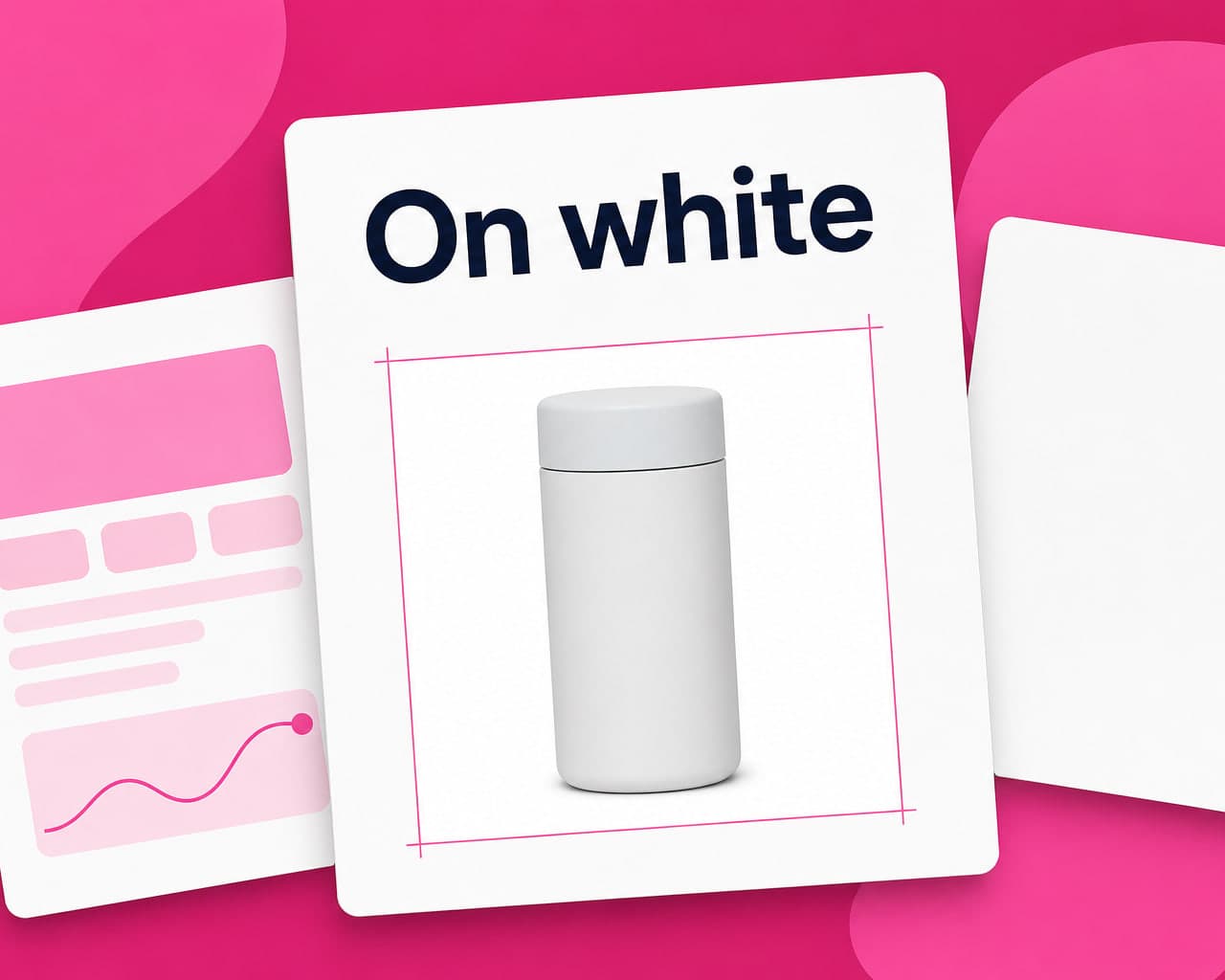
The main image is the strict one
Every other slot gives you room. The main image does not, because it is what appears in search results next to competitors and Amazon standardises it so the grid reads cleanly.
| Requirement | Main image |
|---|---|
| Background | Pure white, RGB 255/255/255 |
| Frame fill | Product occupies most of the frame |
| Longest side | 1600px or more so zoom works; 1000px is the floor |
| Added text, logos, watermarks | Not permitted |
| Props and accessories not sold | Not permitted |
| Format | JPEG is safest; PNG, TIFF and GIF accepted |
Check the category rules on top of these. Apparel, media and a few others carry extra conditions, and a listing suppressed for the wrong main image stops selling immediately rather than ranking lower.
Secondary images are where you actually sell
Everything the main image forbids is allowed here — text callouts, lifestyle scenes, size graphics, comparison charts, packaging.
Most sellers under-use them. The main image is fought over and the other six slots sit half empty, when those are the ones answering the questions that stop a purchase.
Doing it across a catalogue
Two thousand listings cannot be checked by eye, and the failures are boring rather than interesting: an off-white background at 254/254/254, a product sitting at 60% of frame, a 900px file that silently loses zoom.
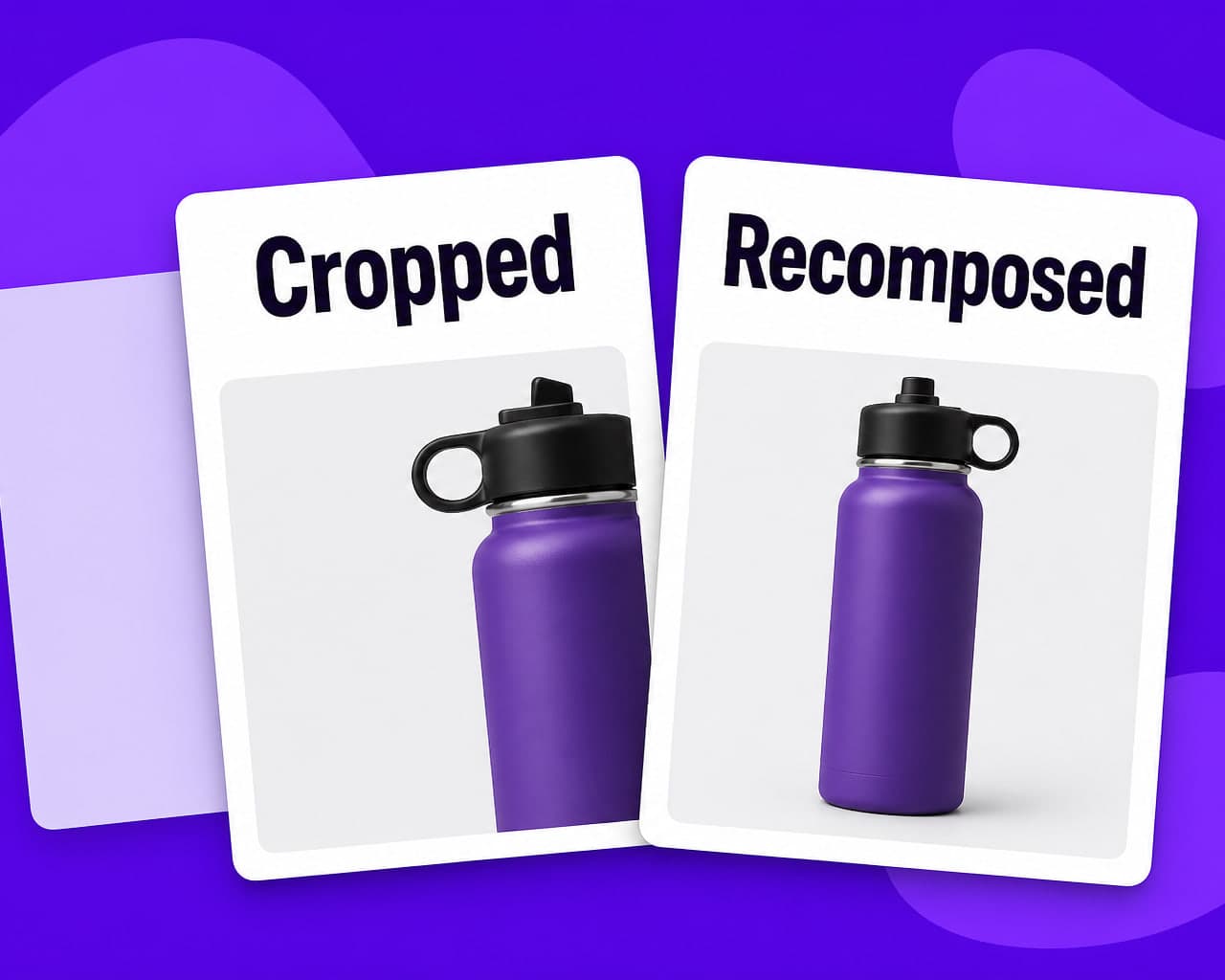
Automating the check is the only version of this that holds. Image personalization produces the compliant main image from whatever the source was — background replaced, product scaled to fill, exported at zoom resolution — and quality control flags the ones that need a human. Keep the originals somewhere addressable. When a spec changes, and it does, you want a re-export rather than a re-shoot, which is the argument for keeping the source rather than only the upload.
The one that catches people out
Text baked into a secondary image is fine on Amazon and useless in Germany.
Selling the same catalogue on another Amazon marketplace means those callouts, size charts and comparison graphics have to exist in that language, and they are pixels rather than fields. Building them as layered assets is what makes that a re-render instead of a redesign.
Below the main image, A+ content is where the rules loosen and the localization work begins.
FAQ
What are Amazon's main product image requirements? A pure white background at RGB 255/255/255, the product filling most of the frame, a longest side of at least 1000px so zoom activates, and no added text, logos, watermarks or props that are not part of the sale.
What image size should be uploaded to Amazon? At least 1600px on the longest side. Zoom needs 1000px as a floor, and zoom measurably helps conversion, so uploading at the higher size costs nothing and avoids re-exporting later.
Can text be added to Amazon product images? Not on the main image. Secondary images allow text, callouts, lifestyle scenes and comparison graphics, and most sellers leave those slots underused while competing hard on the one image that permits nothing.
How do large catalogues stay compliant with image rules? By automating the check rather than sampling. The common failures are near-white backgrounds, products sitting too small in frame, and files below zoom resolution — all detectable without a human opening the file.