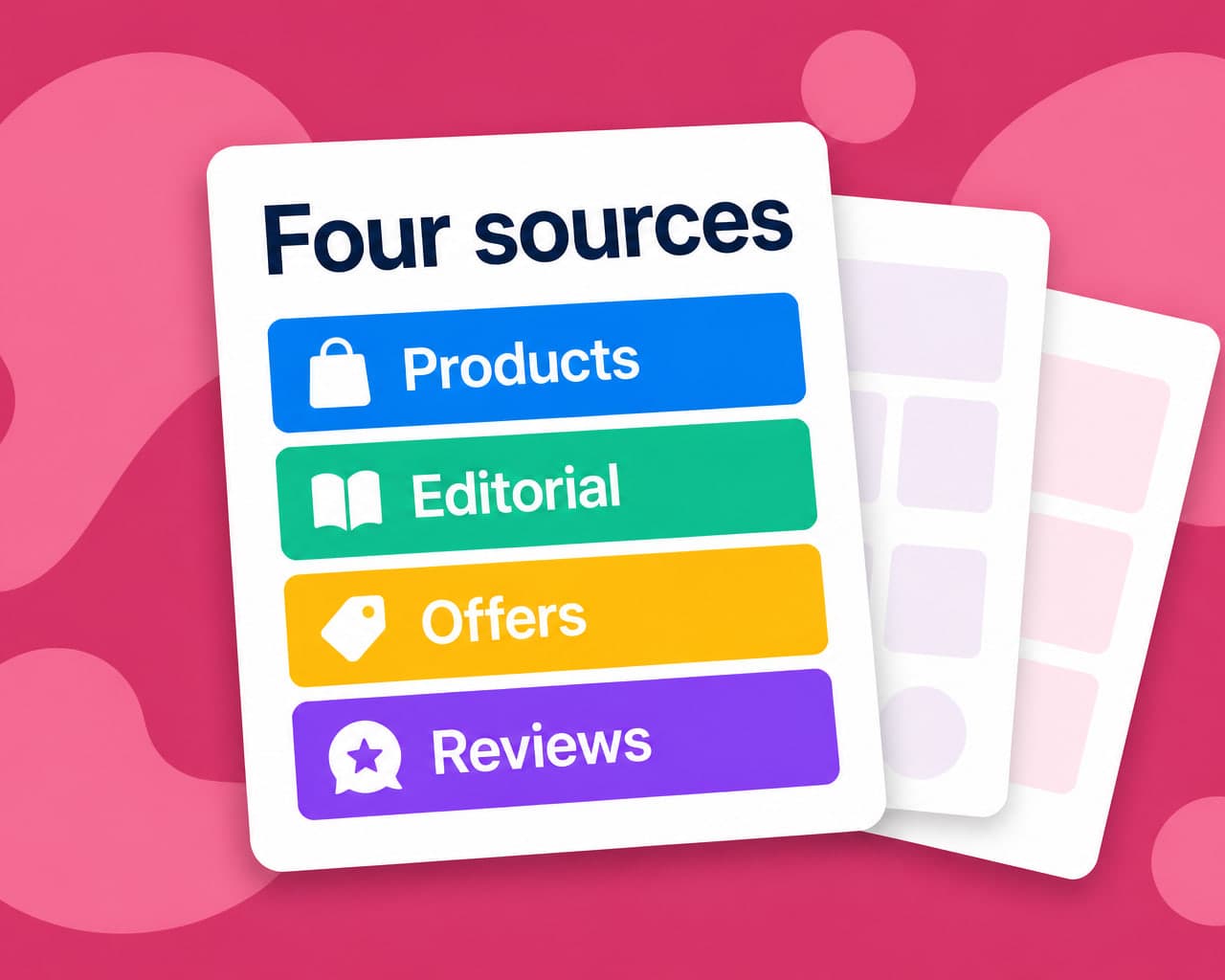
Quick answer — A retail website is not one content source. Product copy comes from a PIM, editorial from a CMS, offers from a promotions engine and reviews from a third party, and a translation project scoped to the CMS covers perhaps half of what a shopper reads.
Find every source before you pick a tool
Open a product page and ask where each block came from. The title and attributes are almost certainly PIM. The buying guide is CMS. The banner is the promotions engine. The reviews are a widget from another vendor entirely.
Most retail translation projects scope to the CMS because that is the system the marketing team owns. The shopper then lands on a page that is half translated, which reads worse than a page that is not translated at all, because it looks broken rather than foreign.
Translate the layer, not the page
The durable answer is a layer in front of everything: a translation proxy or an edge layer that renders whatever the page assembles, whichever system it came from. That is what website translation does, and it is why no-code approaches outperform per-system integrations in retail specifically.
Per-system integration is the alternative and it means four projects, four budgets and four things to maintain.
Do not translate the whole catalogue
A retailer with sixty thousand SKUs does not need sixty thousand translated pages on day one. Ninety percent of traffic lands on a few thousand.
Translate by revenue rank, and let the rest fill in over time from translation memory as the memory grows.
The parts people forget
Size guides, delivery and returns, care instructions, and the checkout error states. Nobody plans for error states, and they are exactly where a confused shopper abandons a basket.
Drift is the operational risk
A product description edited in English and not re-translated is worse than an untranslated one, because it now says something the retailer no longer claims. Fire the translation on the publish event and the problem never starts.
Where to start
The top thousand products by revenue, plus delivery, returns and checkout, in one market.
Formats sit in retail translation and the capability map in AI for retail.
FAQ
Why do retail website translations end up half-finished? Because a retail page is assembled from several systems. Product copy comes from a PIM, editorial from a CMS, offers from a promotions engine and reviews from a widget, and most projects scope only to the CMS.
Is a translation layer better than per-system integration? For retail, usually. A layer renders whatever the page assembles regardless of source, while per-system integration means four separate projects, four budgets and four things to keep working.
Should a retailer translate its entire catalogue? No. Around ninety percent of traffic lands on a few thousand products, so translating by revenue rank and letting memory fill the tail in over time costs a fraction and covers nearly as much.
Which retail pages get forgotten? Size guides, delivery and returns, care instructions and checkout error states. Error states in particular are where a confused shopper abandons a basket, and nobody scopes them in.