Quick answer — EPG metadata is the title, synopsis, genre and cast data that populates guides and search. It translates badly because every field has a hard character limit and the genre list is a fixed taxonomy rather than free text.
Vitra.ai Universe handles the dub, the captions and the artwork around them.
The text nobody treats as content
Metadata is how a programme gets found, and it is usually handled as a database export rather than as writing.
That is why translated guides read like translated guides. A synopsis truncated mid-word, a genre that does not exist locally, a title translated differently in the guide than on the artwork.
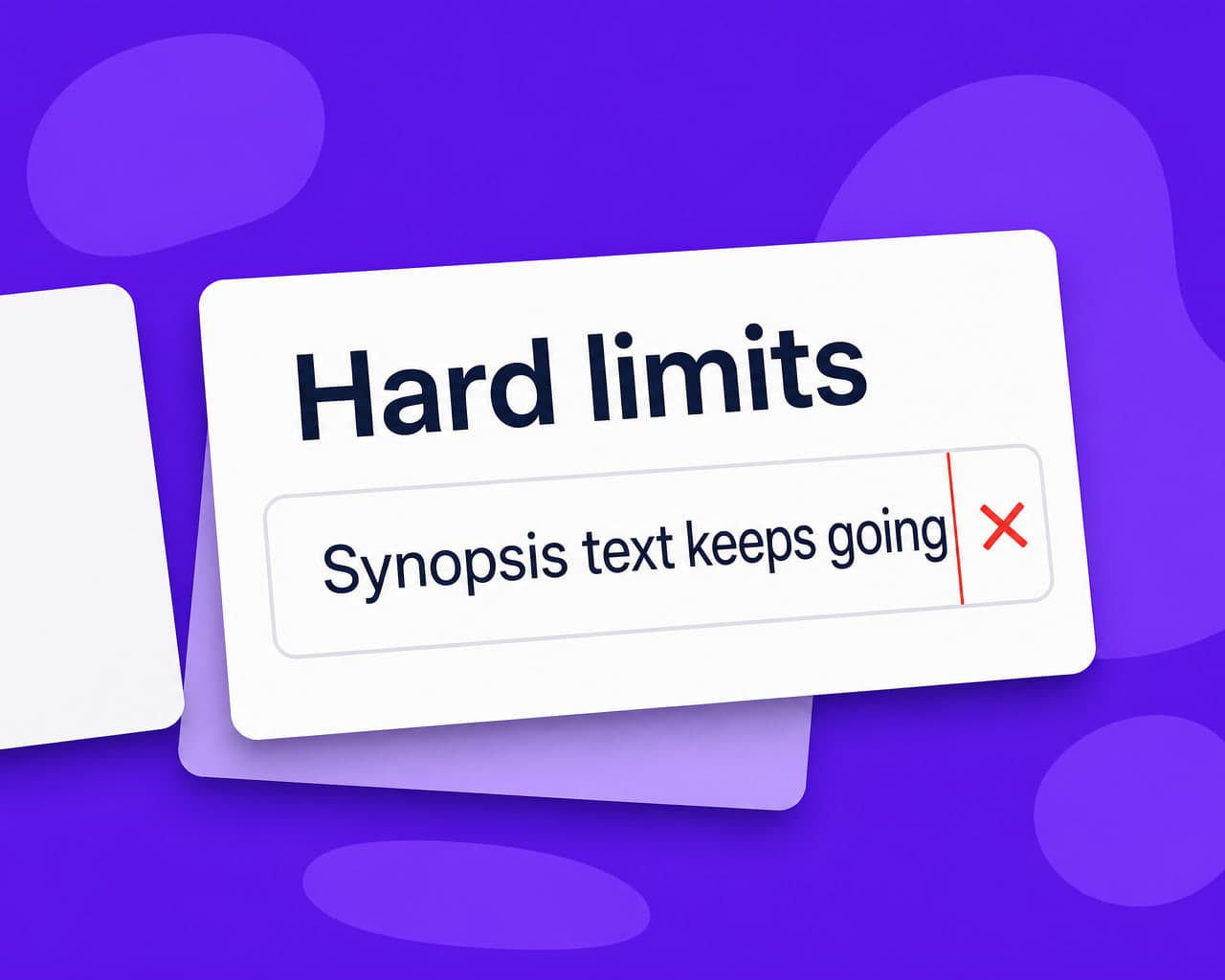
Character limits do the editing
| Field | Typical constraint |
|---|---|
| Title | Very short, and often already fixed by marketing |
| Short synopsis | Around 100 characters |
| Medium synopsis | A few hundred |
| Long synopsis | A paragraph |
| Genre | Chosen from a fixed list |
Most languages run longer than English, so a synopsis written to exactly fill the English limit cannot be translated into the same limit. It has to be rewritten shorter.
Systems that truncate rather than reject make this worse, because nothing fails — the guide simply shows a sentence that stops.
Write the short synopsis natively per language. It is one line and it is the one most people read.
Genre is a taxonomy problem
Genres are not translated. They are mapped, from your list to the platform's list, and the lists disagree. A category that is meaningful in one market may have no equivalent in another, and the mapping is a decision somebody has to own rather than a lookup. Guessing produces programmes filed where nobody browsing would find them.
Titles have to agree with everything else
The guide title, the artwork title and the title spoken in the trailer should be the same words. They frequently are not, because artwork is handled by marketing and metadata is handled by operations, and the two decide independently. Fixing the title once in a translation memory and drawing every surface from it is the only version of this that survives a catalogue of any size. Cast and crew names need attention in non-Latin scripts, where transliteration conventions vary and search depends on matching what a viewer would actually type.
For the volume, document translation handles the synopsis fields in bulk, and an automated step on ingest means a new title arrives with its metadata already prepared rather than joining a queue.
The localized title also has to agree with the artwork, which is where key art localization picks it up.
FAQ
What is EPG metadata? The title, synopsis, genre, cast and crew data that populates electronic programme guides, on-demand menus and search. It determines whether a programme can be found, which is why it is content rather than a database export.
Why can synopses not be translated within the same character limit? Because most languages run longer than English. A synopsis written to fill the English limit exactly will exceed it in translation, and systems that truncate rather than reject show viewers a sentence that stops mid-word.
How should genres be handled across markets? Mapped rather than translated. Genre fields draw from fixed taxonomies that differ by platform and market, and a category with no local equivalent needs an owned decision rather than a literal rendering.
Why do programme titles differ between the guide and the artwork? Because marketing owns artwork and operations owns metadata, and they decide independently. Fixing the localized title once and having every surface draw from it is the only approach that scales past a small catalogue.