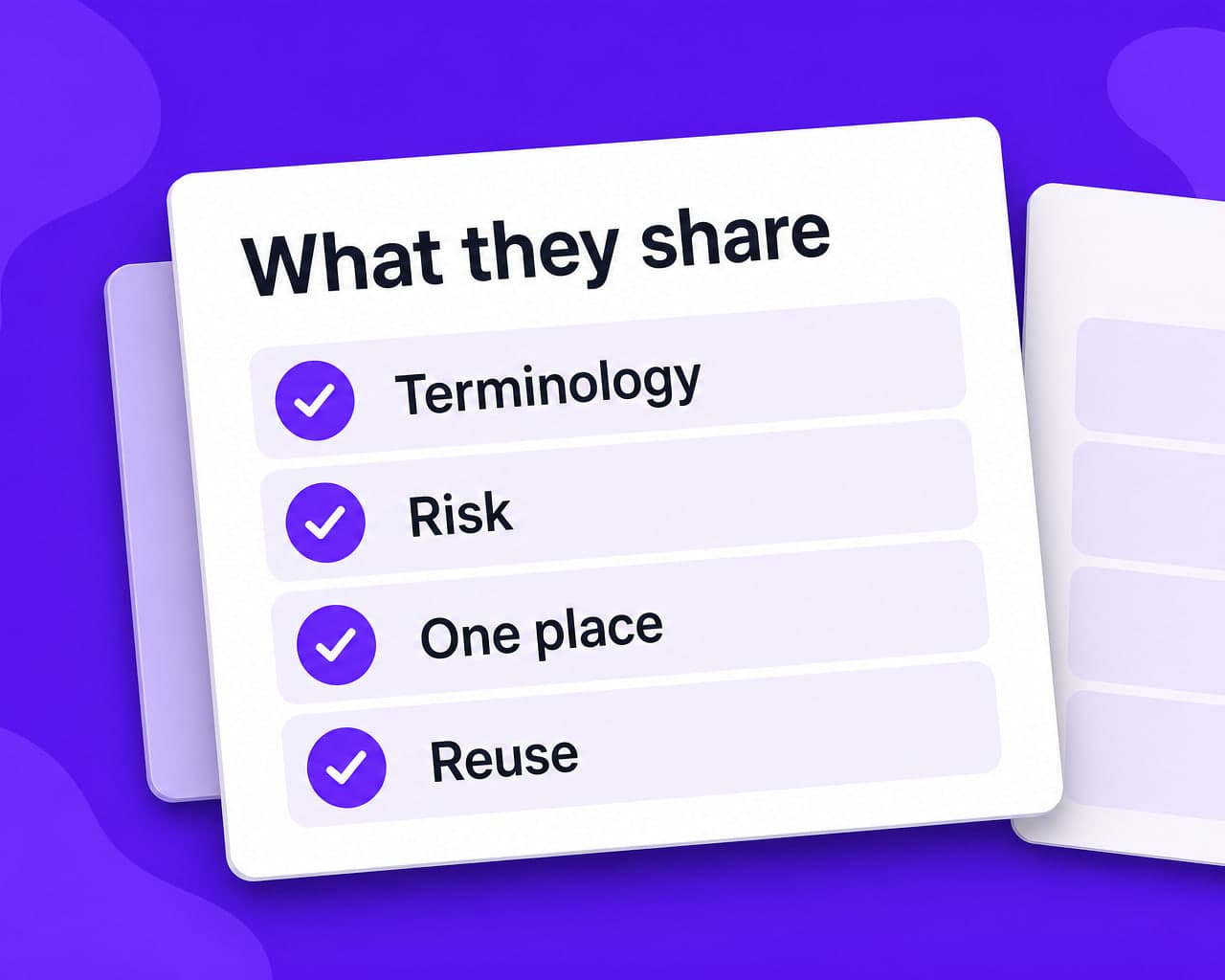
Quick answer — Successful localization projects settle terminology first, route review by risk, keep every asset and approval in one place, and measure reuse. The common factor is one system rather than a chain of them.
Vitra.ai Universe creates, translates, adapts and publishes from one place.
Four traits, consistently
Programmes that work do the same four things, regardless of industry or size.
They settle terminology before translating anything. They route review by consequence rather than by volume. They keep every asset and every approval somewhere addressable. And they measure reuse, so they can tell whether the thing is compounding.
None of that is about translation. All of it is about setup.
Before the first file moves
| Set up | Why now |
|---|---|
| Glossary, pinned | Everything after inherits it |
| Tone brief per language | Formality is grammatical, not stylistic |
| Review band by risk | Otherwise everything or nothing gets reviewed |
| One memory | Reuse only compounds if it is shared |
| Asset location | Or the master is unfindable in six months |
| Success metric | Decided after the fact means never |
Terminology first is the one people skip because it feels like preparation rather than progress. It is the hour that pays back most, because every later correction to a term means re-approving everything that contains it.
Route review by consequence
Contractual, clinical and regulated content always reaches a person. Product and marketing copy reaches one only when quality control flags it.
That produces a queue short enough to be taken seriously, which is the actual goal — a reviewer facing forty files skims; a reviewer facing three findings decides.
Keep it in one place
Every content type reading and writing one memory, so a claim approved for the website resolves identically in the app, the document and the dubbed video.
Every output landing in one asset manager, so next quarter starts from the master rather than from whatever someone can find.
That unification is the difference between a programme and a series of projects, and it is precisely what is missing in the failures.
Telling early whether it is working
Three numbers, watched from the first month. Reuse rate should climb. Reviewer edit distance should fall. Cost per market should drop with each market added.
If all three are flat after two quarters, the pipeline is running but not learning — corrections are not writing back, and the programme will cost the same in year three as in year one.
FAQ
What do successful localization projects have in common? Terminology settled before translation starts, review routed by consequence rather than volume, every asset and approval kept in one addressable place, and reuse measured from the beginning.
What should be set up before any translation begins? A pinned glossary, a tone brief per language, a review band defined by risk, one shared memory, a decided asset location, and an agreed success metric. Terminology first, because everything inherits it.
How should review be routed? By consequence. Contractual, clinical and regulated content always reaches a person; other content only when an automated check flags it. A short queue gets real attention where a long one gets skimmed.
How do you know early whether a localization programme is working? Watch reuse rate, reviewer edit distance and cost per market. Reuse should climb, edit distance should fall, and cost per market should drop. All three flat means the pipeline is not learning.