Quick answer — Send a human the middle band only. Content that clearly passes ships, content that clearly violates is blocked, and the reviewer sees the ambiguous remainder with the score, the rule that fired and the model's reasoning already attached.
Quality control routes a Review verdict into a queue with the evidence attached.
The band, not the queue
Most moderation systems offer two answers and a queue behind them. Everything uncertain piles into the queue, the queue grows, and within a month somebody is approving in bulk without reading.
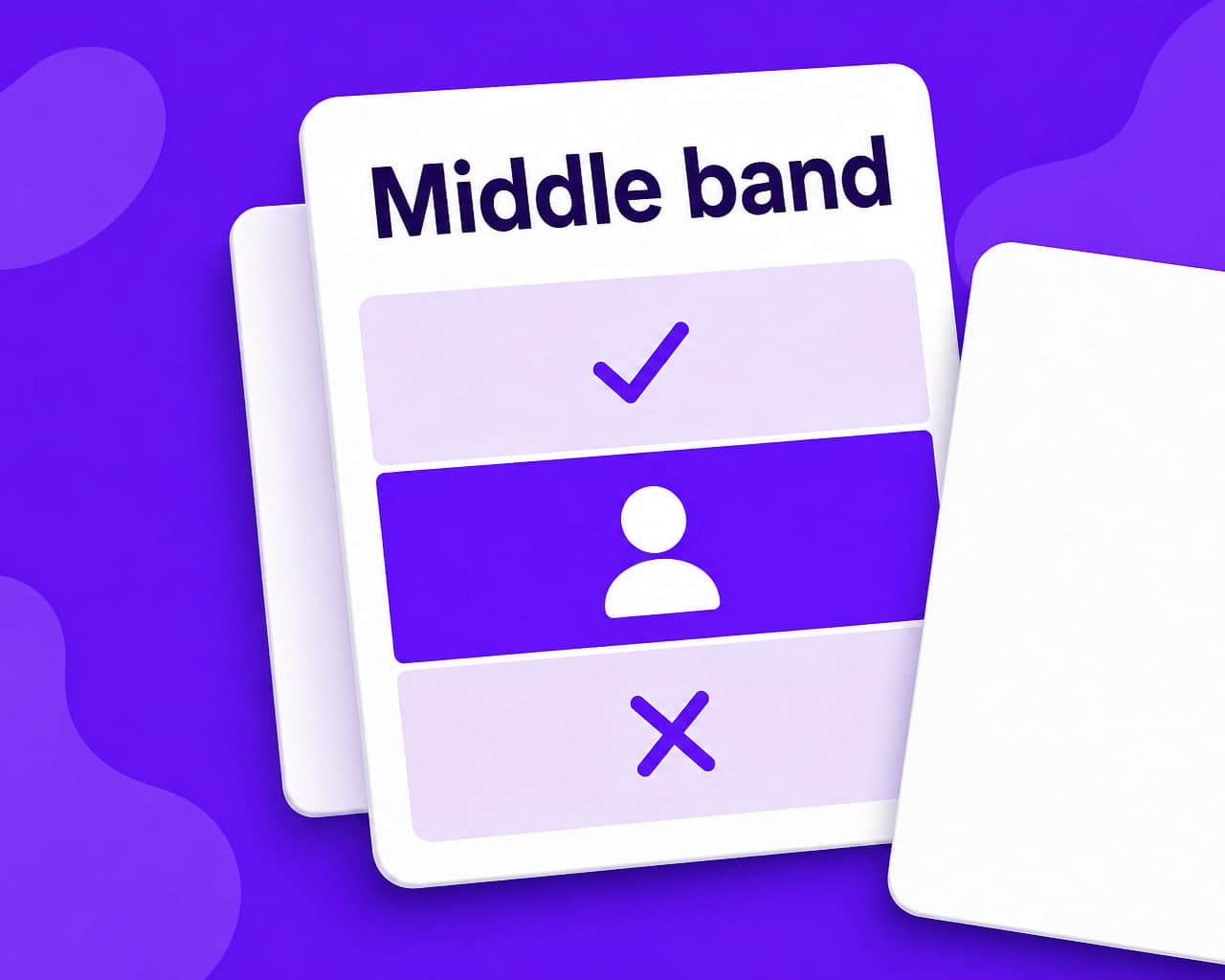
A three-verdict design fixes that by making the middle band explicit. Approved ships. Blocked stops. Review is a deliberately narrow slice where the score fell into an ambiguous range, and it is the only thing a person ever sees.
Where the boundary sits
The band is defined relative to a per-market threshold, and it is wider below than above — a small margin over the threshold approves, a much larger margin below still routes to review rather than blocking outright.
That asymmetry is the whole design. Being generous with review and stingy with approval means the system fails towards a person rather than towards shipping.
Worth knowing: at the shipped default the approval bar is a perfect score, so anything with any flagged concern reaches a human. If that produces too much volume, the correct fix is lowering the threshold deliberately, not widening what auto-approves.
What the reviewer gets
A verdict with no evidence is just an opinion. Every review carries:
| The overall score and verdict | And which market produced the worst one |
| Per-rule scores | Every rule that was checked, not just the ones that failed |
| A rationale per rule | Short, factual, capped so it stays readable |
| Findings beyond the rules | Concerns the model raised that no rule covered |
That last row is the one reviewers use most. It is where the model says "this isn't in your rulebook, but here is a problem" — and each finding arrives with a reusable rule statement the reviewer can promote into the pack.
Adjudication is a decision, not a correction
When a reviewer approves or rejects, the original model verdict is preserved alongside their call rather than overwritten. You end up with both, which is what makes the record useful later: a month of adjudications tells you where the model and your team disagree, and disagreement is where the rules need work.
When to skip the human entirely
Some content genuinely does not need review. Internal decks, throwaway social copy, anything with no external audience. The lever is the threshold, set per market, so a low-stakes market can run looser without touching a high-stakes one.
Where to start
The gate itself can sit inside a pipeline as a pause, which agentic workflows supports as a first-class step.
Run a month of assets and look only at the Review pile. If it is empty your threshold is too loose. If it is everything, it is too tight. The right setting is the one where reviewing the pile is a morning's work, not a role.
FAQ
When should content moderation involve a human? Only in the middle band. Content that clearly passes should ship and clear violations should stop automatically, leaving a human the ambiguous remainder with the score and reasoning attached.
What should a content reviewer be shown? The verdict and which market produced it, every rule that was checked rather than only failures, a short rationale per rule, and any concern the model raised that no existing rule covered.
Should a human decision overwrite the model verdict? No. Keep both. A month of adjudications then shows where your team and the model disagree, and that disagreement is the signal telling you which rules need rewriting.
How do you stop a moderation review queue growing out of control? Tune the per-market threshold rather than widening what auto-approves. The right setting makes clearing the queue a morning's work; if it has become a role, the threshold is wrong.