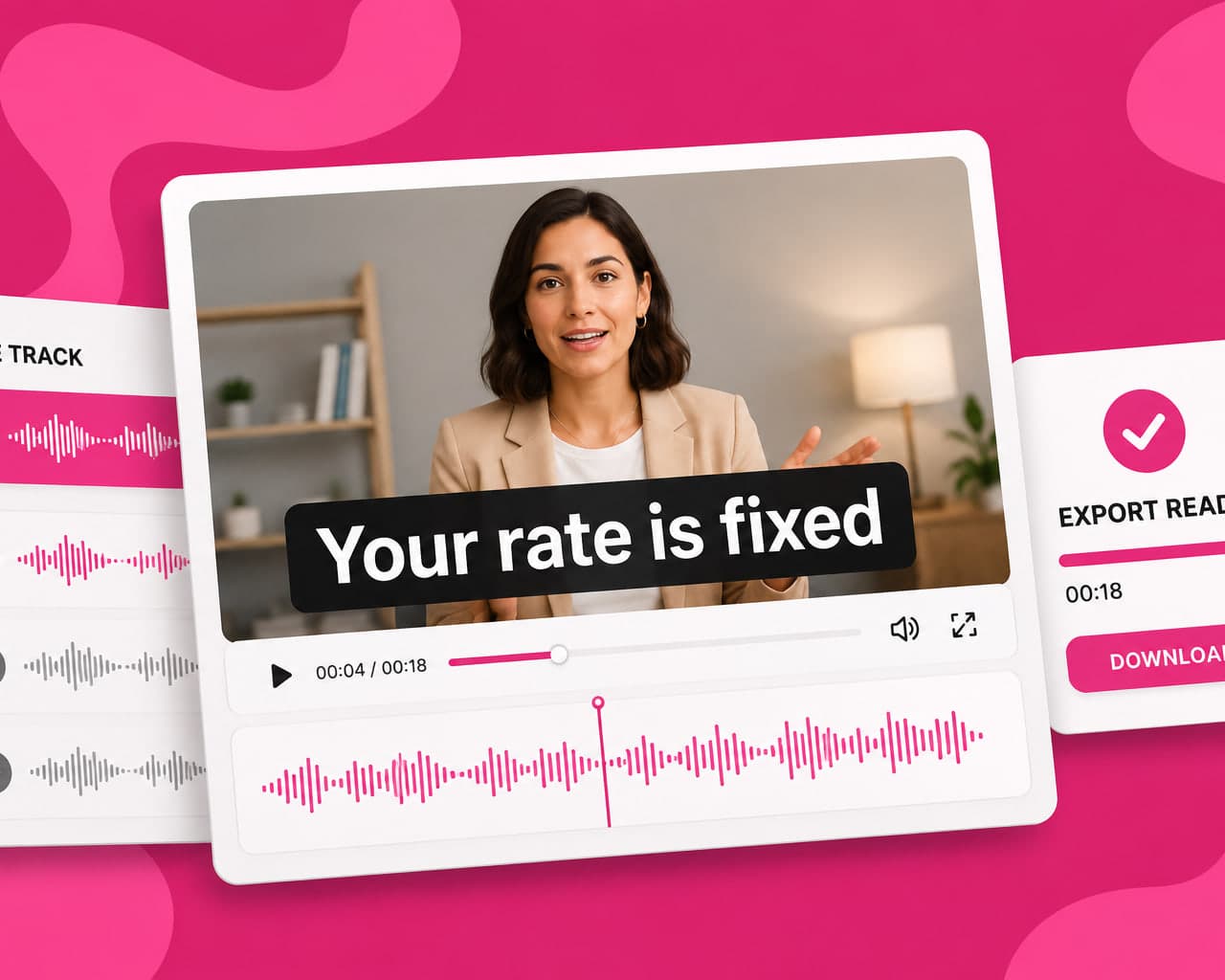

Quick answer — Output rises when one master is reused across languages and segments, and when approval moves to the script so the same review doesn't repeat for every render. Settle processing location, voice consent, training use and retention before the first job, not after.
Vitra.ai Universe covers the reuse and the review order together.
Filming was never the constraint
Ask a bank marketing team why they publish so few videos and the answer is rarely camera availability. It's the queue: brief, legal, brand, compliance, a rate check, then a shoot day everyone has to attend. Adding a second shoot day does nothing. Removing a review round does.
Two multipliers that don't need a camera
One master film, dubbed, becomes nine assets — the production cost was paid once and the incremental cost per language is a fraction of it. The same explainer with a different opening line and a different closing offer is a different asset for a different segment, built from the same recording.
| Approach | Assets from one shoot |
|---|---|
| One film per campaign | 1 |
| Dubbed into nine markets | 9 |
| Nine markets, three segments each | 27 |
The third row is where volume actually comes from, and none of it involves booking a studio. Video dubbing covers the language axis and video personalization the segment one — personalized video banking goes deeper into the second.
Approve the script, not the render
This is the hinge, where governance and throughput turn out to be the same problem.
If every rendered version goes through full review, review cost scales with output and the whole thing seizes at about the fifth asset. Worse, a wrong rate found in a finished video means regenerating audio and realigning lips across every language, where the same error caught in the translated script is a text edit taking minutes.
So the regulated fields — rate, fee, eligibility, risk warning — get locked at the script, and the variants inherit an approval rather than queuing for a new one.
Settle these before the first render
Where is the media processed? A branch explainer is low sensitivity. An internal module naming systems and controls is not, and neither is anything featuring an identifiable employee.
Do you have consent for the voice? If a named executive's voice is cloned, written consent covering the use, the languages and what happens when they leave is not optional. It's the question that comes back hardest later.
What does the vendor train on, and how long is anything kept? Both are contract terms rather than features, and your retention schedule already covers this even if the vendor's default doesn't.
What not to scale
Volume isn't the goal. Nine languages of a video nobody watched in English is nine times nothing. Multiply the asset that already performs.
Where to start
Take your best-performing explainer of the last year, dub it into two markets and build two segment variants. Four new assets, no shoot, one approval — and use it to test the contract answers rather than the output quality, since output rarely blocks a rollout. The text equivalent of this checklist is AI translation in banking.
FAQ
Why do banks produce so little video? Not because of filming capacity. The constraint is the approval queue - brief, legal, brand, compliance, a rate check - and a shoot day everyone has to attend. Adding shoot days does not change throughput.
How can a bank increase video output without filming more? By reusing one master across languages and segments. A single recording dubbed into nine markets with three segment variants each yields twenty-seven assets from one shoot day.
Should AI video be approved before or after it is generated? Before, at the translated script. A wrong rate found in a finished video means regenerating audio and realigning lips in every language, while the same error in the script is a text edit.
Does a bank need consent to clone an executive's voice? Yes, written and specific: the use, the languages, and what happens when that person leaves. It is the question that causes the most trouble when it was skipped at the start.