Quick answer — Pet insurance is sold direct to a young, digital, price-comparing buyer and claimed through a vet. The content that matters is social-first at acquisition and brutally clear about pre-existing conditions before the first claim.
Vitra.ai Universe covers the video, creative and document surfaces pet insurers use.
Direct, emotional, and bought by someone under 40
Pet has almost no intermediary layer. The customer finds you through a comparison site or a social feed, buys in minutes, and never speaks to a person until something is wrong with an animal they love.
That produces a content profile unlike any other line: heavy at the top, thin in the middle, and emotionally charged at the claim.
What each capability does here
| Capability | For pet |
|---|---|
| Video creation | Short social video, produced weekly rather than annually |
| Video dubbing | One creator-style explainer reused across markets |
| Image personalization | Breed and species variants of one campaign creative |
| Quality control | Animal imagery, which carries real cultural variance |
| Website translation | Cover comparison and the exclusions page |
| Document translation | Policy and vet claim form |
| Mobile app translation | Claim submission with photos and invoices |
| Translation memory | Condition and treatment vocabulary repeats heavily |
The pre-existing condition exclusion
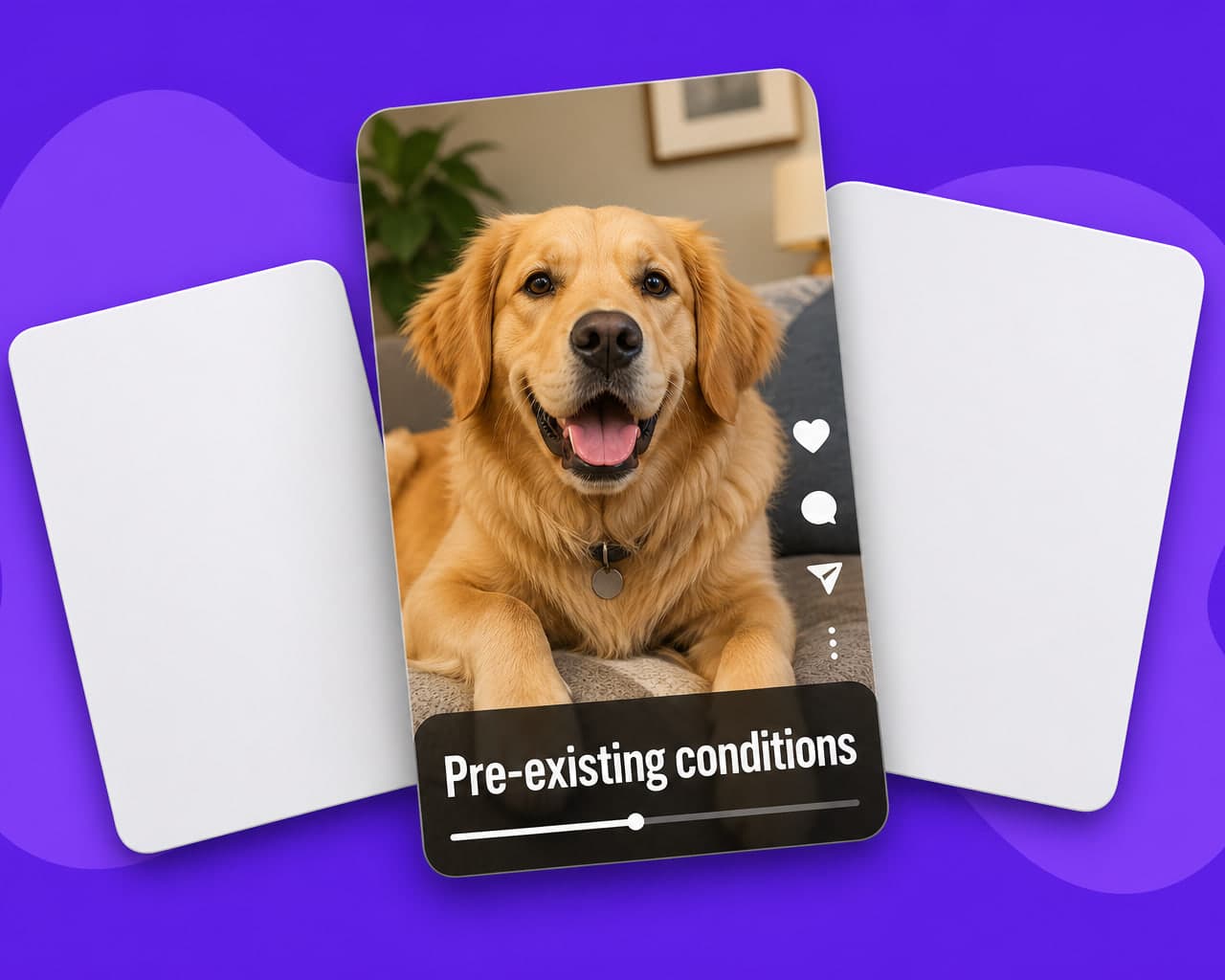
Almost every pet insurance complaint comes back to the same thing: the customer did not understand that a condition the animal already had would not be covered.
It is explained in the policy. Nobody reads the policy. So the useful place to explain it is at purchase, in thirty seconds, in the language the customer bought in — and doing that costs a small amount of conversion and prevents a large amount of complaint.
Most insurers are too nervous to lead with it. The ones who do have better retention, because the customers who stay understood what they bought.
Animal imagery is not culturally neutral
Dogs are family in some markets and unclean in others. Cats carry associations that vary widely. A campaign photograph that reads as warm in one country reads as inappropriate two borders away.
This is the one line where the cultural check on creative is about the subject rather than the styling, and it is worth running before spend rather than after.
The vet is the claims channel
Many pet claims are submitted by the practice, not the owner. That makes the vet practice a content audience — forms, portals, direct-payment instructions — and they are a professional audience with no patience for a bad translation.
Where to start
The pre-existing condition explainer, thirty seconds, in every language you sell in. It is the cheapest complaint reduction available in this line.
Most of it ships as a feed or a short video, which pet insurance translation goes through format by format.
Pet against the rest of a composite book: AI for insurance.
FAQ
What makes pet insurance content different from other lines? It is direct and social-first. There is almost no intermediary, the buyer arrives from a comparison site or a feed and purchases in minutes, so content is heavy at acquisition and thin until something goes wrong.
What causes most pet insurance complaints? The pre-existing condition exclusion. It is in the policy and nobody reads the policy, so the useful place to explain it is at purchase in thirty seconds, in the language the customer bought in.
Is animal imagery culturally sensitive? Considerably. Dogs are family in some markets and unclean in others, and cat associations vary widely. This is the line where the cultural check on creative is about the subject rather than the styling.
Are veterinary practices part of a pet insurer's content problem? Yes. Many claims are submitted by the practice rather than the owner, which makes vets a professional audience for forms, portals and direct-payment instructions - and a poor translation is obvious to them.