Quick answer — Survey translation determines whether responses are comparable across languages. A question that shifts meaning produces data that looks combinable and is not, so questions need testing rather than proofreading.
Vitra.ai Universe runs white-labelled, and on-premise where data cannot leave.
The output is data, not text
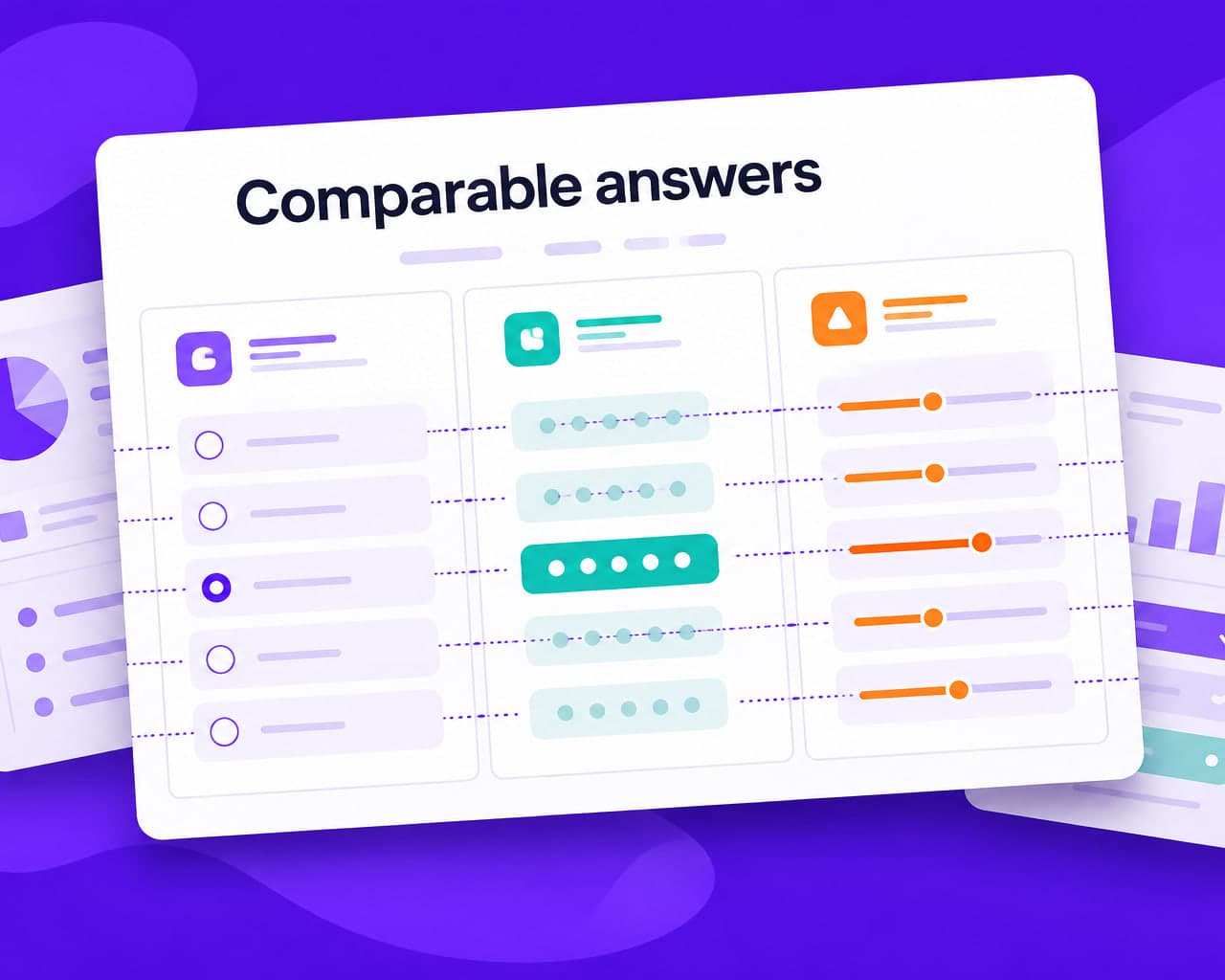
Most translated content is judged on whether a reader understands it. A survey is judged on whether the answers can be combined. If a question means something slightly different in one language, the responses to it are measuring a different thing, and aggregating them produces a number that looks solid and is not. Nobody downstream can detect that from the data alone.
Where questions shift
| Issue | Effect on data |
|---|---|
| A concept with no direct equivalent | Different question entirely |
| Response scales rendered unevenly | Points are not equivalent |
| Category lists that do not fit local reality | Forced or missing answers |
| Household and family definitions | Different unit counted |
| Sensitive topics phrased more directly | Non-response rises |
| Formality level | Changes willingness to answer |
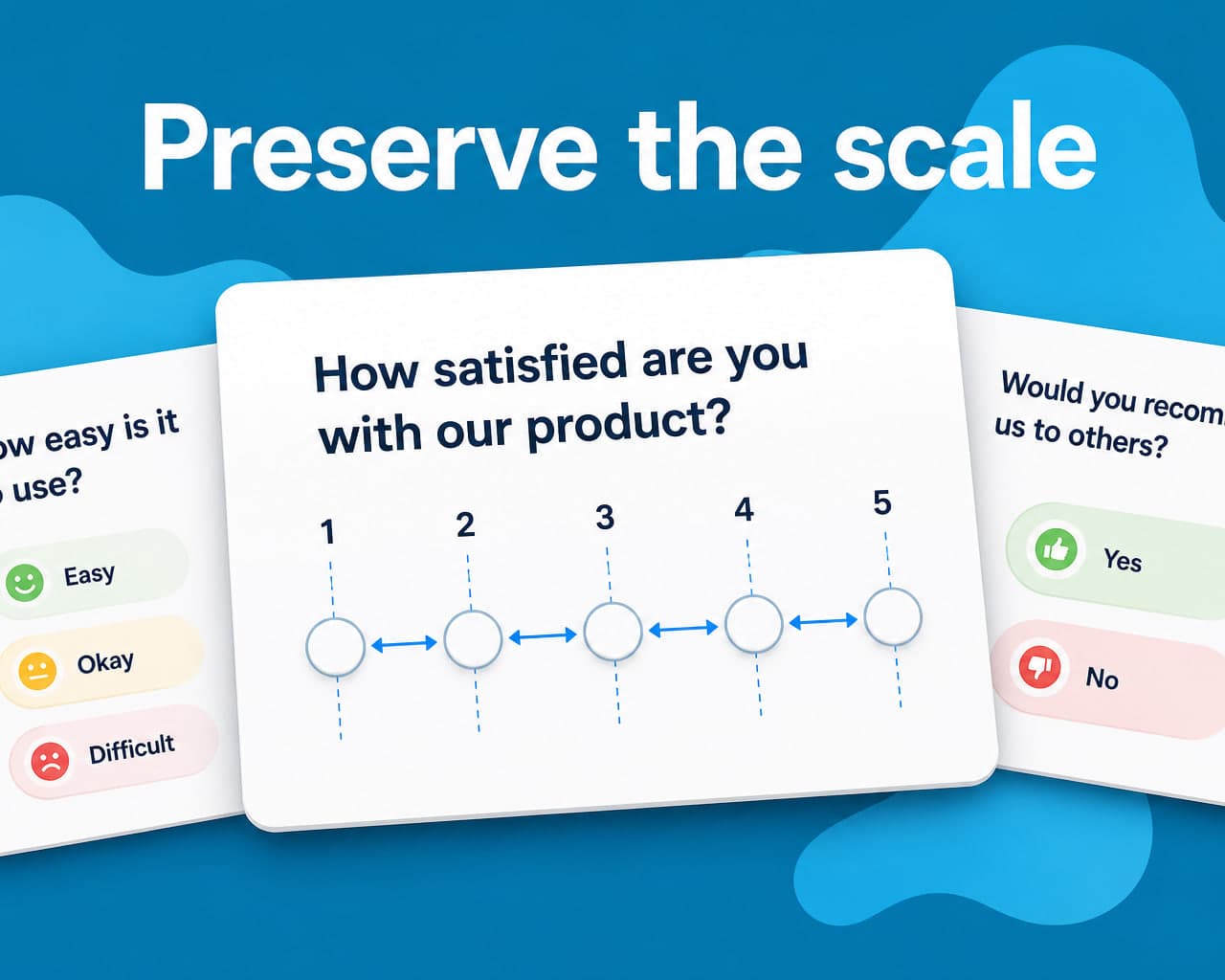
Response scales are the underrated one. Agreement and frequency scales rely on evenly spaced wording, and translations frequently compress or stretch the middle points, which changes the distribution without changing the question.
Test the questions, do not proofread them
Established survey practice tests translated instruments with real respondents before fielding, and asks people to explain what they think a question means.
That surfaces exactly the failures a linguistic review cannot see: a question understood differently, a category nobody fits, a scale point that reads as more extreme than intended. It costs a small amount before fielding and saves a data set afterwards.
Consistency across waves matters more than improvement
Once a question is fielded, changing its translation breaks comparison with earlier waves.
Improving a translation is therefore a methodological decision with a cost, not a quality fix. Record the wording used in each wave alongside the data, and treat changes as deliberate breaks rather than corrections.
The rest of the instrument
Instructions, help text, refusal options, privacy notices and the interviewer script all shape responses and all need the same care as the questions.
A privacy notice that reads as more intrusive in one language depresses response in that group, which shows up as a demographic gap rather than a translation problem.
Delivery
Translation memory keeps question wording identical across waves and instruments, and quality control checks every scale and category list rather than sampling.
Where responses are confidential and cannot leave your estate, translation runs on-premise, with air-gapped handling where the data classification requires it. The deployment shapes behind that are set out in private AI.
FAQ
Why is survey translation different from other content? Because the output is data rather than text. A question that means something slightly different in one language measures a different thing, and aggregating the responses produces a number nobody can detect as wrong.
What is the most underrated survey translation problem? Response scales. Agreement and frequency scales rely on evenly spaced wording, and translations often compress or stretch the middle points, changing the distribution without changing the question.
How should translated questions be checked? By testing with real respondents before fielding, asking them to explain what they think a question means. That surfaces misunderstandings and unusable categories that no linguistic review can see.
Can a survey translation be improved between waves? Only as a deliberate methodological decision, since changing wording breaks comparison with earlier waves. Record the wording used in each wave alongside the data.