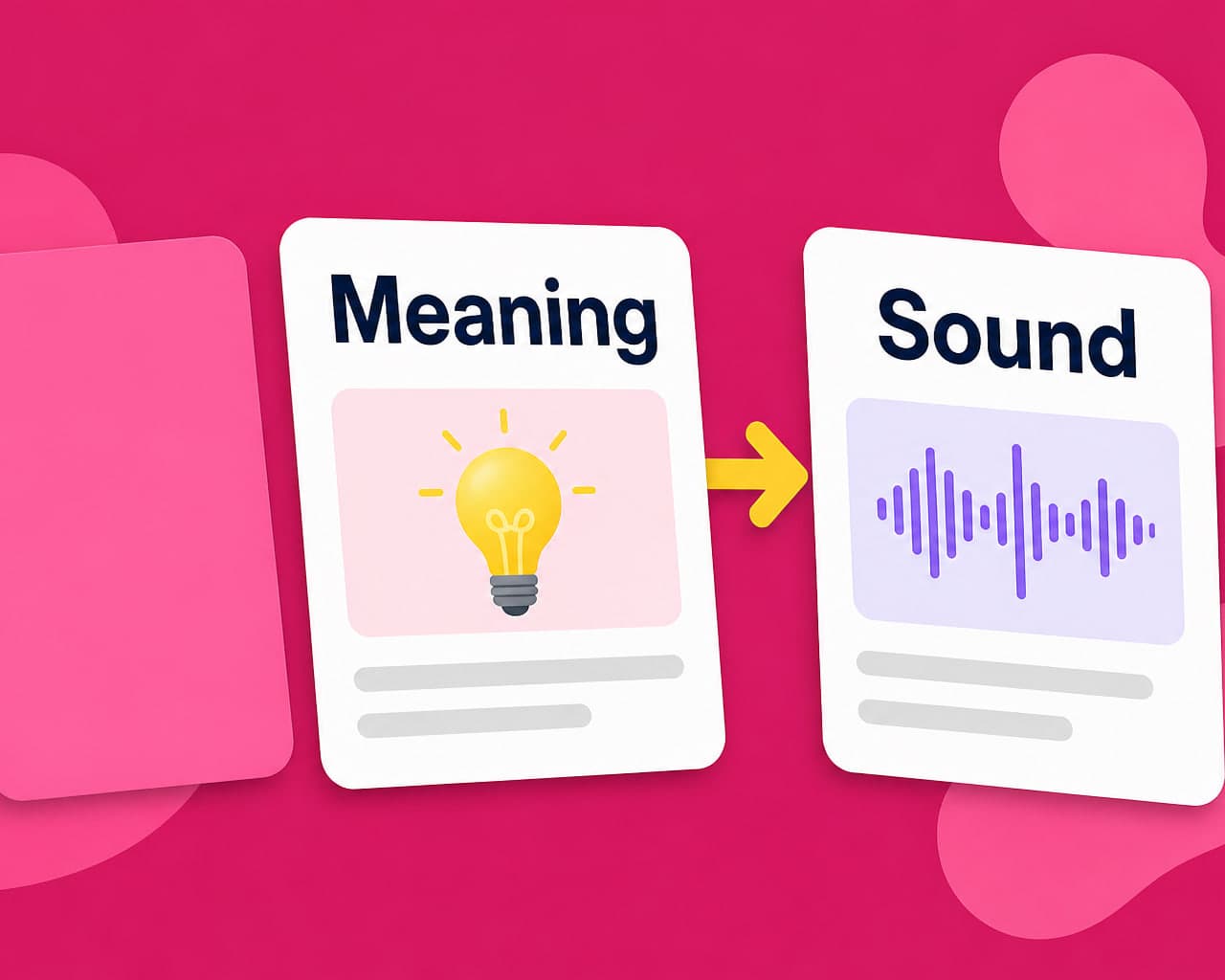
Quick answer — Translation carries meaning across languages. Transliteration carries sound across scripts, leaving the word itself intact. A shop called Sunrise Motors should be transliterated into Devanagari, not translated into the Hindi words for sunrise and motors.
Hyperlocal marketing picks the method per field automatically.
The difference in one example
Take a dealership called Sunrise Motors and localize it for a Marathi audience.
Translated, it becomes the Marathi words meaning sunrise and motors. It is now a different business with a different name, and nobody searching for the dealership will find it.
Transliterated, it becomes Sunrise Motors written in Devanagari script — same sound, same name, readable by someone who does not read Latin script.
| Translation | Transliteration | |
|---|---|---|
| Changes | The words | The script |
| Preserves | Meaning | Sound |
| Right for | Descriptive text | Names |
| Gets it wrong when | Applied to a proper noun | Applied to a sentence |
Why this matters more in some markets
In markets where the audience reads a non-Latin script, a Latin-script brand name is a barrier — not because it is offensive but because it is slower to read, and in a scrolling feed slower means skipped.
India makes this vivid because a single campaign can span Devanagari, Tamil, Telugu, Bengali, Kannada, Malayalam and Odia scripts. The dealership name has to appear in each, and it has to still be the dealership's name.
The rule that works
Decide per field, not per document:
- Transliterate proper nouns. Business names, people's names, brand names, product model names.
- Translate descriptive text. Addresses beyond the proper noun, area descriptions, offers, calls to action.
- Leave alone codes and identifiers. SKU numbers, registration numbers, anything that is looked up rather than read.
The middle case is the subtle one. In "Shop 4, MG Road, Bengaluru", Shop is descriptive and translatable while MG Road is a name and is not. Splitting a single address field between the two methods is exactly the kind of thing that gets done wrong by hand and right by configuration.
What happens when you get it backwards
Translated names read as absurd — a business whose name means something literal in the new language, which is memorable for the wrong reason.
Transliterated descriptions read as gibberish — the sound of English words written in Devanagari, which a Marathi reader can pronounce and cannot understand.
Where to start
Where the name sits inside artwork rather than a text field, image translation handles the swap.
Pull ten records from whatever list you are personalizing and mark each field as name, description or identifier. The split is usually obvious, it takes ten minutes, and it is the configuration everything downstream depends on. Part numbers are the clearest identifiers of all — spare parts catalogue translation.
FAQ
What is the difference between transliteration and translation? Translation carries meaning into another language and changes the words. Transliteration carries sound into another script and keeps the word, so a name stays the same name.
Should brand names be translated or transliterated? Transliterated. Translating a proper noun produces a different business with a different name, which nobody searching for the original will find.
Which fields should be translated rather than transliterated? Descriptive text - area descriptions, offers, calls to action, and the descriptive parts of an address. Codes and identifiers should be left alone entirely, since they are looked up rather than read.
Why does this matter most in India? Because one campaign can span Devanagari, Tamil, Telugu, Bengali, Kannada, Malayalam and Odia scripts, so a business name has to appear in all of them and still be recognisably that business.