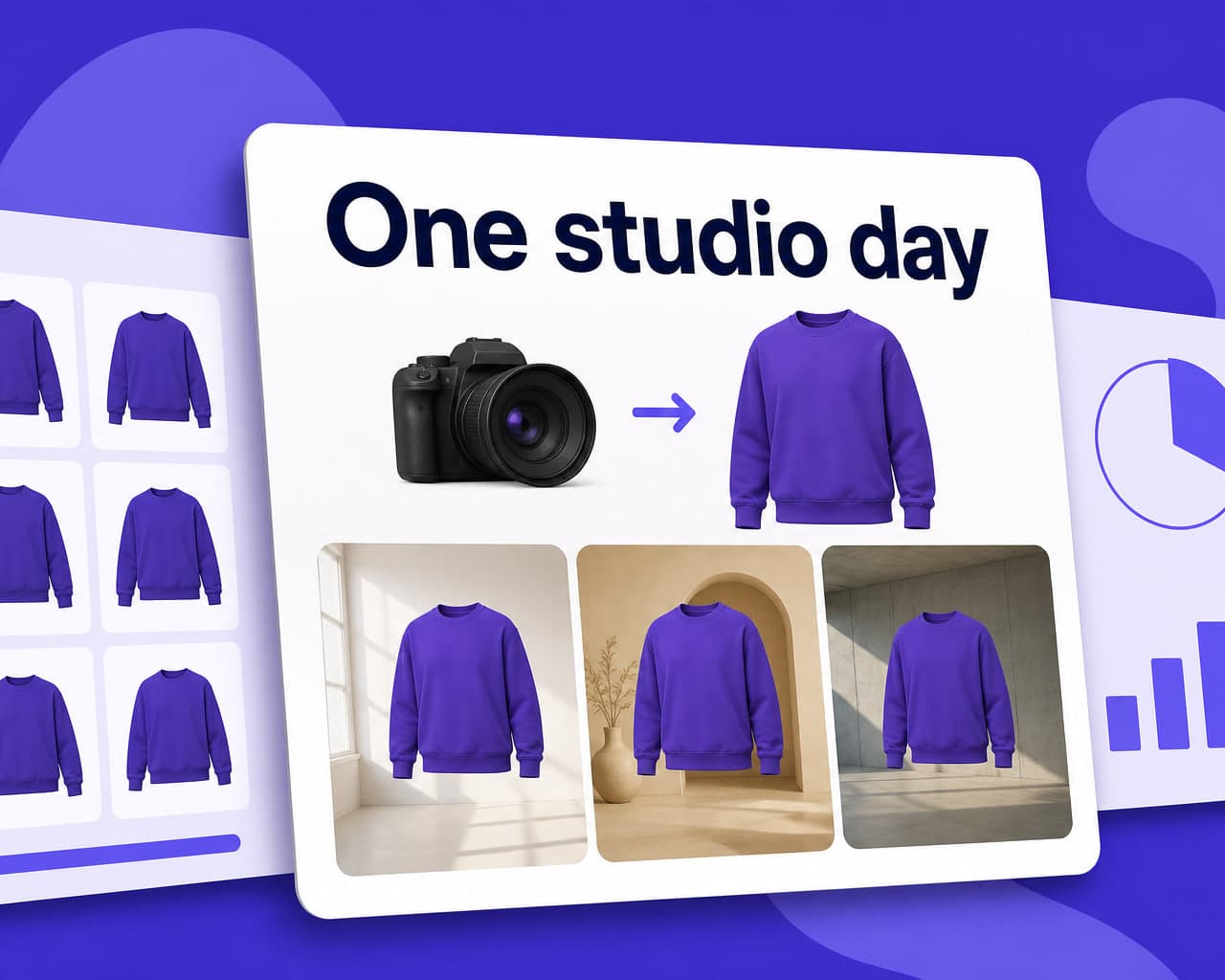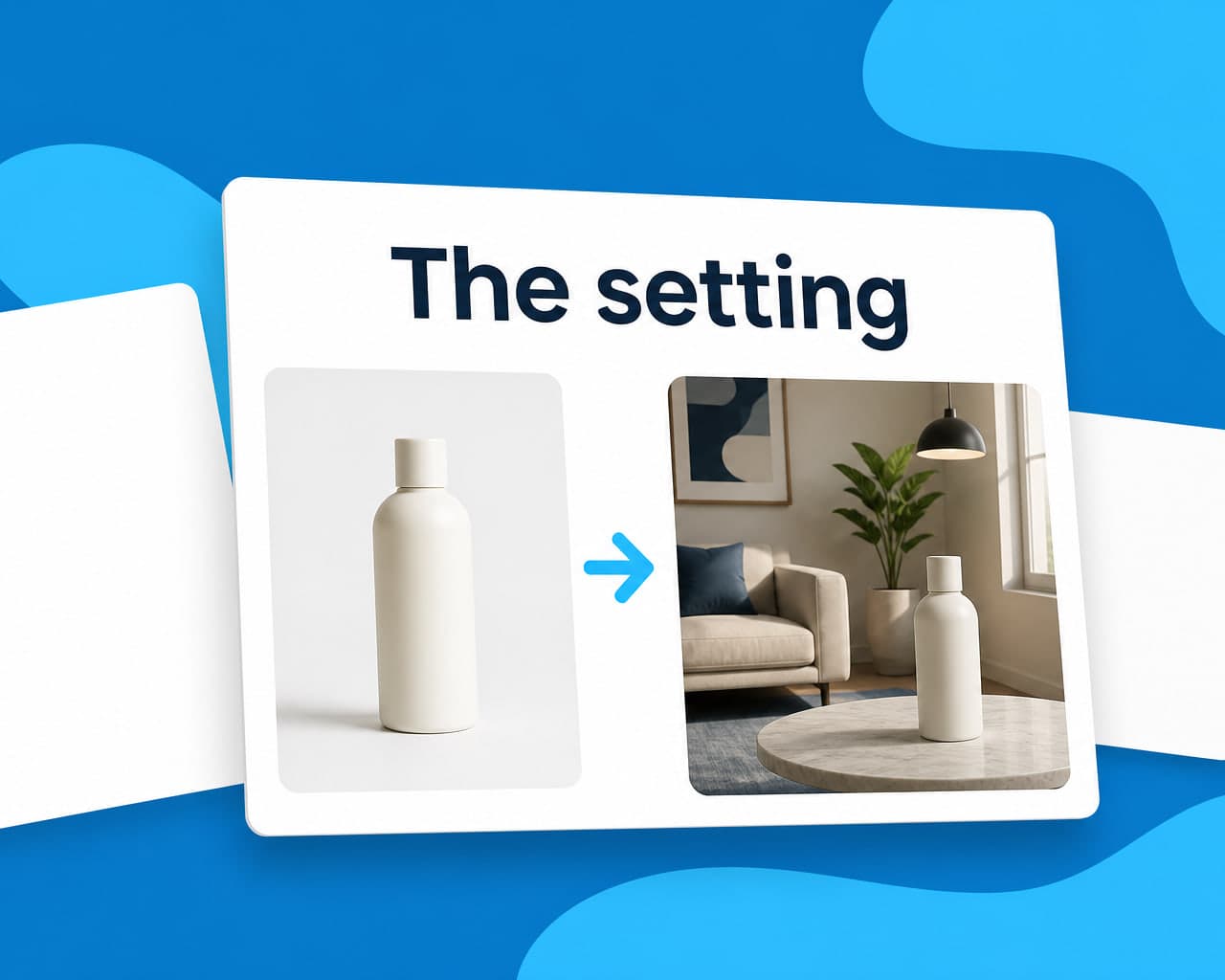
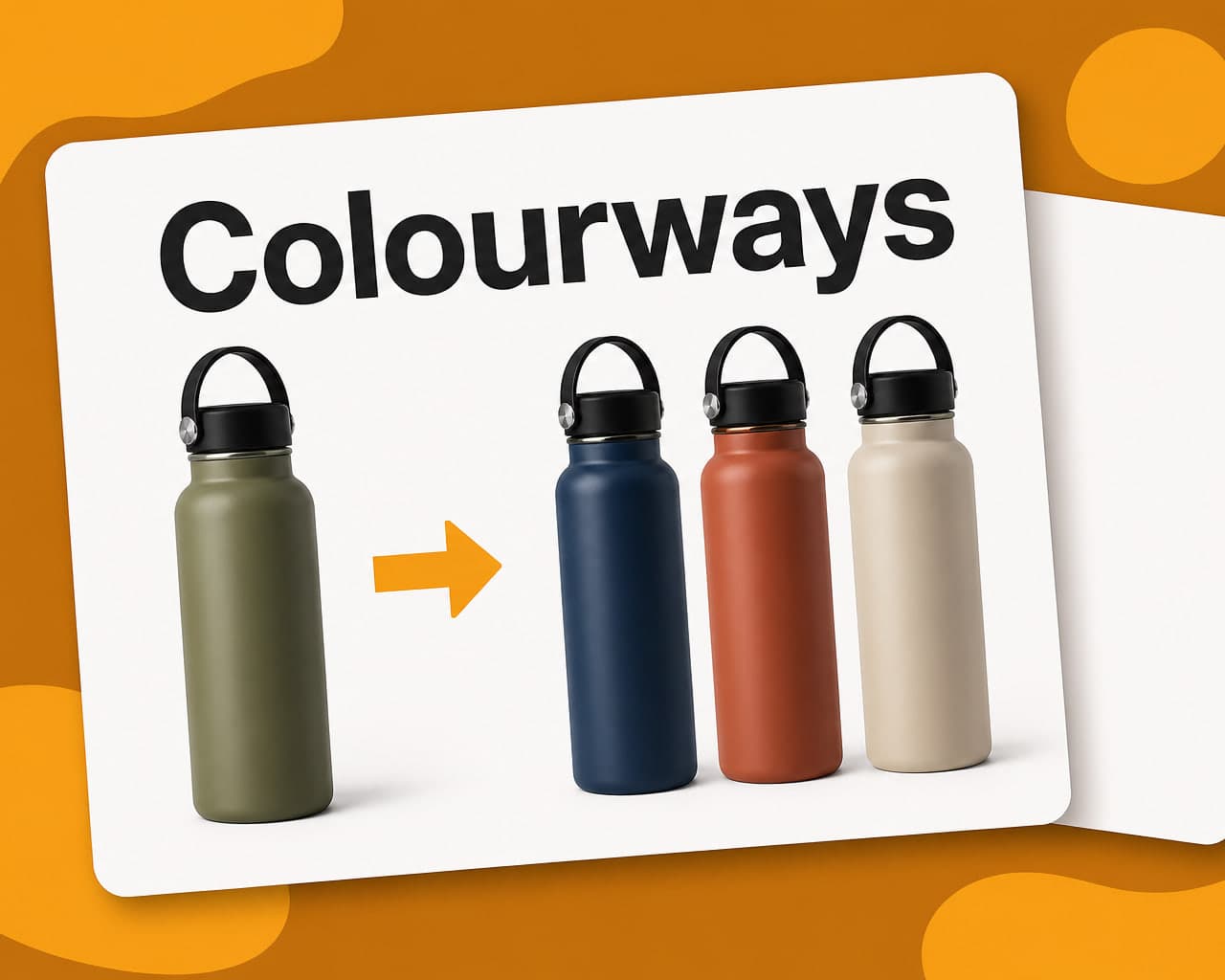
Quick answer — AI product photography replaces the repetitive half of a shoot — colourway variants, background swaps, crops and lifestyle context built from an existing capture. It does not replace the first capture of a new material, and treating it as though it does is how returns go up.
Vitra.ai Universe generates, adapts and translates the whole set.
The shoot is two jobs, and only one of them is photography
A catalogue shoot is a small amount of capture and a large amount of repetition. Somebody photographs the jacket once. Then the same jacket gets shot again in four colourways, again on white for the marketplace, again in a room set for the campaign, again cropped square for social.
The capture is skilled work. The repetition is production. Generation is good at the second job and unreliable at the first. That split is the whole decision, and it maps cleanly onto a shot list.
Where to generate and where to book a studio
| Shot | Generate it | Shoot it |
|---|---|---|
| Colourway variants of a photographed style | Yes | — |
| Background removal and white-field versions | Yes | — |
| Crops and per-channel recomposition | Yes | — |
| Room sets and lifestyle context | Yes | — |
| First capture of a new fabric or finish | — | Yes |
| Jewellery, watches, anything where sparkle sells | — | Yes |
| Texture-critical knitwear and pile fabrics | — | Yes |
The rule underneath the table is about information. Generating a red version of a photographed blue coat is interpolation, because the garment's drape and seams are already in the file. Generating the coat from nothing is invention, and invention is what customers return.
The number that decides it
Returns. Apparel return rates run high enough that a small rise wipes out the saving on a shoot, and "it looked different online" is the reason customers give most often when the photograph was not of the thing they received.
So the test is not whether the image looks good. It is whether the image is true about fit, colour and texture — which is why the quality control pass matters more here than in any other kind of creative.
Colour is the one to watch. A generated red drifts, and drifts differently across a range, so a customer ordering two items in the same shade gets two different shades.
What it actually saves
Not the photographer. The saving is in sample logistics — shipping product to a studio, waiting for it, shipping it back — and in the reshoots that happen because a channel changed its spec after the shoot wrapped.
Image creation conditioned on your brand kit gets the field, the palette and the crop right the first time, and image personalization produces the per-channel versions without going back to the original set.
Once the capture exists, everything downstream of it is production work, and production work is where the cost actually sits.
Which shots a listing actually needs is a separate question, and the PDP image set answers it slot by slot.
FAQ
Can AI product photography replace a studio shoot entirely? Not for a new product. The first capture of a material carries information a model cannot infer, and getting drape or finish wrong shows up in returns. It replaces the repetition after that capture, which is most of the volume.
Is AI product photography allowed on Amazon and other marketplaces? Marketplaces care about whether the image accurately represents the product, not how it was produced. A generated colourway of a real photographed item is fine. An invented product shot that misleads on appearance breaches listing policy.
What is the biggest risk with generated product images? Colour drift across a range. Two items generated in the same nominal shade often come out slightly different, so a customer ordering both receives a visible mismatch and one of them comes back.
Which product categories are worst suited to generation? Anything sold on texture or light behaviour — knitwear, pile fabrics, jewellery, watches, glassware. The detail that closes the sale is exactly the detail a generated image approximates.