Quick answer — Troubleshooting content is found by symptom and read under stress, so the symptom wording has to match how customers describe the fault in their own language. Codes stay untranslated, and each step needs one action with a verifiable result.
Vitra.ai Universe keeps one product vocabulary across box, app, page and video.
The reader is not calm
Troubleshooting is the only content a customer reads when the product has already failed them. They are scanning, not reading, and they will abandon the page and open a ticket within seconds if it does not look like their problem.
Every structural decision follows from that.
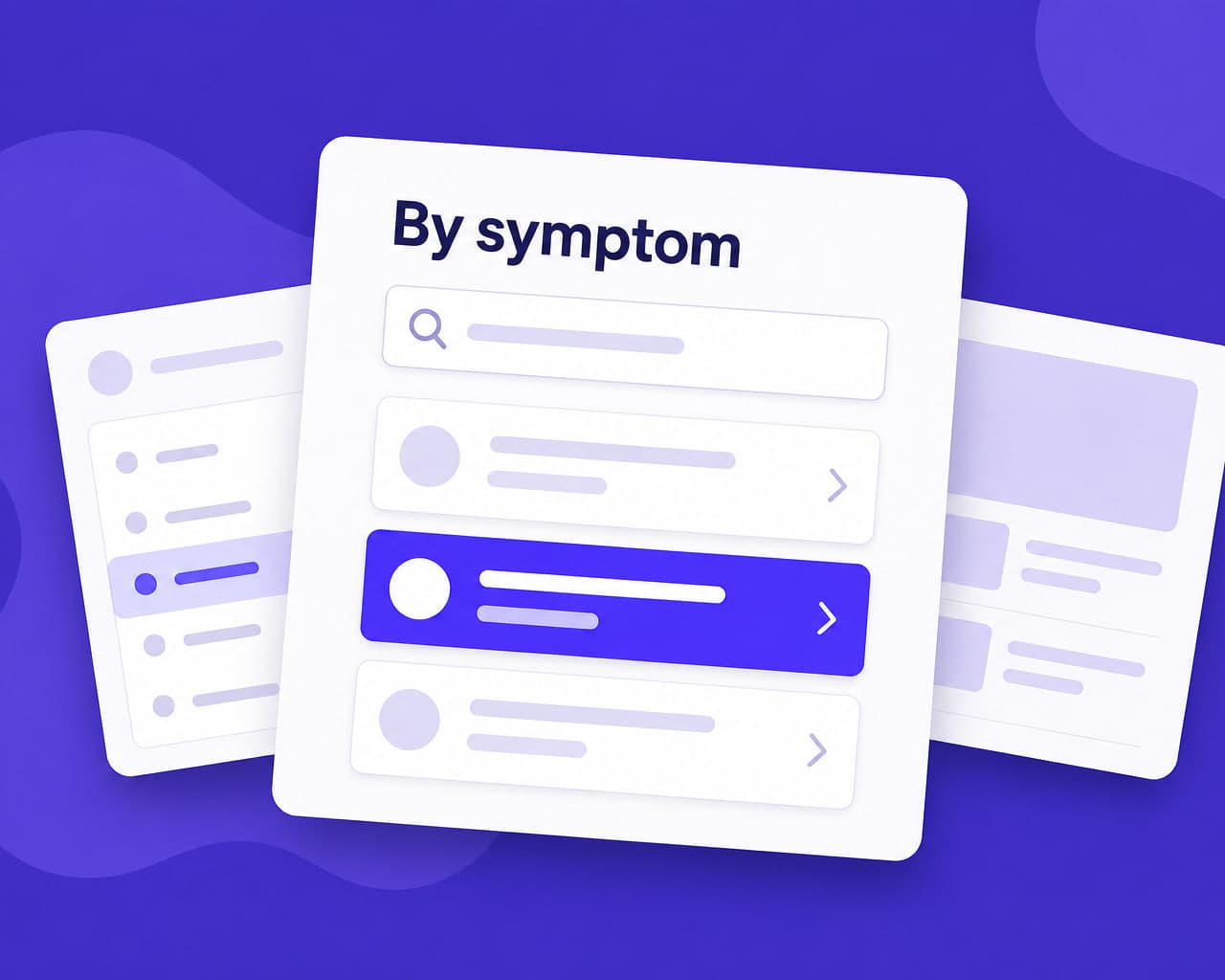
Symptom wording is the findability layer
Customers search using the words they would use to a friend, not the words an engineer would use.
Someone whose earbuds keep cutting out does not search for intermittent Bluetooth disconnection. Translating the engineering phrase produces an article that is accurate, well written and never found — the local colloquial phrasing is what has to appear in the heading and the opening lines, and that is research in each market rather than translation from English.
The technical term still belongs in the article, further down, for the customers who use it.
Structure that survives scanning
| Element | Requirement |
|---|---|
| Symptom heading | Customer's own words, local phrasing |
| Applies to | Model and firmware version, untranslated |
| Likely cause | One line, plain |
| Steps | One action each, in order |
| Expected result | Stated after each step |
| If it still fails | Explicit escalation path |
Stating the expected result after each step is what lets a reader stop when the problem is solved instead of completing a procedure that stopped being relevant at step two.
Codes, LEDs and states
Error codes stay untranslated so they remain searchable, exactly as on the support site. Indicator behaviour needs the same terminology as everywhere else. If the setup guide calls a pattern slow amber pulse, the troubleshooting article calls it slow amber pulse, in every language. A reader matching a light to a table cannot cope with two descriptions of one state. Beep patterns and haptic cues get the same treatment, and they are usually forgotten because they are absent from the screenshots.
Video helps, when it is short
A fifteen-second clip of a reset sequence resolves more cases than three paragraphs, because the reader can copy it.
Those clips localize cheaply through video dubbing or captions, and generating market variants from one master through video creation keeps the count manageable across a product catalogue.
Measure it
Deflection by market is the number that matters — whether the article prevented a contact. If a translated article is read and the customer still opens a ticket, the fault is usually findability or an unclear step rather than translation accuracy, and quality control on terminology will not surface it. Ticket data will.
FAQ
Why do translated troubleshooting articles go unfound? Because they use the engineering description of the fault. Customers search using everyday phrasing in their own language, so the symptom heading has to be researched per market rather than translated.
How should troubleshooting steps be structured? One action per step with the expected result stated after it. That lets a reader stop as soon as the problem is solved instead of completing a procedure that stopped applying at step two.
Should error codes and LED descriptions be translated? Error codes never — they must stay searchable. LED and beep patterns must use the same wording as the setup guide and manual, since a reader matching a light to a table cannot handle two descriptions of one state.
How do you tell whether translated troubleshooting content works? By measuring deflection per market. If the article is read and a ticket still follows, the problem is usually findability or an unclear step rather than translation accuracy.