Quick answer — Ten AI use cases are genuinely in production across travel and tourism: demand forecasting, dynamic pricing, content localization, destination video dubbing, personalized pre-departure content, guest support, review analysis, itinerary generation, image adaptation and operational documents.
Vitra.ai Universe covers the content-side cases through one orchestrated workflow, with quality checks applied before anything reaches a reviewer.
The ten
| Use case | What it changes | Time to a readable result |
|---|---|---|
| Demand forecasting | Occupancy and staffing planned on signal, not on last year | One season |
| Dynamic pricing | Rates move with demand and competitor activity | Weeks |
| Content localization | Site, listings and policies exist in every source market | One booking cycle |
| Destination video dubbing | A film library reaches markets it never served | Weeks |
| Personalized pre-departure content | Every booking gets its own transfer and arrival detail | One trip cycle |
| Guest support agents | Routine queries answered in the guest's language, at 2am | Weeks |
| Review analysis | Complaints surface by theme instead of being read one by one | One month |
| Itinerary generation | Draft itineraries assembled from inventory and preferences | Weeks |
| Image adaptation | Campaign creative re-rendered per market without a rebuild | Days |
| Operational documents | Vouchers, safety sheets and terms produced per language | Days |
Which to do first
Ranked by how fast you can read the result, not by how interesting it sounds.
Pricing and forecasting are usually in place before anyone asks this question. Of what's left, localization and personalization pay back quickest, for the simple reason that their output is the only kind a traveller sees before deciding whether to book. Itinerary generation gets the most attention in the room and returns the least in the first year. Travellers weren't especially stuck on drafting itineraries. They are stuck on content they can't read.
The one most travel brands underrate
Destination video.
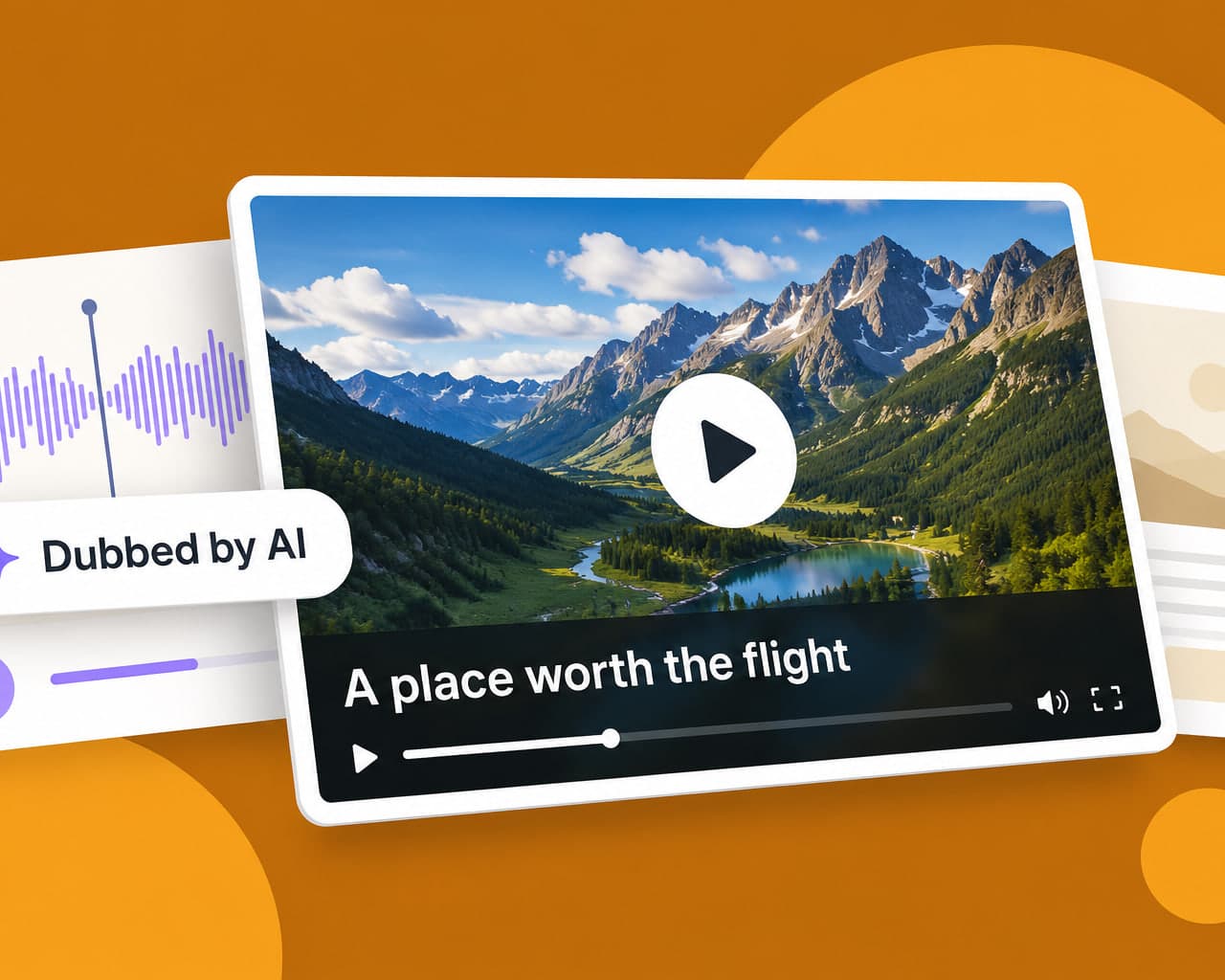
Travel is the most video-led industry there is, and most film libraries exist in exactly one language, because re-recording per market has always cost more than the content brings back. So the footage sits there. Video dubbing runs transcription, translation, voice, lip-sync and subtitles as one job across 120 languages and 178 regional variants, with the captions generated from the same transcript as the audio so the two can't drift apart. That doesn't just make dubbing cheaper. It changes which markets a library is worth serving at all.
Where accuracy stops being negotiable
Most travel copy survives an approximate translation. Cancellation terms, visa and entry requirements, accessibility statements and safety instructions don't.
For those, a back-translation pass compares meaning against the source instead of checking grammar, and a named person releases the content before it goes live. Knowing which content needs that and which doesn't is most of what keeps a programme affordable.
How to choose one
Pick the case you can already measure. If you track direct-booking share, start with localization. If you run properties, start here instead.
An AI project without an existing metric turns into an argument about whether it worked.
FAQ
How is AI used in the travel and tourism industry? Ten ways, in practice: demand forecasting, dynamic pricing, content localization, destination video dubbing, personalized pre-departure content, guest support agents, review analysis, itinerary generation, image adaptation and operational document production.
Which AI use case gives a travel business the fastest result? Image adaptation and operational documents return within days, and localization inside a single booking cycle. Pricing and forecasting move faster still, but they're usually already running before anyone considers the rest.
Is AI itinerary generation worth investing in? It gets the most attention and returns the least early on. Travellers were never badly stuck on drafting an itinerary, whereas they are routinely stuck on content they can't read, and that's where the measurable gain sits.
Can AI dub existing destination videos? Yes. Transcription, translation, voice, lip-sync and subtitles run as a single job across 120 languages and 178 regional variants, with the caption track built from the same transcript as the dubbed audio.