Quick answer — Translate the explanation and the next step, keep the error code and any searchable identifier in English, and check where the string is generated — most product errors come from the server, not the client.
Vitra.ai Universe ships product and customer content in every language.
Errors are the worst place to be vague
Everything else a user reads, they read while things are going well. An error is read by someone already blocked, often in a hurry.
A translation that is grammatically perfect and tells them nothing actionable has made the moment worse, because now they cannot even search for the original wording.
Three parts, three different rules
| Part | Handling |
|---|---|
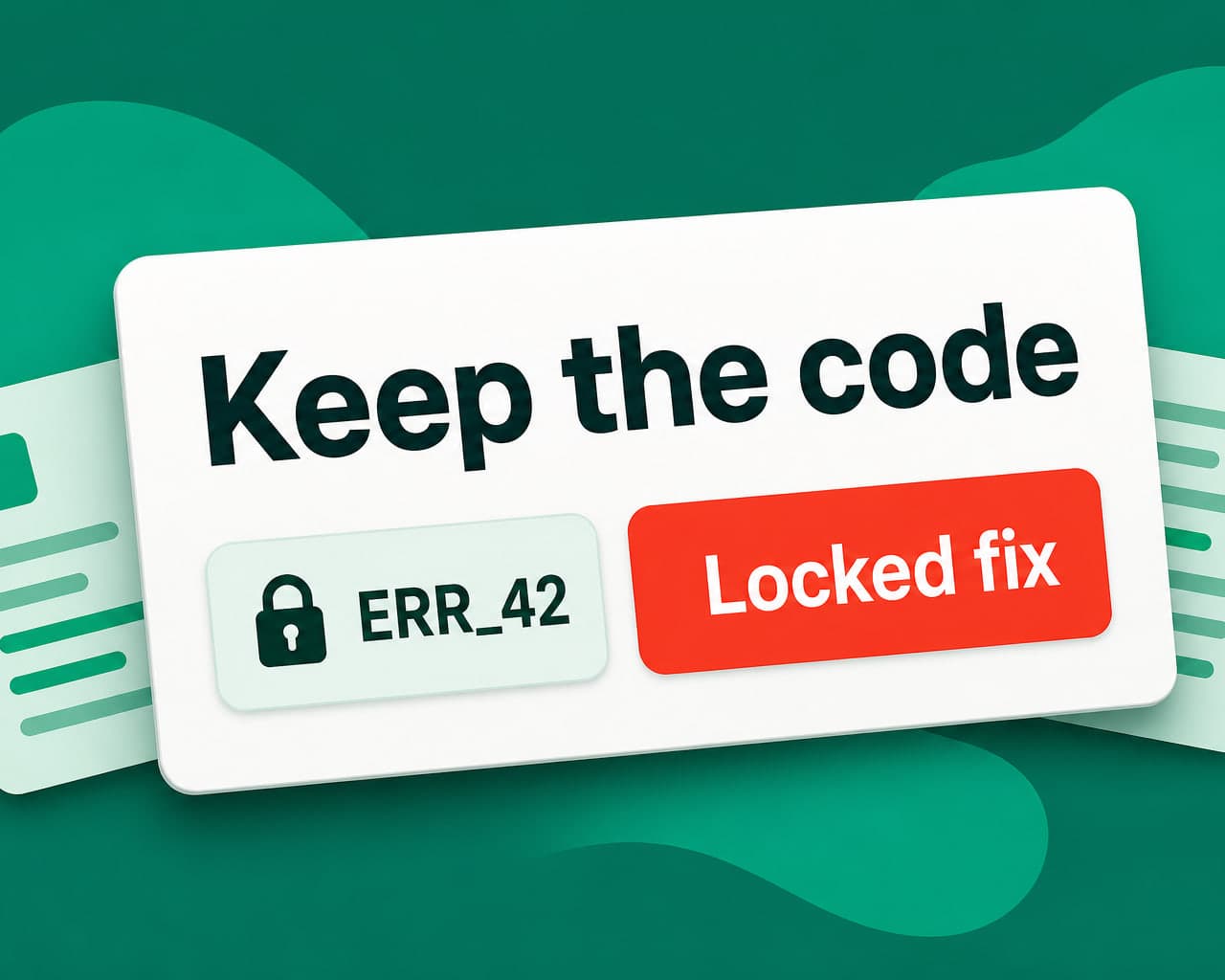
| Error code or identifier | Keep in English, keep visible |
| What went wrong | Translate |
| What to do next | Translate, and make it specific |
| Technical detail for support | Keep in English |
| Link to help article | Point at the localized version |
Keeping the code visible is what lets a user search and a support agent match the ticket to a known issue. Hiding it behind a friendly translated sentence removes the one string that reliably finds an answer. The last row is the one teams forget. An error linking to an English help article inside an otherwise localized product breaks the chain at the exact moment it matters — see help centre translation.
Find out where the string comes from
This decides whether the work is possible at all.
Client-side errors live in your string files and localize with everything else. Server-generated errors — validation, billing, rate limits, third-party responses — arrive as text the client displays, and no amount of front-end localization reaches them.
Audit that before scoping. It is the most common reason a "fully localized" product still shows English at the worst moment.
Write them to survive translation
Short, active, specific. Not "an error occurred" but what failed and what to try.
Avoid building the sentence from fragments, because word order changes and a concatenated error cannot be reordered — the point made in internationalization versus localization.
And keep the tone flat. Apologetic or jokey error copy translates badly and reads as evasive when someone is already annoyed.
For a physical product the same rules apply to indicator lights and beep patterns, which is troubleshooting content.
Run quality control over the set with the codes on a do-not-translate list, and keep the phrasing consistent through memory so the same failure is described the same way everywhere it can occur.
FAQ
Should error codes be translated? No. Keep the code or identifier in English and visible, because it is what lets a user search for an answer and a support agent match the report to a known issue.
Why do localized products still show English errors? Because many errors are generated on the server — validation, billing, rate limits and third-party responses — and arrive as text the client just displays. Front-end localization never reaches them.
What should a translated error message contain? What went wrong and what to do next, both specific, plus the untranslated error code and a link to the localized help article rather than the English one.
How should error strings be written? Short, active and specific, and never assembled from fragments. Concatenated sentences assume the source language's word order and cannot be reordered correctly in translation.