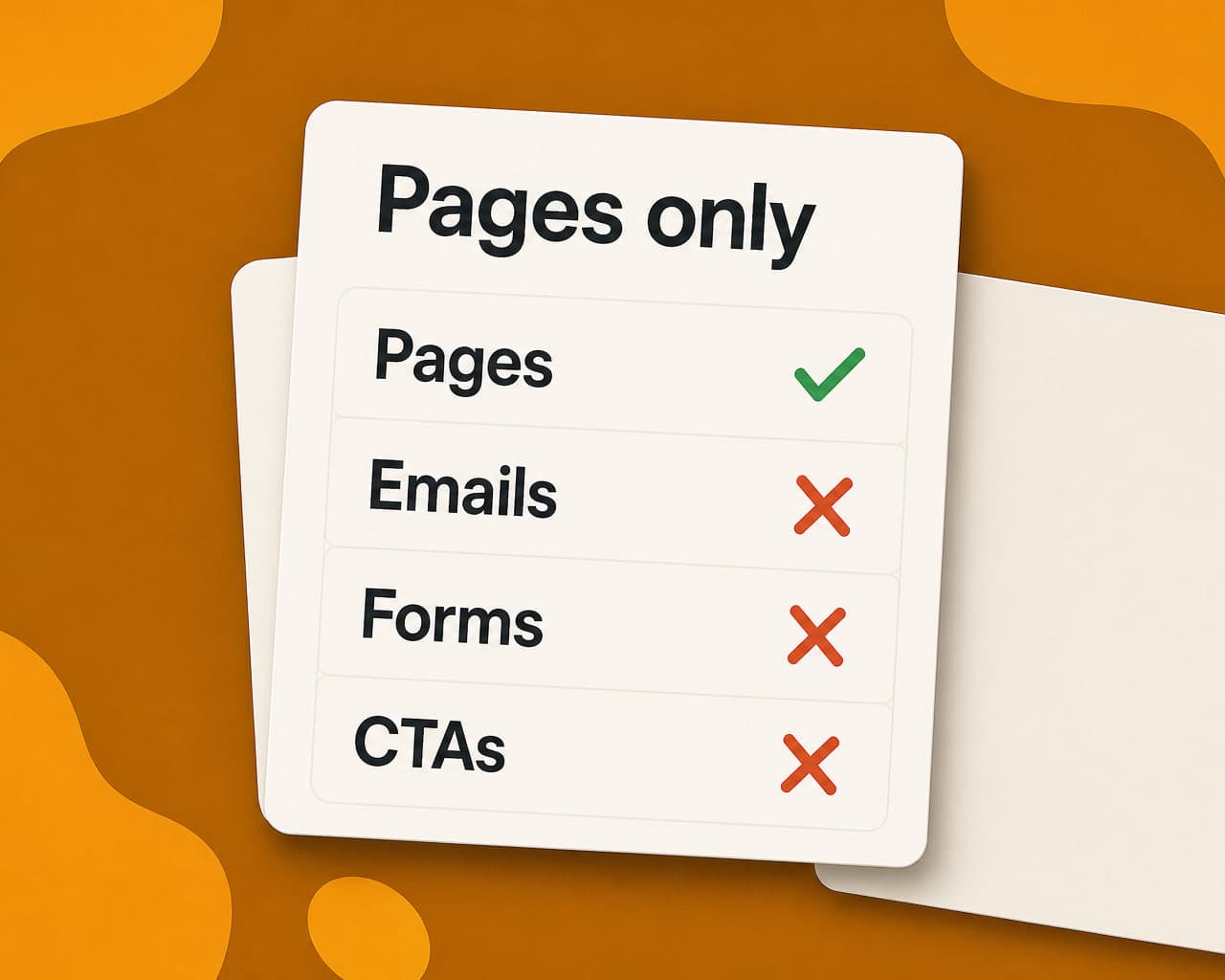

Quick answer — Shopify product content lives in three places: native fields, metafields and third-party apps. Native fields translate cleanly, metafields translate only when flagged, and app content usually sits outside Shopify's framework entirely — which is why a theme-level snippet often covers more than a connector does.
Three places the content hides
Native fields — title, description, handle, SEO fields — are handled by Shopify's translation framework and behave predictably. Metafields hold the detail that actually sells: specifications, ingredients, care instructions, size charts. They translate only if flagged as translatable, and that flag is off by default. This is why a merchant can translate a store and find half the product page still in English.
App content is the third layer. Reviews, bundles, subscriptions and upsell widgets each store their own strings, and most sit outside the framework altogether.
Check the metafield flag before choosing anything
List the metafields on a product template and confirm which are marked translatable. Ten minutes, and it determines whether automation covers the whole page or roughly a third of it.
The snippet route covers what connectors miss
Because app-injected content and theme strings are rendered rather than stored in Shopify's translation tables, a layer that works on the rendered page reaches them when a field-level connector cannot. Installing it is a theme edit: open theme.liquid, paste the snippet, save. No child theme, no app permissions, and it survives theme updates rather than being overwritten. Rolling it back is deleting the line you added.
That covers product pages, collection pages, the homepage and navigation together, which is the practical difference between a translated catalogue and a translated store. website translation is the capability behind it.
Handles change the URL
The product handle is part of the address. Translating it helps local search and creates a new URL, so the old one needs a redirect or the link equity is lost.
Decide once for the whole catalogue rather than product by product. A mixed approach is worse than either.
Markets and pricing are not translation
Shopify Markets handles currency, tax and domain routing. Translation runs alongside it as a separate concern, and conflating the two is the most common setup mistake — a store can be routed correctly to a market and still be entirely in English there.
Automate the catalogue, review the hundred that matter
Product descriptions at catalogue scale should run unattended.
The hundred products carrying the revenue deserve a human read, and quality control is what routes them differently instead of treating sixty thousand items identically.
translation memory is what makes the recurring cost survivable: a catalogue refresh changes a fraction of the rows, and the rest return their approved renderings untouched.
Checkout is a separate surface
Shopify's checkout is not part of the theme on most plans, so a snippet in theme.liquid does not reach it. Checkout language comes from Shopify's own translations and any customisations you have configured.
That is the one place a shopper is most committed and least tolerant of a language switch, so confirm it separately rather than assuming the store-wide work covered it.
Where to start
Audit the metafields, then install the snippet on a staging theme and compare a product page before and after. The gap between them is what a field-level approach alone would have missed.
Setup steps are on the Shopify integration page.
FAQ
Why is half my Shopify product page still in English? Because metafields translate only when flagged as translatable, and the flag is off by default. Specifications, ingredients, care instructions and size charts usually live in metafields.
How does the theme snippet differ from a connector? It works on the rendered page, so it reaches app-injected content and theme strings that a field-level connector cannot. Installation is a single line in theme.liquid and it survives theme updates.
Should Shopify product handles be translated? Generally yes for local search, but a translated handle creates a new URL that needs a redirect from the old one. Decide it once for the whole catalogue rather than product by product.
Does Shopify Markets handle translation? No. Markets covers currency, tax and domain routing only. A store can be routed correctly to a market and still be entirely in English, which is the most common setup mistake.