Quick answer — Headless CMS localization comes down to how locales are modelled: field-level, entry-level or separate spaces. Field-level suits close variants, entry-level suits real editorial independence, and the choice is hard to reverse.
Vitra.ai Universe creates, translates, adapts and publishes from one place.
The modelling decision comes first
Before any translation happens, you decide how a locale is represented. That decision shapes every query, every editorial workflow and every migration afterwards.
Most teams make it implicitly, by using whatever the CMS defaults to.
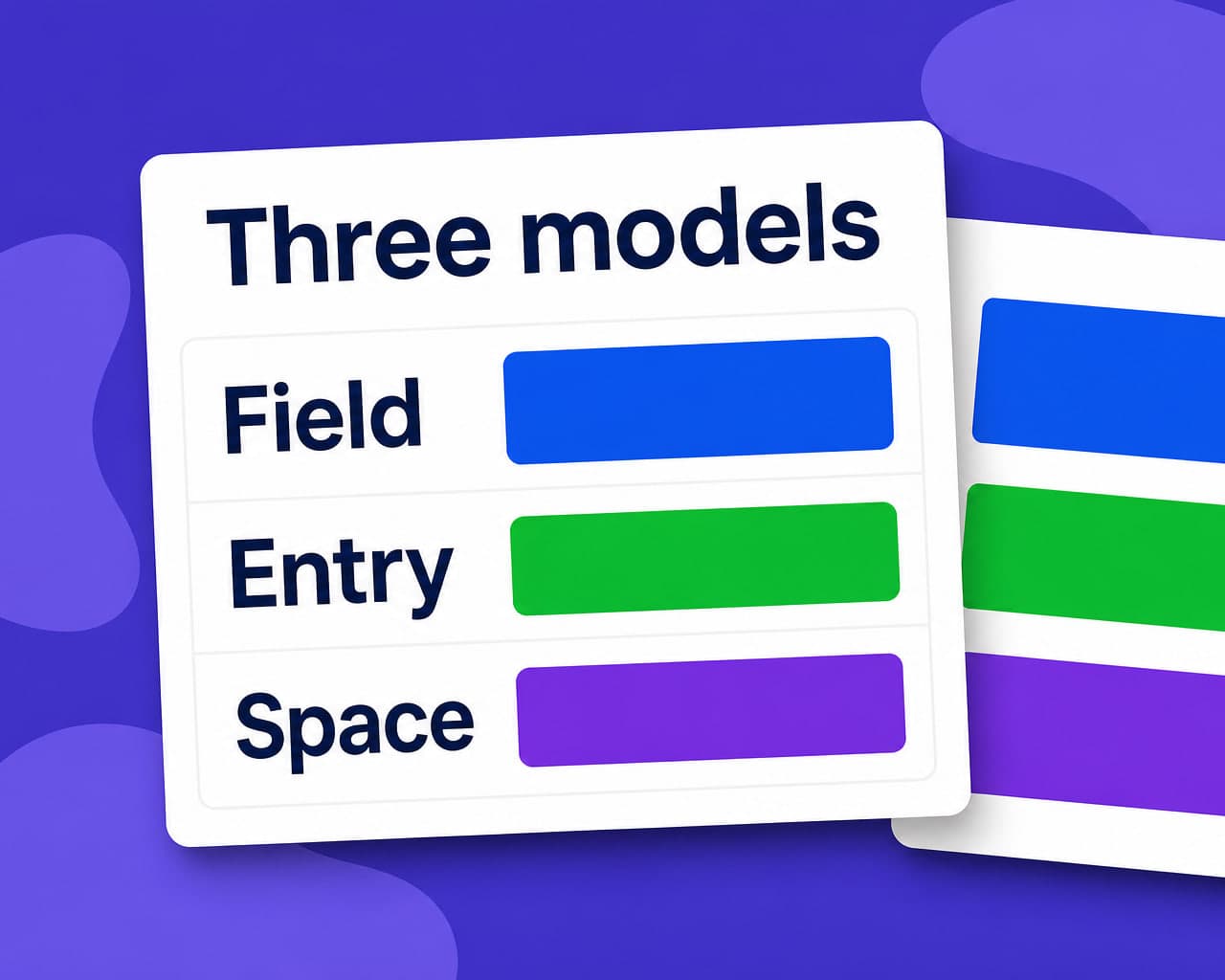
Three patterns
| Pattern | Locale is | Suits |
|---|---|---|
| Field-level | A variant on each field | Close translations, shared structure |
| Entry-level | A separate entry per locale | Editorial independence per market |
| Space or environment | A separate content space | Strong isolation, separate teams |
Field-level keeps one entry with translated values per field. Structure stays identical everywhere, which is efficient and means a market cannot add a section the source does not have. Entry-level gives each locale its own entry linked to the source. Markets can diverge — different images, an extra paragraph, a section removed — at the cost of harder consistency and more content to keep in sync.
Separate spaces isolate fully, which suits genuinely independent regional teams and makes shared reporting difficult.
Field-level is the right default for product and marketing content. Entry-level earns its complexity when markets genuinely publish different things.
What breaks regardless of pattern
Fallbacks. Decide what a missing translation renders — the source language, a regional parent, or nothing — and make it explicit rather than discovering it in production.
References. An entry linking to another entry needs the link to resolve to the right locale, and a source-locale reference inside a translated entry is a common and hard-to-spot bug.
Assets. Images with text in them are usually shared across locales by default, which means every market gets the source-language image unless image translation is part of the pipeline.
Automating the flow
Publish and update events should trigger translation rather than an editor requesting it, which is what makes continuous localization possible in a headless setup.
Keep terminology in memory so the same field resolves consistently across locales, and gate only high-risk entries with quality control so the rest publish without waiting. Buyer-facing technical sites have their own pattern — manufacturing website translation.
FAQ
How should locales be modelled in a headless CMS? Field-level for close translations sharing structure, entry-level where markets need editorial independence, and separate spaces for fully independent regional teams. The choice is hard to reverse.
Which locale pattern is the best default? Field-level for product and marketing content, because structure stays identical and content is efficient to manage. Entry-level earns its extra complexity only when markets genuinely publish different things.
What breaks most often in headless localization? Fallback behaviour and references. A missing translation needs an explicit fallback, and an entry linking to another must resolve to the right locale rather than the source.
Are images localized automatically in a headless CMS? Usually not. Assets are typically shared across locales by default, so every market receives the source-language image unless image translation is built into the pipeline.