Quick answer — An electronics retail campaign fans out into retailer specifications, market variants and format sizes at once. Build the variants from one approved master with claims and pricing routed for local approval, rather than adapting each asset by hand.
Vitra.ai Universe keeps one product vocabulary across box, app, page and video.
The fan-out is the problem
A launch campaign is not one asset in many languages. It is a matrix. Markets multiplied by retailers multiplied by formats multiplied by the moments of the campaign — announce, pre-order, on sale, promotion — produces a number of final files that no amount of manual adaptation reaches on schedule. That number is why launches slip, and it is arithmetic rather than a translation problem.
What each retailer wants is different
| Retailer requirement | Varies by |
|---|---|
| Image dimensions and safe areas | Retailer |
| Copy length limits | Retailer, format |
| Claim substantiation | Market, retailer policy |
| Price display rules | Market, promotion type |
| Model line-up carried | Market |
| Co-op branding | Retailer agreement |
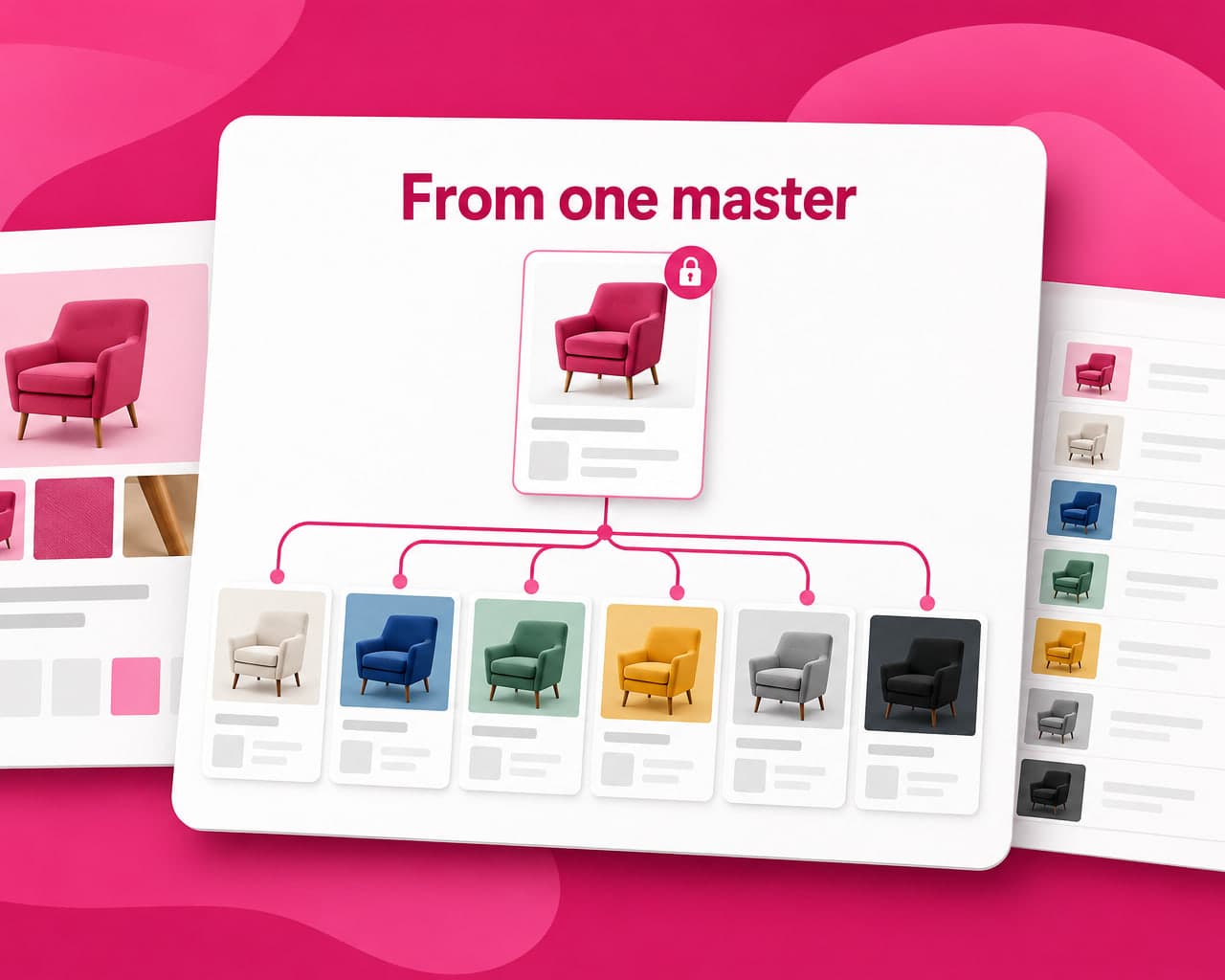
A campaign built as flat artwork per retailer means every late change — a price move, a claim withdrawal, a date shift — is re-executed across the whole matrix by hand. Built as variants of one master, the same change is made once and regenerated.
Claims and pricing route separately
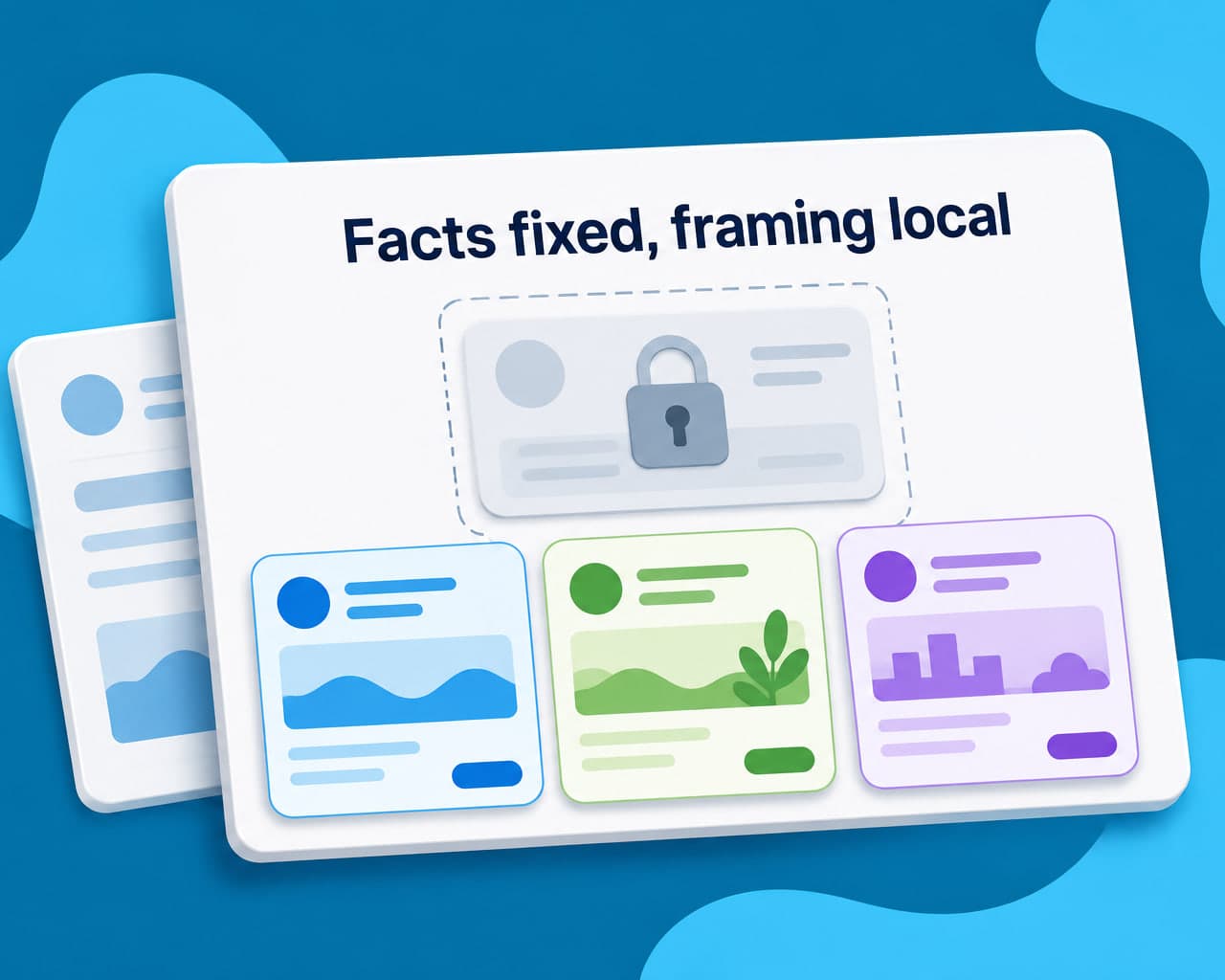
Price, promotional mechanics and performance claims are the three elements that cannot flow straight through a translation pipeline, because they are local decisions with local rules.
The workable pattern is to hold them as fields rather than as baked text, so the creative can be produced while those values are still being approved, and the approved value drops in at generation time. Agentic workflows park exactly those elements for local sign-off while everything else keeps moving.
Getting this wrong is expensive in a way translation errors usually are not, and it is the reason legal is normally the last gate before a retail launch.
Formats from one master
Image personalization generates the size and placement variants from an approved master, and image translation handles text baked into the creative — the pack shot callouts, the feature flashes, the burst copy.
For video, one master yields the retailer in-store loop, the paid social cuts and the connected-TV version through video creation.
Keep the words the same as everywhere else
The feature name on a retail banner should be identical to the one on the product page, in the demo video and on the box.
Shared translation memory is what makes that automatic rather than a checklist item, and it also means the second market costs materially less than the first. There is more on channel and partner distribution in distributor campaign localization. The production side is creative localization.
FAQ
Why do electronics launch campaigns slip? Because the asset count is a matrix — markets times retailers times formats times campaign moments. Manual adaptation cannot reach that number on schedule, which is arithmetic rather than a translation issue.
What cannot flow through a translation pipeline? Price, promotional mechanics and performance claims. These are local decisions with local rules, so they should be held as fields that drop in at generation time rather than baked into artwork.
How should retailer variants be produced? As variants of one approved master rather than flat artwork per retailer. A late price move or claim withdrawal is then made once and regenerated, instead of re-executed across the whole matrix.
How do campaign words stay consistent with the product? Through shared translation memory, so a feature name on a retail banner resolves identically to the product page, the demo video and the box without anyone checking manually.