Quick answer — Domestic travel is by far India's largest tourism market, and most operators still market it in English and Hindi. Reaching travellers in Marathi, Tamil, Bengali, Telugu or Odia is a production problem, not a demand problem.
Hyperlocal marketing covers low-resource Indic languages with custom voice and language models where commercial providers have none.
The market that gets marketed to in the wrong language
Domestic trips dwarf inbound in India, and they always have. Yet a state tourism campaign, a houseboat operator in Alleppey and a homestay in Coorg will all typically run English and Hindi, and stop. For a traveller from Coimbatore or Nagpur, that means researching a domestic holiday in their second or third language. They'll manage. They'll also convert worse than they would have, and everyone will read that as the market being soft.
Hindi is not a national strategy
It's the most common mistake in Indian travel marketing, and it's usually made in good faith.
A campaign in Hindi reaches a large audience and misses Tamil Nadu, Kerala, Karnataka, Andhra Pradesh, Telangana, West Bengal and much of the Northeast — which between them hold a great deal of the discretionary travel spend. Adding two or three regional languages typically opens more incremental demand than doubling the Hindi budget.
Why it never happened before
Cost per language, and it was a hard cost. A Marathi voiceover meant a studio, an artist and a session. A Tamil brochure meant a translator, a designer and a print proof. That maths only worked for the top two or three markets, so the rest were served in English indefinitely.
The other blocker was coverage. Many Indic languages have thin or no commercial support — you can buy French voice easily, and Odia not at all. Custom-trained voice and language models for exactly those gaps are what changes which campaigns are possible.
What to localize first
| Content | Why it comes first |
|---|---|
| Video for social | Where regional-language audiences actually are |
| WhatsApp and SMS confirmations | The channel most Indian bookings run through |
| Booking flow and payment | Where the drop-off happens |
| Package inclusions and cancellation | The questions that generate calls |
| Destination guides | Slower payback, useful for search |
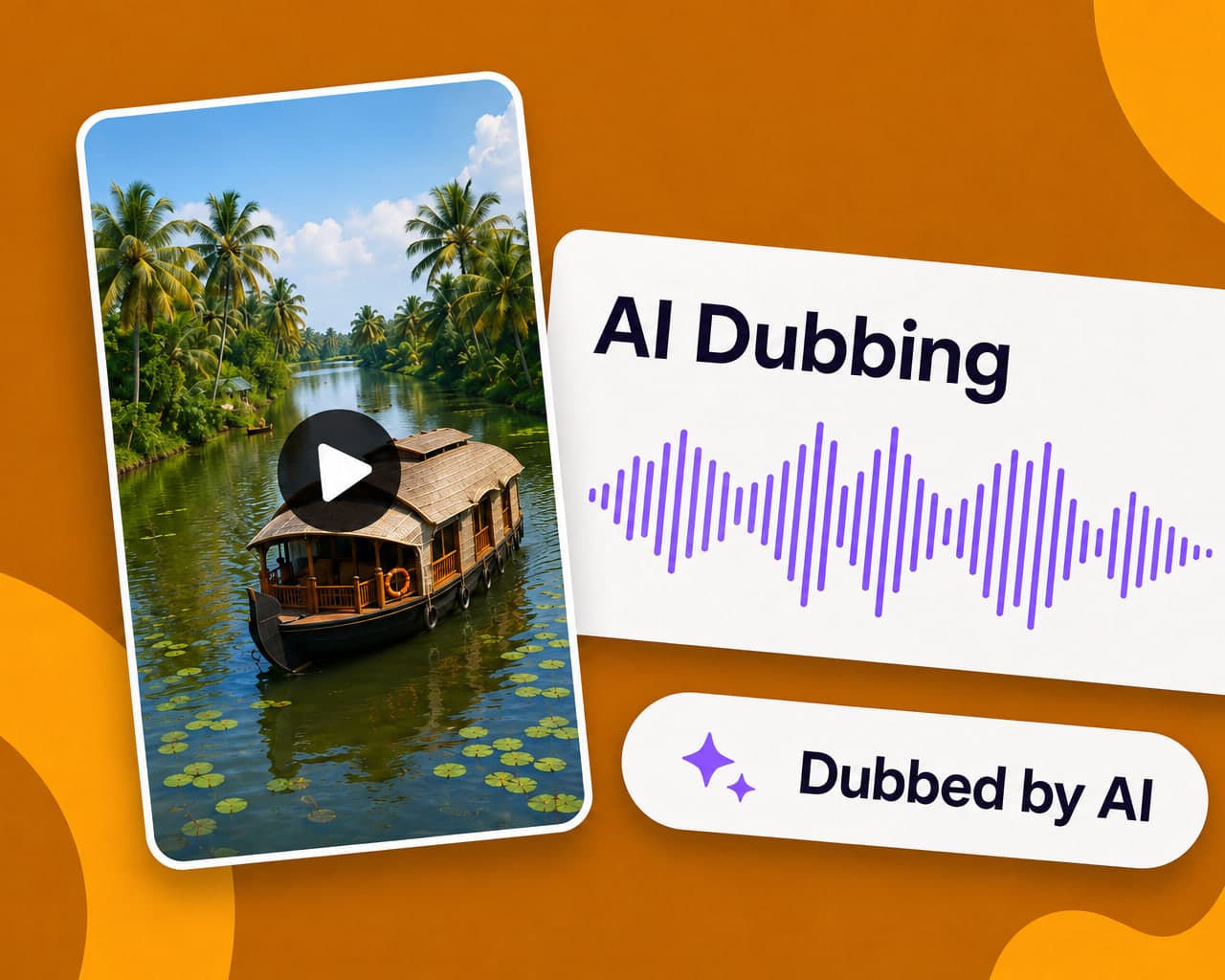
Video first, because regional-language consumption in India is overwhelmingly video-led and the existing English film can be dubbed rather than reshot.
How to choose the languages
Not from a map. Look at where your existing bookings and enquiries already come from, and at which of those states convert worst against traffic. That gap is usually a language gap, and it's evidence you already own.
FAQ
Which languages should Indian tourism brands market in? Start from your own booking and enquiry data rather than a map. The states already sending you traffic that converts poorly are usually the ones reading in a second language, and that's evidence you already hold.
Is Hindi enough for domestic tourism marketing in India? No. A Hindi campaign misses Tamil Nadu, Kerala, Karnataka, Andhra Pradesh, Telangana, West Bengal and much of the Northeast. Adding two or three regional languages usually opens more incremental demand than increasing the Hindi spend.
Why haven't Indian travel brands localized into regional languages before? Cost per language and patchy coverage. A Marathi voiceover meant a studio and a session, and many Indic languages have no commercial voice support at all, so only the top two or three markets ever justified it.
What should an Indian travel brand localize first? Video for social, then WhatsApp and SMS confirmations, then the booking flow. Regional-language consumption in India is heavily video-led, and an existing English film can be dubbed rather than shot again.