Vitra AI .ASC Translation
Translate .ASC files into 75+ languages instantly while preserving structure, formatting, data integrity, and file compatibility.
Vitra enables enterprises, engineering teams, technical documentation teams, software teams, and localization teams to translate .ASC files quickly without breaking formatting, structure, or file usability.
Vitra helps teams scale multilingual technical files, structured data content, and system documentation efficiently.
What This Integration Does
Vitra provides an AI-powered .ASC translation workflow designed for structured text files, technical documents, configuration files, and data-heavy content.
Instead of copying file content into generic translation tools and manually fixing formatting, teams can translate .ASC files directly within the Vitra platform.
Vitra automatically translates the text inside the file while preserving structure, formatting, and file integrity.
This enables faster technical localization, enterprise documentation translation, and multilingual content operations.
How It Works
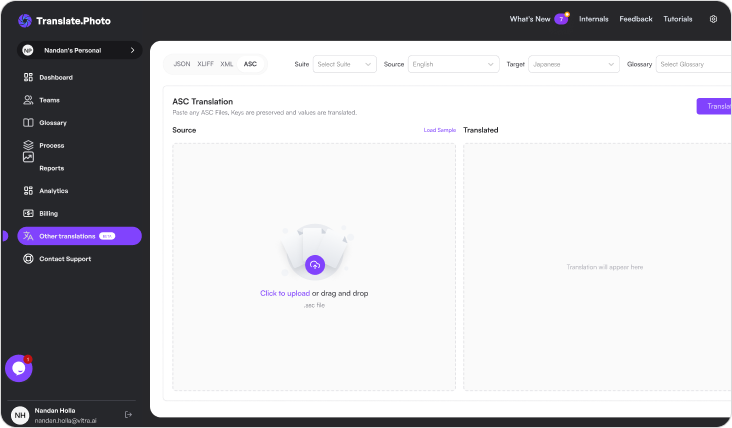
Step 1: Upload the file
- Start by uploading the .ASC file you want to translate.
- Vitra scans the file and detects translatable text while preserving the file’s structure and formatting.
Step 2: Select the Suite
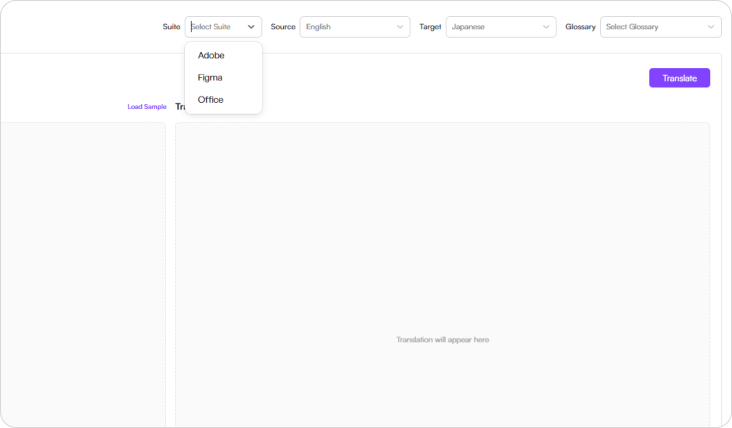
- Choose the suit that aligns with your workflow
- Available options include:
- Adobe
- Figma
- Office
- This helps align the translation workflow with design environments, documentation tools, or enterprise content systems.
Step 3: Select language
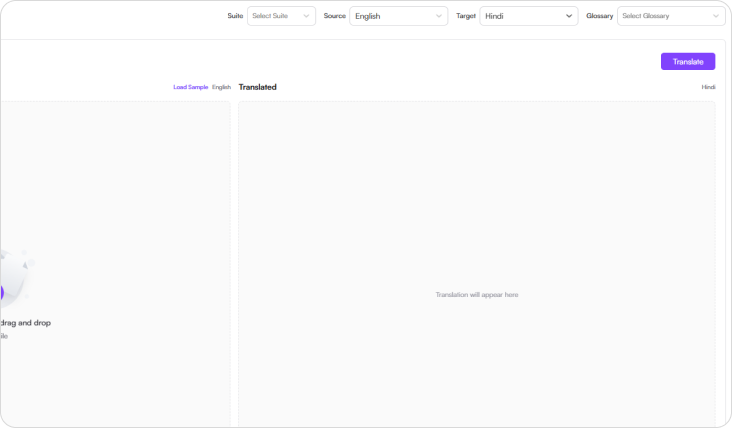
- Choose the source language and one or more target languages.
- Vitra supports 75+ global languages, making it easy to localize ASC files for international teams, systems, and customers.
Step 4: Select Glossary
- Choose your organization’s translation glossary to ensure consistent terminology across technical files and documentation.
- Glossary-driven translation ensures technical accuracy, brand consistency, and standardized terminology across all translated outputs.
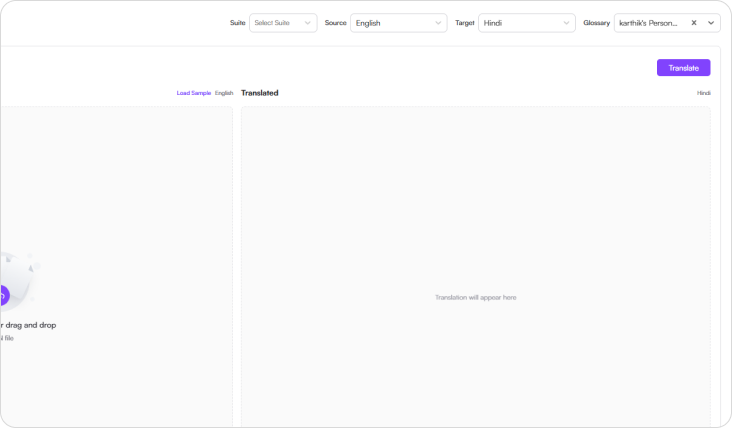
Step 5: Translate
- Click Translate, and Vitra AI automatically translates the content inside the ASC file while preserving:
- File structure and formatting
- Data alignment and layout
- Technical references and labels
- Links and cross-references
- Compatibility with existing systems
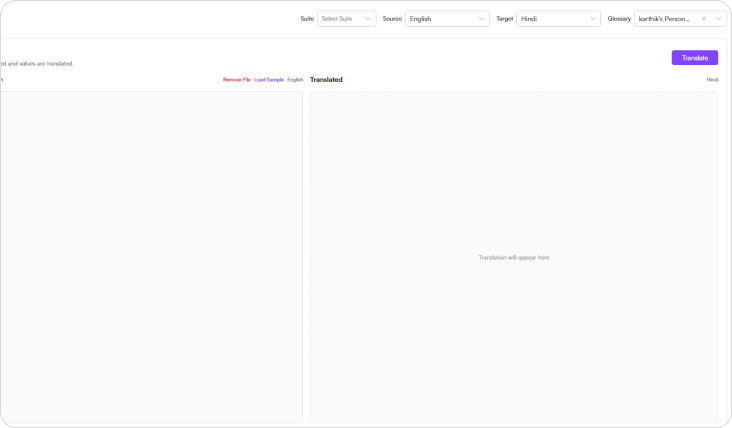
- Your translated ASC file is ready for publishing.
Use Cases
Software & Technology
Translate software configuration files, system logs, and structured data files used in applications and platforms.
Engineering & Manufacturing
Localize engineering documentation, machine data files, and production-related text content.
Telecommunications
Translate network configuration files, telecom documentation, and infrastructure data files for global deployment.
Automotive Industry
Localize vehicle documentation, diagnostic data files, and technical reference files for international markets.
Aerospace & Defense
Translate technical documentation, engineering specifications, and operational data files used in aviation systems.
Energy & Utilities
Localize power grid documentation, system configuration files, and operational data for global energy infrastructure.
Healthcare & Medical Technology
Translate medical device documentation, technical data files, and healthcare system configuration files.
Finance & Banking
Localize data files, financial system documentation, and reporting content used in banking systems.
Logistics & Supply Chain
Translate shipping documentation, operational data files, and logistics system records for international operations.
Why Teams Choose Vitra
- Translate ASC files 100× faster with AI-powered automation
- Preserve file structure, formatting, and compatibility automatically
- Maintain technical terminology with glossary-driven translation
- Reduce manual editing and translation errors
- Scale global technical documentation and data localization workflows
Start Creating Videos from PowerPoint
Translate ASC files and structured data content into multiple languages instantly while preserving file integrity, formatting, and technical accuracy.
Launch multilingual technical systems, documentation, and enterprise data workflows faster without rebuilding files manually.